China Has a Whopping 650 New Car Models So Far This Year
Chinese automakers have been attracting growing global attention as their electric vehicles expand into international markets, including Europe and, increasingly, Canada. However, one of the most remarkable developments is not just the volume of vehicles being produced, but the extraordinary pace at which new models are being introduced in China.
According to Bloomberg, reported by Inside EVs, approximately 650 vehicle models were either launched or refreshed in China during the first six months of 2026. That equates to roughly four new or updated vehicles entering the market every day between January and June. The total includes all-new models, facelifts, and refreshes across a wide range of manufacturers.
BYD Executive Vice President He Zhiqi described the figure as “completely insane” on social media, highlighting the intense competitive pressure within China’s automotive sector. He characterized the domestic market as not merely competitive, but “brutal,” as automakers battle for market share amid slowing sales growth and a prolonged price war.
Data from the China Automotive Technology and Research Center indicates that China has been introducing around 30 genuinely new vehicle models each month in 2026. These are vehicles that have no previous entry in the country’s national vehicle database, distinguishing them from refreshed or updated versions of existing products.
The scale of China’s vehicle rollout becomes even more striking when compared with other markets. In the United States, just 29 new or refreshed vehicles were launched during all of 2024. Meanwhile, a Bank of America Securities study projects that 159 new models will be introduced in the U.S. over the next four years combined—far fewer than the 650 vehicles launched or updated in China during a single six-month period.
A major factor behind this rapid pace is the shortening of vehicle development cycles. Chinese automakers are increasingly leveraging artificial intelligence, advanced software development, battery innovations, fast-charging technologies, and enhanced driver-assistance systems to accelerate product development and attract consumers. Companies are continually updating their lineups in an effort to stand out in an increasingly crowded marketplace.
BYD has embraced this competitive environment, arguing that intense rivalry drives innovation. The company has publicly stated its ambition to become the world’s largest automaker within the next five years and recently regained the global EV sales lead from Tesla. Whether that success stems from technological innovation, aggressive pricing, or the breadth of its product portfolio, China’s automotive industry is demonstrating a level of speed and competitiveness that is reshaping the global auto market.
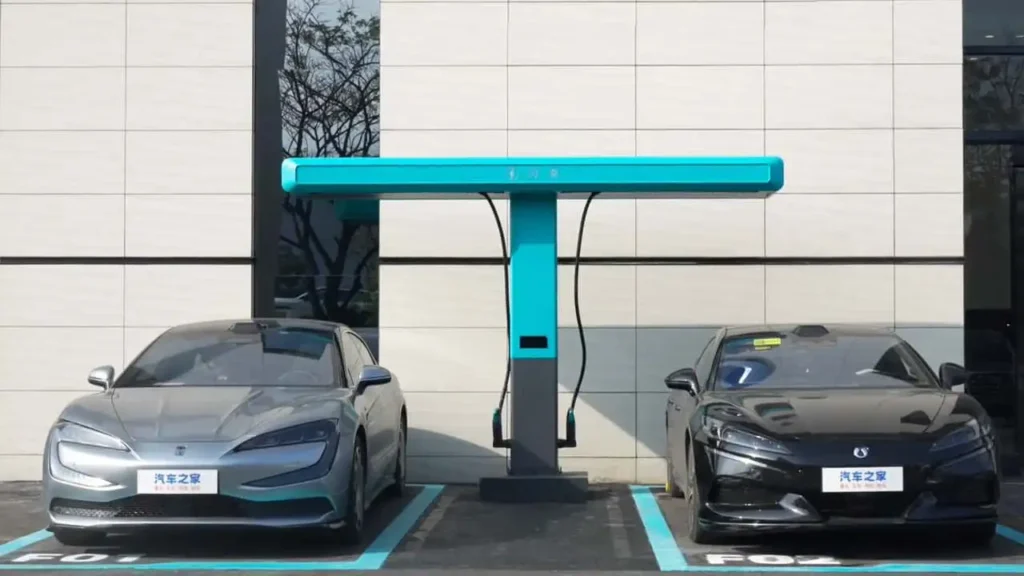
America Must Move Faster and Smarter to Compete With China’s Auto Industry
China’s automotive industry has entered a new era of global competition, and the United States faces a critical challenge. While Chinese automakers rapidly expand EV production, introduce hundreds of new models, lower manufacturing costs, and accelerate innovation, America risks falling further behind in one of the most important industrial transformations in decades.
The rise of companies such as BYD, Geely, SAIC, NIO, and others demonstrates how quickly China has built a competitive advantage in electric vehicles, batteries, software, and supply chains. Chinese automakers are not only producing large numbers of EVs, but they are also shortening development timelines, integrating advanced technology, and competing aggressively on price.
The United States has world-class automotive companies, talented engineers, and a history of transportation innovation. However, maintaining global leadership requires a stronger focus on manufacturing competitiveness, technological advancement, and long-term industrial strategy.
America’s disastrous current federal approach to transportation policy has created uncertainty for automakers, consumers, and investors. Regulations, incentives, and market requirements must be carefully evaluated to ensure they encourage innovation rather than limit consumer choice or increase manufacturing costs. Policies that slow domestic production or make it harder for American companies to compete globally risk benefiting overseas competitors instead.
A competitive EV industry requires more than encouraging vehicle adoption. It requires investment in battery manufacturing, critical mineral supply chains, charging infrastructure, workforce development, research, and advanced manufacturing. China’s success has come from building an entire ecosystem around electric transportation, not simply producing electric cars.
Artificial intelligence, autonomous driving, energy storage, and next-generation batteries will shape the future of mobility. The countries that lead in these technologies will influence global transportation markets for decades.
A concerning pattern has emerged in federal transportation and environmental policy. Instead of accelerating the transition away from fossil fuels, the current U.S. federal administration is loosening incentives and standards that protect public health and the climate. These decisions are not minor regulatory adjustments. They will increase harmful smog, worsen air pollution, undermine climate progress, and cost drivers more money over time. All of these policies must be rolled back.
Rather than retreating from electrification, the United States must develop policies that allow American companies to compete more effectively. A strong domestic auto industry depends on innovation, affordable manufacturing, reliable supply chains, and a business environment that rewards technological progress.
The competition with China is not only about electric vehicles. It is about the future of transportation itself. America must move faster, invest smarter, and create the conditions necessary for its automotive industry to remain a global leader.

Electric Vehicle Marketing Consultant, Writer and Editor. Publisher EVinfo.net.
Services