WaterCar: The Amphibious Electric Vehicle Turning Roads Into Boat Ramps
For decades, the idea of driving a car directly into the water and continuing the journey as a boat seemed like something reserved for movies and futuristic concepts. WaterCar has spent more than 30 years turning that vision into reality, developing amphibious vehicles that are capable of operating on both roads and waterways without the need for a trailer or separate vessel.
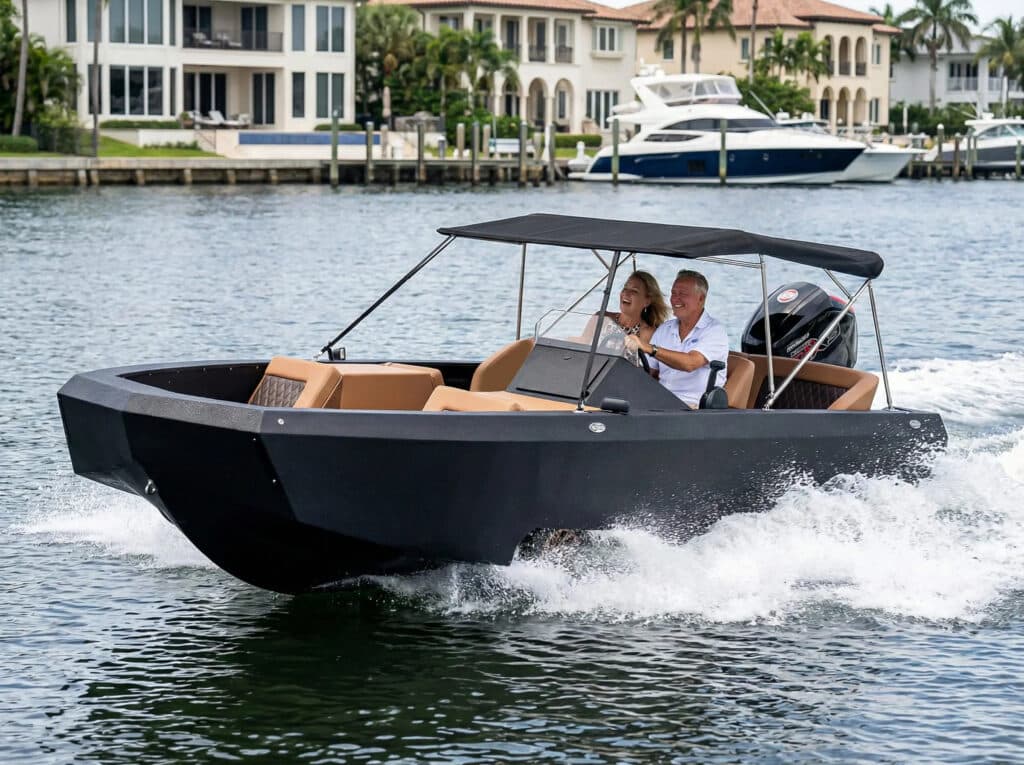
Based in Southern California, WaterCar has established itself as one of the most recognized names in amphibious transportation. The company has accumulated more than 27 patents and has built vehicles that have attracted worldwide attention through television appearances, automotive media coverage, and online videos viewed by millions.
Its latest offering, the WaterCar EV, combines the functionality of a low-speed electric vehicle with the capabilities of a recreational boat. Designed as a 19-foot amphibious craft, the vehicle can transition from land to water at the push of a button. On land, it operates as a street-legal low-speed vehicle with a top speed of 25 mph, while on the water it is powered by a Mercury Pro XS outboard motor capable of reaching speeds of approximately 35 mph.
Built on an all-welded aluminum unibody hull, the vehicle seats four passengers and offers an estimated 80-mile water range. On land, it is powered by a 48V LiFePO4 battery system with approximately 20 miles of driving range per charge. The vehicle features independent coil-over suspension, a limited-slip differential, 10 inches of ground clearance, and off-road capability for launching from a variety of terrains.
One of the biggest advantages of the WaterCar concept is convenience. Traditional boat ownership often requires a tow vehicle, trailer, launch ramp logistics, marina fees, and storage considerations. WaterCar eliminates many of these challenges by functioning as its own trailer and allowing owners to drive directly into and out of the water. According to the company, this streamlined experience is one of the primary reasons customers are attracted to amphibious vehicles.
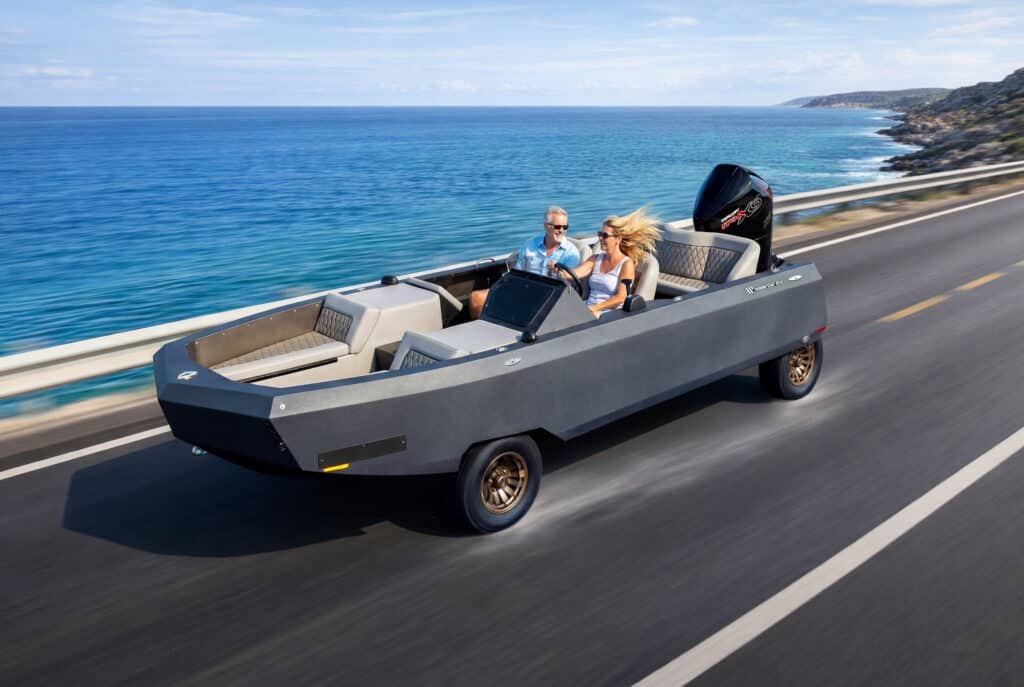
The vehicle is built around a high-strength aluminum structure and is engineered to comply with both U.S. Coast Guard marine requirements and federal roadway regulations. WaterCar emphasizes handcrafted production, with each vehicle assembled at its California manufacturing facility and built in limited numbers. Current models start at approximately $170,000 and are customized for individual buyers.
One of its standout features is LaunchMode™, which allows the vehicle to transition from road mode to water mode at the push of a button. Hydraulic systems retract the wheels and position the outboard motor for marine operation in seconds. WaterCar also incorporates TowLink™, an integrated towing system that allows the vehicle to be towed on its own wheels using a standard 2-inch hitch, eliminating the need for a separate boat trailer.
The cockpit features the DualCommand™ Helm, combining dual 10-inch touchscreens with Simrad GPS navigation, Mercury VesselView monitoring, and Apple CarPlay integration. Additional features include multiple independent braking systems, marine-grade lithium battery technology, and components from established suppliers such as Mercury, Wilwood, Simrad, Eibach, Timken, and Victron Energy.
As interest grows in innovative mobility solutions that blur the lines between transportation categories, WaterCar continues to demonstrate that amphibious vehicles can move beyond novelty and become practical recreational products. By combining the freedom of boating with the convenience of driving, the company is creating a unique niche where roads no longer have to end at the shoreline.

Electric Vehicle Marketing Consultant, Writer and Editor. Publisher EVinfo.net.
Services