GE Aerospace Celebrates Historic Hybrid Electric Flight, Agreements Covering Nearly 1,800 Engines
GE Aerospace used the 2026 Farnborough International Airshow to highlight major advances in commercial aircraft engines, engine durability and hybrid electric propulsion, while also announcing nearly 1,800 engine agreements with airlines and aircraft operators.
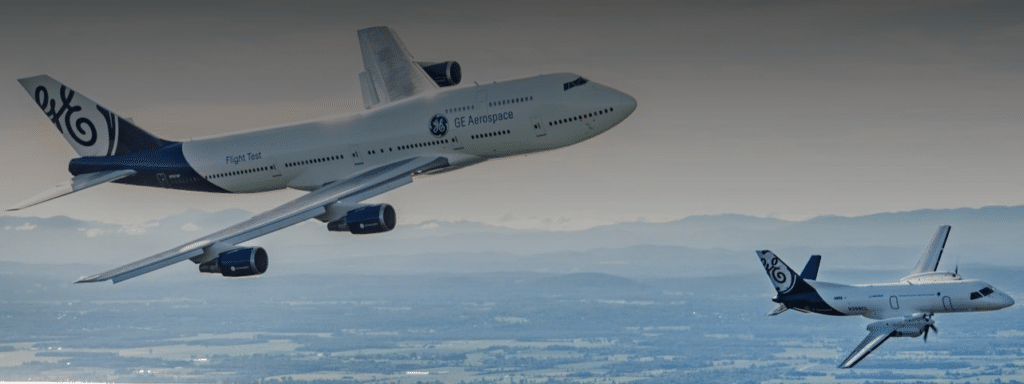
One of the most significant developments at Farnborough involved GE Aerospace’s hybrid electric propulsion technology. GE Aerospace, NASA, BETA Technologies and Boeing subsidiary Aurora Flight Sciences completed the world’s first high-altitude hybrid electric flight at altitudes above 30,000 feet, reaching levels comparable to those used by commercial passenger aircraft.
The flight took place over Plattsburgh, New York, on May 20, 2026, using a modified Saab 340B equipped with GE Aerospace’s Electrified Powertrain Flight Demonstration system.
GE Aerospace and CFM International, its 50-50 joint venture with Safran Aircraft Engines, announced agreements covering nearly 1,800 engines during the show. The largest was a memorandum of understanding with IndiGo for more than 1,000 LEAP-1A engines to power 510 Airbus A320neo aircraft. It represents the largest single LEAP engine order in CFM International’s history.
The IndiGo agreement also includes CFM support for the airline’s planned engine maintenance, repair and overhaul facility, along with a long-term material services agreement for spare parts. The goal is to provide greater engine availability, predictable costs and long-term support as IndiGo expands its fleet.
GE Aerospace also announced additional widebody engine agreements. Philippine Airlines selected GEnx-1B engines for 15 Boeing 787-10 aircraft, while AerCap selected GEnx-1B engines for 15 additional Boeing 787 Dreamliners. The GEnx-1B has now surpassed 50 million flight hours in just over 14 years, reaching that milestone faster than any previous GE Aerospace commercial widebody engine model.
CFM International also reported significant progress with the LEAP program, which has passed 10 years of service, 10,000 engines delivered and 100 million flight hours. The company announced that the U.S. Federal Aviation Administration and European Union Aviation Safety Agency certified a LEAP-1B high-pressure turbine durability kit designed to double time on wing in hot and demanding operating environments.
CFM also received initial engine-level certification for the LEAP-1B reverse bleed system, which is designed to reduce the need for on-wing fuel nozzle replacements. The company continues expanding its maintenance, repair and overhaul capacity to improve engine availability and reduce maintenance costs.
GE Aerospace also completed what it described as the world’s first hybrid electric flight across the Atlantic Ocean. The demonstration aircraft departed Plattsburgh on June 26 and arrived in Farnborough on July 14, making multiple stops along the way. During the Farnborough International Airshow, the aircraft conducted daily demonstration flights and completed four laps of the airfield.
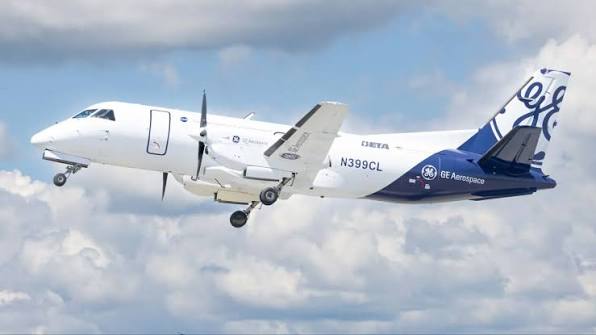
The hybrid electric propulsion system combines an electric motor/generator operating in parallel with a gas turbine. This configuration provides supplemental electrical power during different phases of flight and is intended to demonstrate how hybrid propulsion could improve aircraft efficiency while maintaining the performance and range required for commercial aviation.
GE Aerospace President and CEO Larry Culp said the company is focused on improving efficiency, durability and range while developing technologies that can shape the future of flight. The company views hybrid electric propulsion as a potential path toward next-generation aircraft engines and is testing the technology for possible commercial and defense applications.
The hybrid electric demonstrations were conducted through NASA’s Electrified Powertrain Flight Demonstration program, highlighting the role of government-industry collaboration in accelerating aviation technology development.
GE Aerospace is also continuing work on the CFM RISE program, a technology demonstration initiative focused on developing technologies for more efficient next-generation aircraft engines. RISE, which stands for Revolutionary Innovation for Sustainable Engines, is being developed by CFM International and is not currently a commercial product.
The combination of record engine demand, improvements to existing propulsion systems and successful hybrid electric flight demonstrations gives GE Aerospace multiple paths for advancing aviation technology. The Farnborough results demonstrate that the company is simultaneously addressing near-term airline requirements for reliability and durability while developing propulsion technologies aimed at improving efficiency in future aircraft.
EVinfo.net’s Take: Hybrid Technology Is Advancing in Both Electric Vehicles and Electric Aircraft
Hybrid technology is advancing in both electric vehicles and electric aircraft, but the reasons are very different.
For aviation, the biggest challenge is battery weight. Batteries capable of storing enough energy for long flights are significantly heavier than conventional aviation fuel, creating a major obstacle for fully electric commercial aircraft. Hybrid electric propulsion offers a potential solution by combining electric motors with gas turbines, allowing aircraft to use electric power where it provides the greatest benefit without relying entirely on heavy batteries.
GE Aerospace and others are advancing this approach, the technology could eventually improve aircraft efficiency while preserving the range and performance required for commercial aviation.
For passenger cars, battery weight is far less restrictive. Instead, one of the biggest barriers to EV adoption remains range anxiety. Drivers may hesitate to buy an EV because of concerns about finding a charger, charging time and having enough range for longer trips.
Hybrid technology addresses this problem differently in automobiles. Plug-in hybrids can provide electric driving for daily trips while retaining a gasoline engine for longer journeys. This gives drivers many of the benefits of electrification without requiring them to rely entirely on public charging infrastructure.
However, many drivers don’t realize that going fully electric is much easier now than ever. Fully electric, battery electric vehicles (BEVs) are the most cost-saving and eco friendly vehicles.

Electric Vehicle Marketing Consultant, Writer and Editor. Publisher EVinfo.net.
Services