JOLT Launches Spark Intelligence in the U.S. for Audience-Led Digital Out-of-Home Advertising on EV Chargers
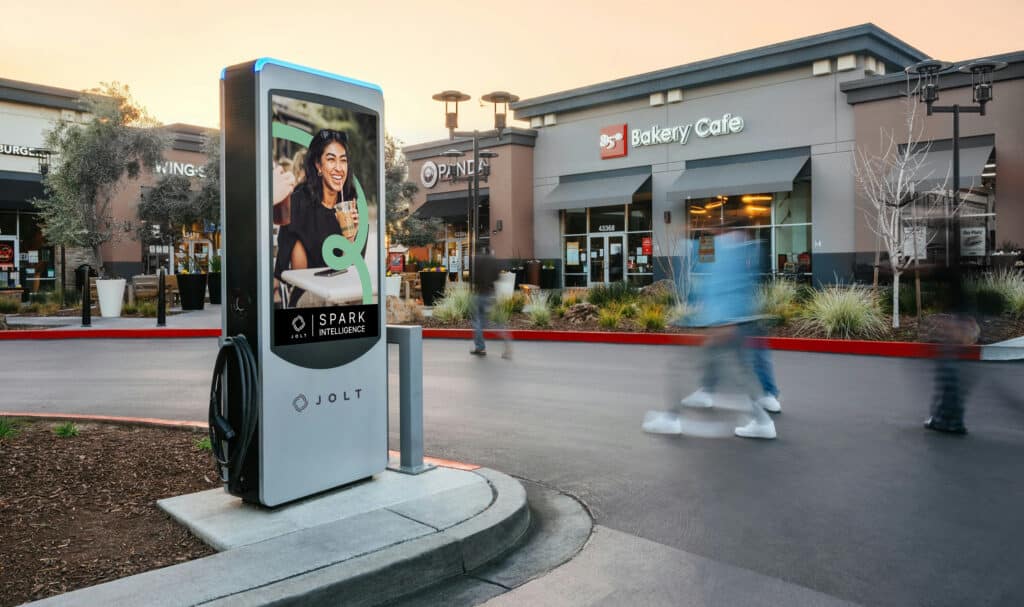
JOLT, a global digital out-of-home (DOOH) and EV charging network, launched Spark Intelligence in the United States, bringing its audience-led planning and measurement platform to more than 4,750 digital screens on its electric vehicle (EV) chargers across 34 states and 65 designated market areas.
Spark Intelligence gives advertisers a data-driven approach to planning, activating and measuring DOOH campaigns. Rather than selecting screens based primarily on location and estimating which consumers pass by, the platform starts with the target audience. Using more than 2,500 audience segments and 1.5 billion monthly geospatial data points, Spark Intelligence identifies where target consumers are concentrated and activates campaigns across relevant screens.
“There’s no shortage of audience data. The challenge is making it useful,” said Brendan Dillon, Head of Revenue and Partnerships, North America at JOLT. “Spark Intelligence puts audiences at the heart of campaign planning, turning data into actionable insights that help advertisers reach the right people and drive better business results.”
Behavioral, purchase and movement data help determine where campaigns are activated. Advertisers can use premium formats, video, 3D and dynamic triggers, while ad delivery and creative can be optimized in real time toward screens and audience segments generating the strongest performance.
JOLT also connects advertising exposure with measurable business outcomes, including store visitation, web activity, brand lift and sales lift. Spark Intelligence is now available to U.S. brands and agencies following launches in other markets across JOLT’s global network, including the United States, Canada, the United Kingdom, Australia and New Zealand.
EVinfo.net’s Take: EV Charging Dwell Time Creates New Opportunities for Local Businesses
EV charging stations can provide an important economic opportunity for businesses located nearby. Unlike gasoline drivers, who typically spend only a few minutes at a fuel pump, EV drivers can remain in the area for 15 minutes, 30 minutes or longer while their vehicles charge. This time is known as “dwell time,” and businesses can turn it into valuable customer traffic.
Advertising networks like JOLT demonstrate one way businesses can benefit. JOLT combines EV charging with digital out-of-home advertising, allowing brands to reach consumers while they wait for their vehicles to charge. The charging experience creates a captive audience and gives advertisers an opportunity to promote nearby stores, restaurants, services and other businesses.
The benefits of charging-related dwell time can go beyond advertising. A restaurant near a fast charger can attract drivers looking for a meal or coffee. Retail stores can encourage shoppers to browse while their vehicles charge. Grocery stores, shopping centers, hotels and entertainment venues can all potentially benefit from customers who have time to spend nearby.
For businesses, the key is understanding that EV charging can turn parking time into commercial opportunity. Drivers are already in the area, and charging can provide the additional time needed to make an unplanned purchase, grab a meal or visit a nearby business.
Charging operators and property owners can also strengthen this connection through digital promotions, discounts, loyalty programs and location-based advertising. A driver who receives a promotion for a restaurant or retailer within walking distance of a charging station may be more likely to visit while charging.
Charging stations will increasingly become part of the commercial landscape. Dwell time gives businesses a valuable opportunity to attract EV drivers, while convenient nearby amenities can make the charging experience more useful and enjoyable.
Fund and Measure Behavior Around Verified EV Charging with Nerava Network
Nerava Network is developing a programmable value layer for EV charging that connects verified charging events with partner-funded credits, benefits and measurable outcomes. Its platform can verify charging sessions, apply rules based on factors such as location, timing and eligibility, deliver incentives and track what happens afterward. For businesses near EV charging stations, this could create a powerful way to turn charging dwell time into measurable customer engagement.
For example, a retailer or restaurant could fund a credit for customers who charge nearby, with Nerava connecting the verified charging event to the resulting visit, purchase or other outcome. This approach moves beyond simply advertising to EV drivers by creating incentives tied directly to charging behavior and measurable business results.

Electric Vehicle Marketing Consultant, Writer and Editor. Publisher EVinfo.net.
Services