The Gulf Oil Shock Is Pushing EV Sales to New Heights Globally
Electric vehicle sales are on track to reach record levels in 2026, with close to 30% of all new cars purchased worldwide expected to be either fully battery-electric or plug-in hybrid models, according to the International Energy Agency. That would represent a sharp increase from just 4% in 2020.
The growth has been somewhat unexpected. Some analysts had anticipated a slower EV market this year, but the war with Iran and closure of the Strait of Hormuz sent oil and gasoline prices higher, triggering a surge in EV sales in markets around the world.
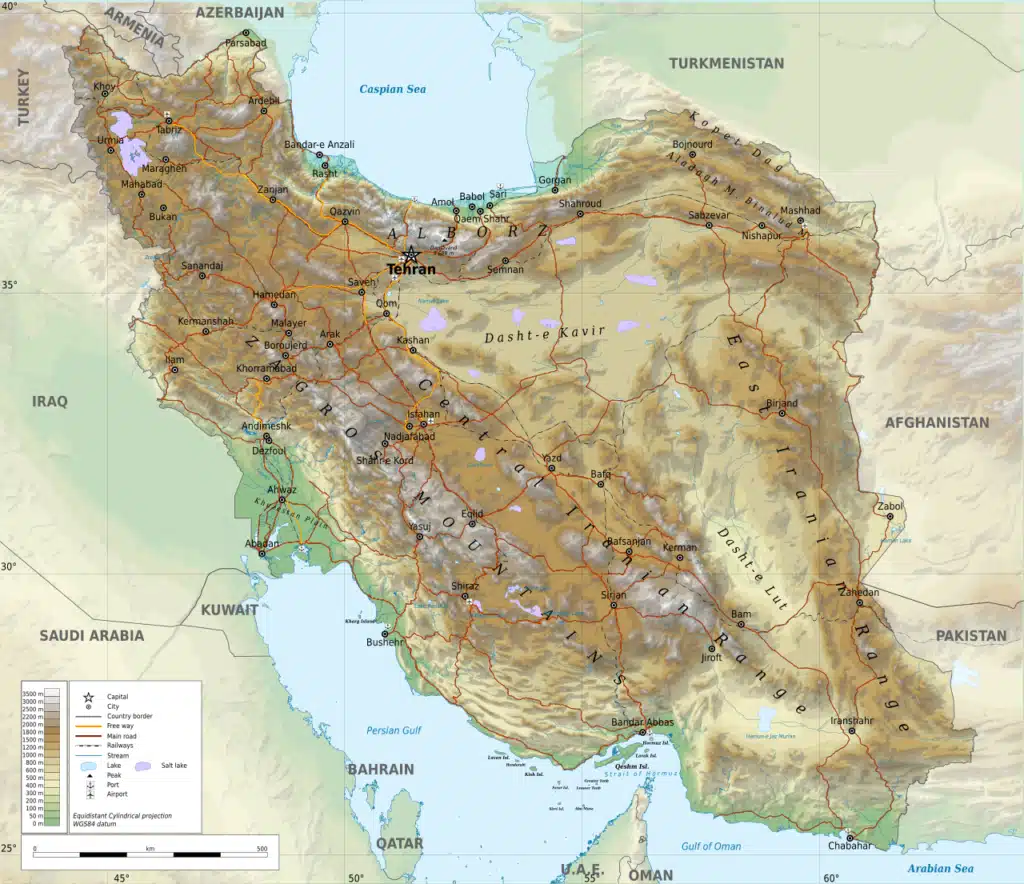

The New York Times reported on August 18, 2026, that in South Africa, EV sales more than quintupled during the first half of 2026 compared with the same period in 2025. In Laos, imports of battery-powered vehicles from China have soared. Australia, Colombia and South Korea have all seen EVs’ share of total new-car sales nearly double since fighting began in the Middle East.
The increase in EV adoption is reshaping global automotive markets. Sales of traditional internal-combustion vehicles have been steadily declining and are expected to reach their lowest level since the early 2000s this year. What makes the trend particularly notable is that EV purchases have actually declined in China and the United States, the world’s two largest automotive markets.
China accounts for roughly half of global EV sales. A weaker economy and reduced government subsidies contributed to a decline in overall vehicle purchases during the first half of 2026. EVs continued gaining market share, however. China still has roughly as many EVs on its roads as the rest of the world combined.
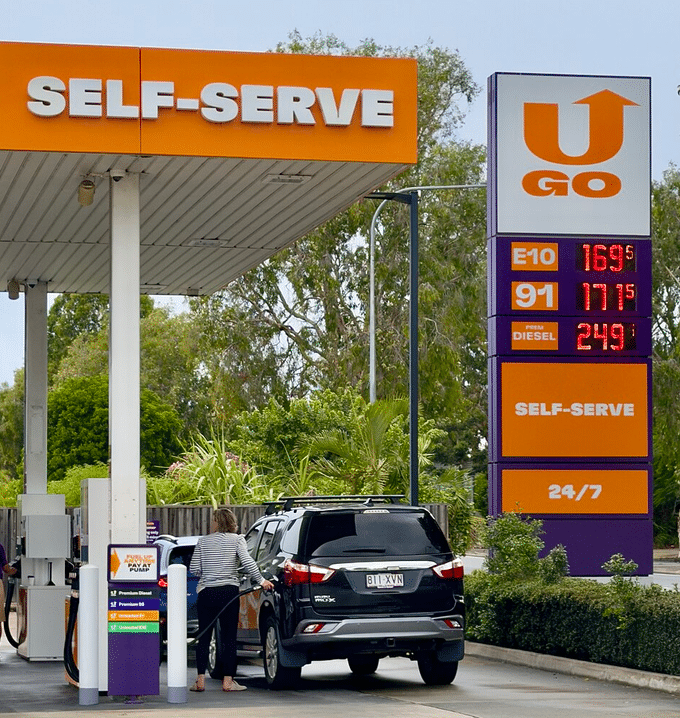

The United States has also experienced a decline in EV sales following the phaseout of the $7,500 federal tax credit.
Outside those two major markets, higher oil prices are helping accelerate the transition. Since the Iran war began in February, Brent crude has risen more than 25%. Over the same period, EV sales roughly doubled in Australia, Brazil, India and South Korea compared with the same period in 2025.
Car sales are influenced by government policies, economic conditions and the availability of new models, so not all of the growth can be attributed to higher fuel prices. However, online searches for EVs have increased significantly since the conflict began, according to BloombergNEF, with some of the largest increases occurring in countries where fuel prices have risen the most.
BloombergNEF analyst Andrew Grant said some consumers may simply have accelerated EV purchases they were already planning. However, he expects sustained or higher oil prices to result in higher EV sales than would otherwise have occurred.
Several countries are experiencing particularly strong increases in EV market share. Singapore reached 65% in July 2026, compared with 31% in July 2025. Uruguay reached 43%, up from 9%, while France climbed to 35% from 13%. Slovenia reached 25%, South Korea 24%, Australia 22%, New Zealand 17% and Colombia 17%.
Governments are also responding to the energy crisis. More than a dozen governments have announced new policies encouraging EV adoption since the conflict began as countries seek to reduce their dependence on expensive imported oil. Ireland and the Netherlands introduced programs encouraging drivers to replace older combustion-engine vehicles with EVs. Chile provided incentives for electric buses and taxis, Spain extended consumer EV tax credits, and China established new goals for electrifying trucks.
The International Energy Agency said the crisis has reinforced the case for EVs as a way to address energy security and fuel-cost concerns. Vehicles on the road account for roughly half of global oil use.
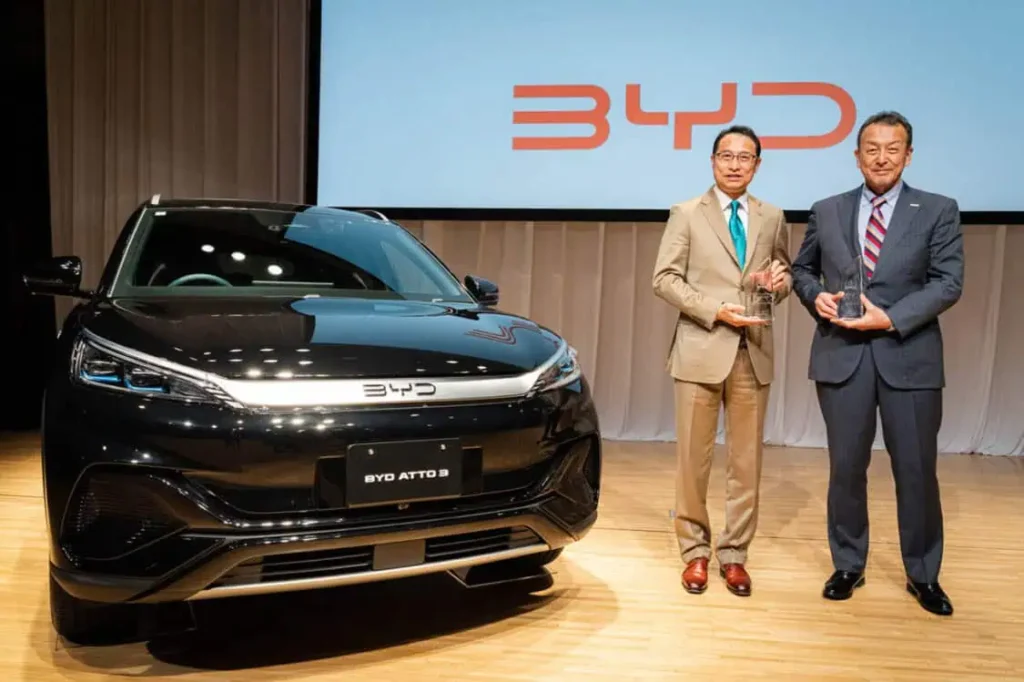
The global EV boom is also benefiting China, which produces more electric vehicles than any other country. Chinese automakers exported roughly 2.4 million EVs during the first half of 2026, nearly matching their total EV exports for all of 2025.
Although policymakers in Europe and the United States have expressed concern about China’s growing influence over the global automotive market, many countries have welcomed inexpensive Chinese EVs as a way to reduce fuel costs. Chinese models account for more than 80% of EV sales in Argentina, Australia, Indonesia, New Zealand and South Africa.
Cambodia and Kenya have temporarily reduced tariffs on imported EVs. Laos has gone even further, banning imports of gasoline-powered cars for the remainder of 2026 while cutting taxes on electric vehicles. The move has triggered a rush of Chinese EV imports.
The major question now is what happens to EV sales if the conflict in Iran ends and the Strait of Hormuz reopens, causing global oil prices to fall.
In the short term, EV sales could slow if consumers become less concerned about gasoline prices. Over the longer term, however, many analysts expect battery-powered vehicles to continue gaining ground.
In many markets, EVs still cost more upfront than comparable gasoline or diesel vehicles, making purchase price one of the biggest barriers for consumers. That could change over the next three to five years if battery prices continue falling. Batteries remain the most expensive component of an EV.
Andrew Grant of BloombergNEF argues that oil prices will continue to rise and fall, but declining battery costs should make EVs increasingly competitive and lead to greater sales over time.
Even with higher upfront prices, EVs generally cost less to operate over their lifetimes because of lower fuel and maintenance expenses. That advantage is particularly important for high-mileage drivers, including rideshare drivers who can drive three to five times as many miles each year as an average driver. These drivers are already adopting EVs at somewhat higher rates.
EVinfo.net’s Take: The Federal Administration’s Anti-EV Efforts Are Backfiring
In the U.S., new EV sales have begun to recover after the foolish and unnecessarily sudden cut of the federal EV tax credit in September 2025. Used EV sales are currently booming so much that used EV prices are rising.
The war isn’t expected to end soon, which means gas prices will remain high for some time. That means EVs will keep growing faster than if the war had not occurred. So the administration’s anti-EV efforts are backfiring, and their mistakes are now helping the EV industry grow.
The Center for American Progress, an independent, nonpartisan policy institute, said on August 20, “At the six-month mark of an irresponsible war of choice in Iran, the Trump administration has become mired in a Middle East quagmire it can neither win nor easily exit.”
EVinfo.net agrees. The federal mistakes and mis-management of the war will obviously continue until Congress stops their mistakes. Hopefully, enough competent new leaders will be elected in the November midterm elections, that these new leaders will stop these federal mistakes.
Congress cutting funding for the war would stop the wasting of expensive military ordinance, now running dangerously low, which use so far in the war has not accomplished anything of value. The executive branch would then have no choice but to negotiate an end to the war and re-open the Strait of Hormuz.

Electric Vehicle Marketing Consultant, Writer and Editor. Publisher EVinfo.net.
Services