American Automakers Urge Congress to Ban Chinese Vehicles in the U.S.
A trade group representing major U.S. automakers is urging Congress to permanently prohibit Chinese vehicles, connected-vehicle hardware and software from being sold, imported or manufactured in the United States.
In a letter sent to congressional leaders on September 3, 2026, the Alliance for Automotive Innovation called for a permanent ban, citing what it described as China’s unfair trade practices, intellectual property theft, government subsidies and surveillance concerns.
Alliance president and CEO John Bozzella argued that China’s industrial and manufacturing policies give Chinese automakers an advantage over competitors while supporting Beijing’s broader effort to dominate global automotive manufacturing and critical supply chains.
According to Bozzella, Chinese automakers are increasingly exporting subsidized vehicles equipped with connected software and hardware into international markets. He said those vehicles can collect, process and transmit sensitive vehicle and consumer information, creating what the group considers a potential national security concern.
The push comes as U.S. automakers face growing competition from Chinese manufacturers, particularly in the electric vehicle market. BYD and other Chinese automakers have expanded their international presence by offering increasingly competitive and lower-cost EVs.
China is already the world’s largest EV market and has become a major exporter of electric vehicles. Chinese automakers are gaining ground in Europe, Australia, Southeast Asia, Mexico and South America.
Canada is also preparing to expand access for Chinese EVs. Under a January 2026 trade agreement, Geely Auto Group will be permitted to sell tens of thousands of EVs annually in Canada, while Canadian tariffs on those vehicles are scheduled to fall from 100% to 6%.
The Alliance for Automotive Innovation argues that the growing international presence of Chinese connected vehicles increases the urgency for the United States to establish its own restrictions.
Bozzella acknowledged that the same level of Chinese vehicle penetration has not yet occurred in the U.S., but urged Congress to act before the end of the 119th Congress.
The organization is specifically calling for a permanent prohibition covering Chinese connected vehicles as well as related high-risk hardware and software. It argues that establishing such restrictions would address concerns surrounding data collection, supply-chain dependence and China’s growing influence over the global automotive industry.
The Alliance represents automakers, suppliers, battery manufacturers, semiconductor companies and autonomous-vehicle innovators across the U.S. automotive industry.
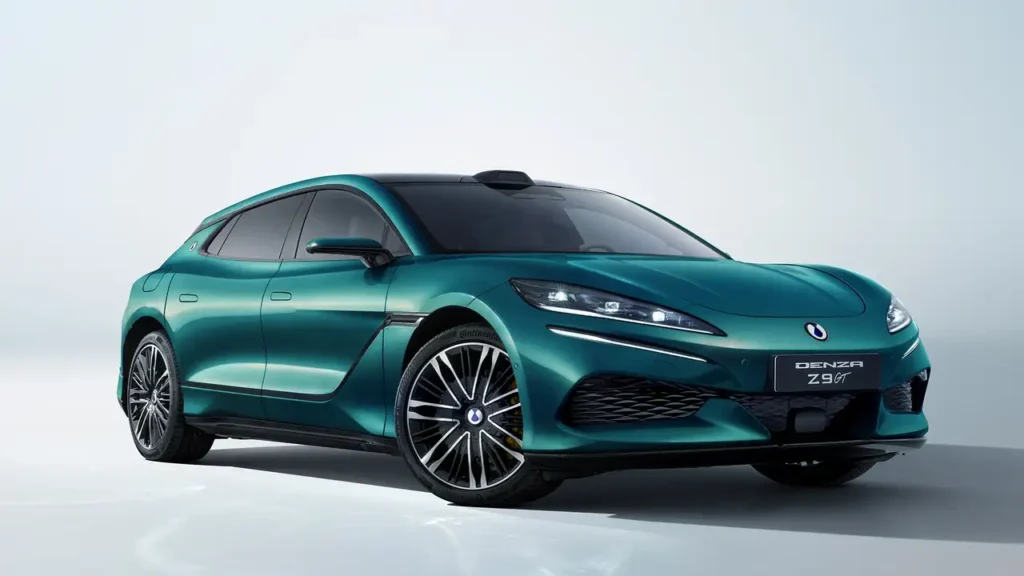
American Automakers Want a Chinese Vehicle Ban, But OEMs, The Alliance for Automotive Innovation and Bad U.S. Policy Helped Create the Problem
The Alliance for Automotive Innovation’s call for a ban raises a larger question: how did the United States become so vulnerable to Chinese competition in electric vehicles in the first place?
The Alliance represents many of America’s largest automakers, including companies that have supported anti-EV policies that are now making the U.S. automotive market less competitive. The Alliance for Automotive Innovation has foolishly backed the administration’s reduction of Corporate Average Fuel Economy standards, while the administration also foolishly eliminated federal EV tax credits and weakened other policies designed to accelerate vehicle electrification.
Those bad decisions are occurring as the global automotive industry moves in the opposite direction. These bad policies are also increasing pollution, driver costs and health risks.
According to the International Energy Agency, electric vehicles accounted for 25% of global new-car sales in 2025. Europe reached 28%, while China approached 55%. The U.S. remained below 10%. The IEA also found that U.S. EV sales dropped sharply in the fourth quarter of 2025 after federal tax credits ended, with quarterly sales falling 45% from a year earlier.
The policy retreat has created uncertainty for automakers, suppliers, charging companies and consumers. Automakers responded by dramatically over-reacting, scaling back EV investments, delaying programs and reducing EV production plans far too much, just as competitors in China and Europe continued expanding their electric offerings.
That overcorrection matters. Automakers cannot simultaneously argue that Chinese manufacturers pose an increasing competitive threat while reducing the policies and investments needed to develop a stronger domestic EV industry.
Chinese automakers, meanwhile, continue using scale, battery manufacturing expertise and lower-cost vehicles to expand internationally. The IEA reports that Chinese manufacturers accounted for more than half of global BEV sales in 2025, while Chinese-made EVs are increasingly reaching emerging markets and other regions.
Blocking Chinese vehicles from the U.S. market may address some short-term national-security and supply-chain concerns, but tariffs and restrictions alone cannot create a globally competitive American automotive industry.
The United States also needs consistent demand, competitive vehicles, battery manufacturing, charging infrastructure and long-term regulatory certainty. Instead, federal policy has moved toward supporting gas vehicles, reducing EV incentives and fuel-economy requirements while the rest of the world continues building EV markets.
America’s automotive decline is therefore not simply a story about Chinese competition. It is also a story about bad federal policy choices and an industry that reacted too aggressively to those choices by cutting back on EV production and plans far too strongly.
Concerns about Chinese vehicles secretly functioning as large-scale spy platforms inside the United States are becoming a growing political talking point, but many cybersecurity and technology observers argue the narrative is often exaggerated and disconnected from how modern intelligence gathering actually works. EVinfo.net debunked the security threat claim about Chinese vehicles.
If U.S. automakers want protection from increasingly competitive Chinese auto manufacturers, they will ultimately need more than a ban. They will need a domestic market and industrial strategy capable of competing with them. That means vastly increasing support of American-made EVs, American EV adoption and the charging infrastructure to support them.

Electric Vehicle Marketing Consultant, Writer and Editor. Publisher EVinfo.net.
Services