EVSTAR’s Hubert Kim Appears on Field Frequency Podcast With Host Jason Cortes
EV chargers fail. The real question is who pays for repairs, and too often, that question remains unanswered when charging infrastructure is purchased.
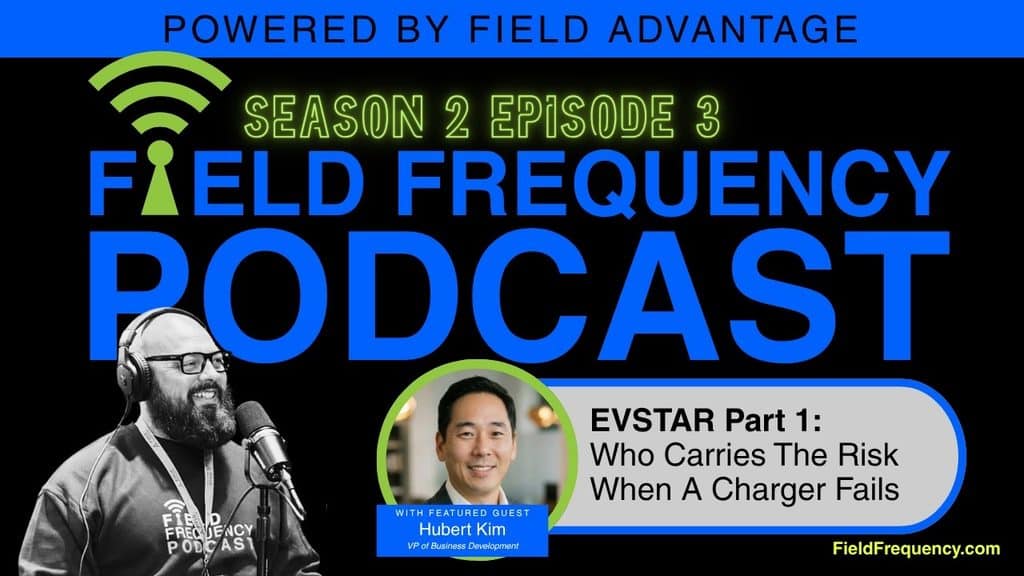
In Part 1 of a two-part series, Field Frequency Podcast host Jason Cortes interviewed Hubert Kim, Vice President of Business Development at EVSTAR, a provider of insurance-backed extended warranty programs for EV charging infrastructure.
Kim spent nearly a decade at Asurion underwriting consumer electronics warranties before leading sales at SK Signet. There, he witnessed one charger along the New York State Thruway remain problematic for six months. Remote diagnostics, four or five technician visits, and a firmware engineer flown in from Korea resulted in more than $20,000 in expenses before the charger was repaired.
That experience helped shape EVSTAR‘s approach: the industry has technicians who can repair broken chargers, but operators also need financial protection against the cost of repairs. As charging utilization increases, power modules experience greater demands, failures can rise, and maintenance costs become harder to predict.
Original equipment manufacturer (OEM) warranties typically cover parts for two years but may exclude labor, travel, and diagnostic costs. If a manufacturer leaves the market, its warranty coverage may also disappear.
Kim argues that warranty protection belongs in procurement and financing discussions before chargers are installed, rather than after problems emerge.
The conversation examines the true life cycle cost of charging equipment, applying consumer extended-warranty models to $20,000 to $100,000-plus charging assets, and the shift from deployment-focused infrastructure to utilization-driven operations. Topics include NEVI’s 97% uptime requirement, the financial implications of service-level agreements, and why warranty protection is a risk-management decision rather than simply a capital expense.
Cortes and Kim also discuss a $3,000 cross-country trip to resolve a two-hour repair, the limitations of OEM warranties, manufacturer self-insurance, and the consequences of a supplier exiting the market. Additional topics include field service partnerships, financing requirements, revenue reimbursement when service commitments are missed, accidental damage versus vandalism, and the often underestimated costs of self-insuring.
The discussion highlights two questions buyers should address before issuing a request for proposals: What does the warranty cover, and who financially backs it?
Purchasing a charger is one decision. Determining who carries its life cycle risk is another.
Part 2 of EVSTAR‘s series moves from strategy to execution, exploring what it takes to turn warranty coverage into measurable charging uptime.
EVSTAR provides insurance-backed extended warranty programs for electric vehicle (EV) charging infrastructure, helping manufacturers, distributors, charging network operators, fleet owners, and site developers manage repair costs and protect equipment uptime. Its StarProtect Pro program provides comprehensive coverage from the date of purchase, including support throughout the claims and repair process. EVSTAR also offers protection for previously installed chargers and equipment whose original manufacturer warranties have expired, helping operators extend asset life and reduce unexpected maintenance expenses.
Underwritten by AIG-affiliated warranty providers, EVSTAR‘s protection programs can cover parts, labor, accidental damage, and power surges, subject to policy terms. The company also offers OEM warranty backstop services and liability transfers for businesses seeking to reduce the financial risks associated with self-insured warranty programs. By combining financial protection with repair coordination and service partnerships, EVSTAR helps charging businesses manage lifecycle costs, reduce downtime, and build greater confidence in EV charging infrastructure.

Electric Vehicle Marketing Consultant, Writer and Editor. Publisher EVinfo.net.
Services