Bugatti’s New U.S. CEO Discusses Manual Transmissions, Electrification and Tariffs
ABC News interviewed Sascha Doering, newly appointed CEO of Bugatti Americas, about the French luxury automaker’s 20-year presence in the U.S., its electrification strategy, customer relationships, production plans, and the impact of tariffs.
North America is Bugatti’s largest market, accounting for approximately 35% to 45% of global sales, up from 20% to 25% when the company entered the region in 2006. Bugatti delivered 353 vehicles to U.S. customers over the past 20 years, including a record 60 vehicles across North America last year.
The company operates 12 dealerships in the U.S., two in Canada, and one in Mexico. Doering said Bugatti does not plan to add dealerships or increase production capacity, which currently stands at approximately 100 vehicles annually.
The upcoming Tourbillon represents Bugatti’s latest engineering achievement. Its hybrid powertrain combines an 8.3-liter naturally aspirated V16 engine with electric motors to produce 1,800 horsepower. Global customer deliveries are targeted for the second quarter of 2027, with U.S. deliveries following several months later.
Doering described electrification as an important addition to the driving experience, combining the sound, vibration, and sensation of a combustion engine with the instant torque of electric motors. However, he emphasized that Bugatti remains committed to emotional driving experiences.
He dismissed current customer demand for an all-electric Bugatti, saying nobody had asked him to build one.
The interview also addressed growing interest in naturally aspirated engines and manual transmissions. Doering acknowledged the industry’s renewed appreciation for traditional driving experiences but left future product decisions to Mate Rimac, CEO of Bugatti Rimac.
Bugatti’s customer base is also getting younger, with the average buyer age declining from 52 to approximately 42. The company emphasizes long-term customer relationships, personalized vehicle specifications, and exclusive ownership experiences.
Tariffs remain another challenge. Doering said Bugatti absorbed the disruption without changing vehicle prices, although tariffs increase customers’ final costs. No customers canceled orders despite the additional expense.
Final assembly of the Tourbillon will remain in Molsheim, France, where Bugatti continues its tradition of combining performance engineering, craftsmanship, and luxury.
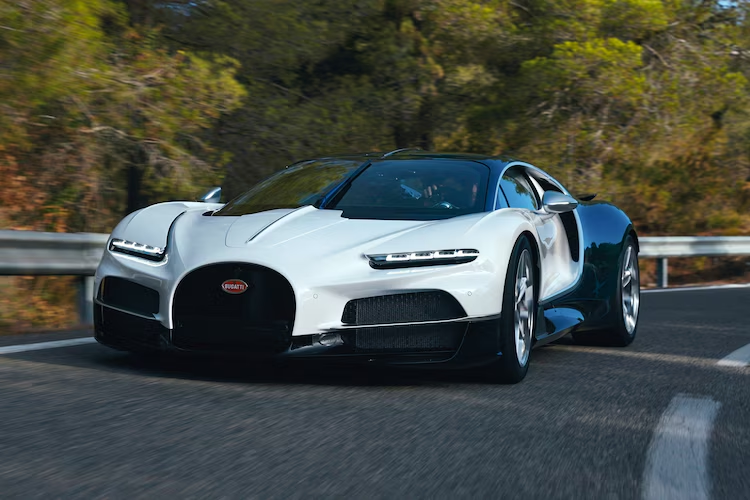
EVinfo.net’s Take: Bugatti Is Making a Big Mistake by Rejecting an All-Electric Hypercar
Bugatti’s reluctance to develop a battery-electric vehicle (BEV) could prove to be a major strategic mistake. The company’s new Americas CEO, Sascha Doering, told ABC News that nobody has asked him to build an all-electric Bugatti. But customer demand is not always a reliable indicator of where the market is heading.
Ferrari faced similar skepticism about electrification, yet its first all-electric model, the Luce, sold out its initial production allocation. Luxury automakers should not assume their existing customers represent the next generation of buyers.
The performance argument against electric hypercars is also becoming increasingly difficult to defend. In November 2026, the all-electric YANGWANG U9 Xtreme reached 503.17 km/h (312.65 mph) during a high-speed run in Abu Dhabi on November 1. FIA officially recognized the achievement, making it the first production car to exceed 500 km/h.
Even Bugatti’s new 1,800-horsepower Tourbillon combines an 8.3-liter V16 engine with electric motors. Electrification is already part of the company’s future.
The era of exclusively gasoline-powered sports cars, supercars, and hypercars is gradually coming to an end. Electric powertrains offer extraordinary acceleration, instant torque, and increasingly impressive top speeds. EV technology is advancing rapidly, and the performance gap is no longer an argument against electrification.
Bugatti should embrace the opportunity rather than wait for customers to ask. The future of high-performance automobiles is increasingly electric, and ignoring that transition risks leaving one of the world’s most prestigious automakers behind.
New Congress Should Stop the Tariffs
In April 2025, A group of hundreds of economists and scholars issued a bold free trade declaration, warning of the dangers of the United States government’s misguided embrace of tariffs. The statement’s signers included Nobel laureates, past members of the Council of Economic Advisers, and leading scholars within the economics profession.
“The time to correct the damaging policies is now,” said Phillip W. Magness, Senior Fellow at the Independent Institute and an economic historian who co-authored and co-organized the statement. “History has already shown us that sound economic principles can and must prevail over protectionist mythologies.”

Electric Vehicle Marketing Consultant, Writer and Editor. Publisher EVinfo.net.
Services