Rural U.S. Families Are Saving Thousands of Dollars With EVs, As Gas Prices Skyrocket
Electric vehicles help rural families reduce fuel and maintenance expenses while lowering emissions. Although public charging infrastructure remains limited in many rural areas, American families are finding that home charging and lower operating costs make the switch to electric vehicles (EVs) worthwhile.
AAA reported that the U.S. average price for regular gasoline reached $4.2957 per gallon on October 24, 2026, up from $3.0679 a year earlier. That represents an increase of $1.2278 per gallon, or approximately 40.0%, adding significant costs for American drivers and households that depend on gasoline-powered vehicles.
For comparison, the U.S. retail average for regular gasoline was $3.95 per gallon in 2022, according to the U.S. Energy Information Administration (EIA), approximately 35 cents cheaper than today. Prices reached a national peak of $5.01 per gallon in June 2022 amid rising crude oil costs, low inventories, and uncertainty following Russia’s invasion of Ukraine.
Yale Climate Connections reported that when Juliana Dockery and her husband, Sean, purchased an electric vehicle in 2022, some people questioned their decision. The family lives in Grass Valley, California, a rural community where public charging stations are relatively scarce. With three children and an electric vehicle as their only car, the decision raised questions about whether they could charge conveniently and handle longer trips.
Two years later, Dockery said the family had no trouble meeting its transportation needs. Like many EV drivers, they charge primarily at home and use apps to plan longer journeys around available charging stations. Although additional charging infrastructure would make travel even easier, the family has been able to get where it needs to go.
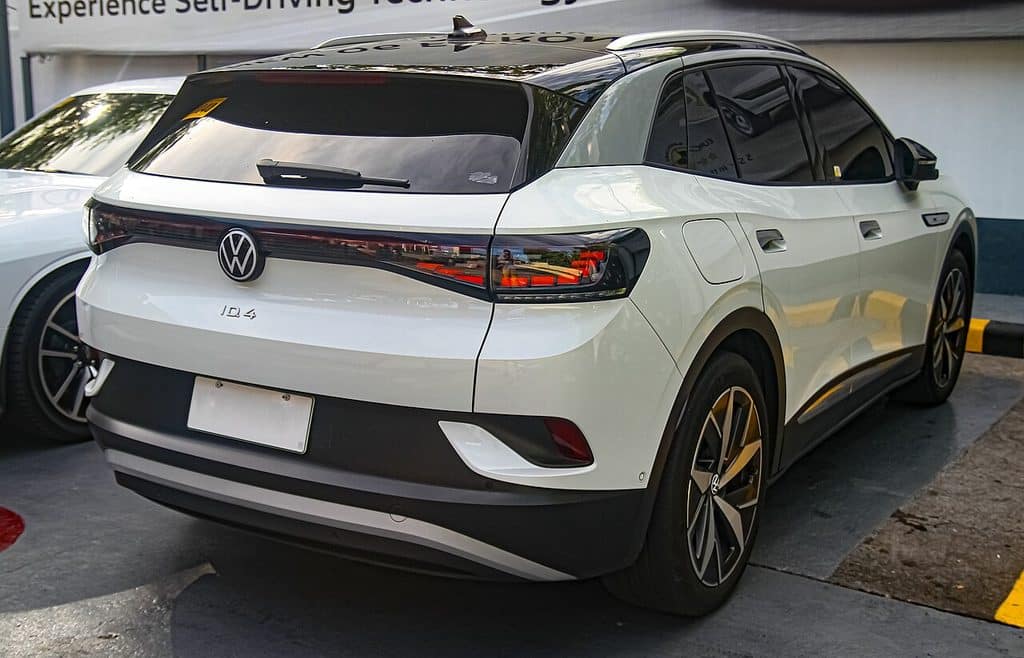
Beyond reducing its carbon footprint, the family has benefited financially by replacing its gasoline-powered Honda Fit with a Volkswagen ID.4.

Why Rural Americans Can Benefit From Electric Vehicles
A 2024 report from Coltura, a nonprofit working to accelerate the transition away from gasoline and diesel, highlights the potential benefits of electric vehicles for rural communities.
Rural residents tend to drive more than their urban counterparts. The report said nearly 70% of U.S. road miles occur in rural areas, and limited public transportation makes personal vehicles essential for many households. More driving also means greater gasoline consumption.
According to 2024 Coltura research, rural drivers account for 25.6% of U.S. light-duty vehicle gasoline consumption despite representing only 18.8% of drivers.
As of 2024, rural gasoline superusers, who made up just 3.6% of the U.S. population, consumed approximately 1,950 gallons of gasoline annually per person, accounting for nearly 13% of total gasoline consumption. A 2024 Rural Climate Partnership analysis indicated that this group consumed more gasoline than the entire national totals for Russia, India, Japan, or Canada.
These fuel expenses place a significant burden on household budgets. Rural superusers earning below the national median income spent 25.5% of their household income on gasoline, a higher share than comparable urban and suburban drivers, the 2024 Coltura report said.
Even rural drivers with typical light-duty vehicles spend a greater proportion of their household income on gasoline than nonrural drivers, at 8.9% compared with 5.1% as of 2024.
Because rural residents often depend on their vehicles for work, errands, school activities, and other essential travel, replacing gasoline-powered vehicles with electric models that can be charged at home or work could deliver substantial savings.
Josh Ewing, director of Rural Climate Partnership, described the issue as both an economic equity concern and a climate policy challenge. Rural drivers spend more to get around, potentially placing an enormous financial burden on families.
Real-World Electric Vehicle Savings
The Dockery family demonstrates how much rural households can save by switching to an electric vehicle.
At the time, using an online savings calculator based on their vehicles and California electricity and gasoline prices, the family estimated it saved $1,814 annually, or $9,071 over five years, by avoiding gasoline purchases. The calculation included the cost of electricity used to charge the vehicle at home.
In Richmond, Vermont, Jennifer Brookes and her husband have driven an electric Ford F-150 Lightning since 2022. Brookes estimated in 2024 that the electric truck saved them approximately $2,000 to $3,000 annually in fuel and maintenance expenses, accounting for electricity costs.
She also points to the truck’s simpler maintenance requirements compared with gasoline-powered vehicles.
“Our truck requires only tire rotation and a quick fluids check,” Brookes said. “The service is free for the first couple years and only costs like $50-$100 a couple times a year thereafter. Our other car runs something like $800-$1k per year to maintain, excluding tire purchases.”
Home charging is an important part of the savings for both families. Although some prospective EV buyers worry about installation expenses, incentives can reduce the upfront cost considerably.
Greater awareness of EV operating costs and available incentives could help more rural households evaluate whether switching makes financial sense.
Brookes also rejects the misconception that electric pickup trucks lack the performance of gasoline-powered trucks.
“If I hit the gas pedal in our truck it will blow your hair back, and it beats almost any gas vehicle off the line hands down. It definitely moves,” she said.
Electric motors deliver immediate torque, giving many electric pickups strong acceleration and towing capabilities, although towing heavy loads can substantially reduce driving range.
Lower Costs And Fewer Emissions
Electric vehicles can reduce both household transportation expenses and climate pollution. The amount of emissions avoided depends on the electricity generation mix used to charge the vehicle.
According to a U.S. Department of Energy calculator cited in the original report, California EV drivers such as the Dockerys generated approximately 1,385 pounds of charging-related emissions annually, compared with 12,594 pounds of climate pollution from average gasoline-powered vehicles.
In Vermont, where renewable energy accounted for nearly all electricity generation at the time of the report, EV drivers could achieve substantially lower charging-related emissions.
For rural families who drive long distances and depend heavily on personal transportation, the financial case for electrification can be particularly compelling. Lower energy costs, reduced routine maintenance, and convenient home charging can make EV ownership practical even where public charging networks remain limited.
The experiences of the Dockery and Brookes families show that electric vehicles are not exclusively an urban transportation solution. Rural households can benefit from lower operating costs, strong vehicle performance, and reduced emissions while supporting a more sustainable transportation system.
Since regular gasoline in the U.S. is roughly 35 cents more expensive per gallon today than it was in 2022 on average, the savings cited above would be even more significant if re-calculated today.

Electric Vehicle Marketing Consultant, Writer and Editor. Publisher EVinfo.net.
Services