‘ICEing’ Penalties and Solutions, From UK Companies and US States Include New NJ Law
In the United States and Europe, a growing problem keeps happening for EV drivers. Petrol drivers in Europe, and gas drivers in the USA, frequently park in spaces reserved for electric vehicle (EV) charging. The practice, in both parts of the world, is called “ICEing,” referring to internal combustion engine (ICE) vehicles. In the US, several states already have ICEing laws, and New Jersey announced a new law this week. In Wales, UK, an innovative Automatic Number Plate Recognition (ANPR) camera and ticketing system was announced to solve the problem.
Sometimes the driver does it on purpose, and sometimes they simply do not realize the space is meant only for EVs. Regardless of the reason, the result is the same. EV drivers are left without access to the charging they need.
Several factors contribute to the problem. Some drivers are unaware that EV charging spaces are reserved. Others park there out of convenience because the spots are close to an entrance. In many areas there is little enforcement, so drivers do not face consequences for parking in the wrong place. In a few cases, drivers intentionally block EV chargers as a form of protest.
ICEing matters because EV drivers rely on charging access the same way drivers of gas vehicles rely on fuel pumps. When an EV spot is blocked, it can cause delays, force drivers to take detours or increase range anxiety when the battery is already low. It also reduces the reliability of charging networks, especially in places where public charging is limited.
Communities and charging operators are trying different approaches to reduce ICEing. Clearer signage, stronger enforcement, physical barriers that restrict access to charging spots and better public awareness all help keep these spaces available for the drivers who need them. Some charging sites are also experimenting with reservation systems that guarantee access for EV drivers.
As electric vehicles become more common, keeping charging spaces open and accessible will become even more important. Gas-powered drivers, EV owners and property managers all share responsibility for protecting these spots. While ICEing is a relatively new term, the principle is simple. Charging spaces should be available for charging so drivers can get where they need to go without unnecessary stress or delay.
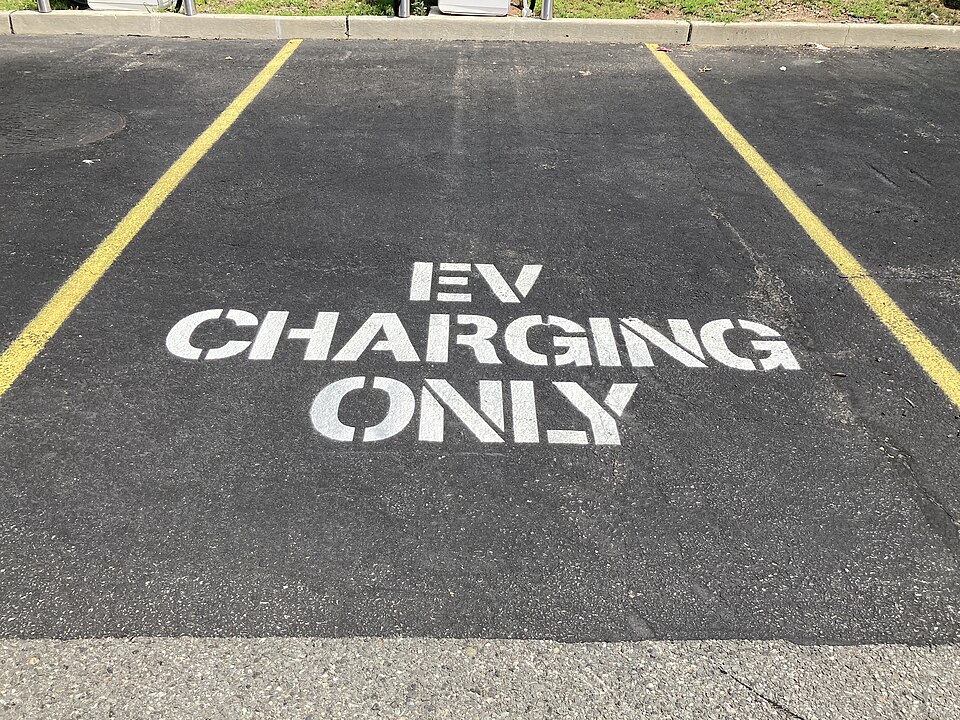

US States With Laws and Ticketing for Parking in EV Spaces
Several U.S. states have laws that penalize internal combustion engine (ICE) vehicles for parking in EV-only charging spaces, including California, Colorado, Maryland, Washington, Nevada, and Illinois, with penalties varying by state. Other states may enforce such laws through local ordinances or have similar regulations pending legislative approval.
California: Prohibits parking a non-electric vehicle in a designated EV charging space unless it is an electric vehicle and is charging.
Colorado: Has a law with potential fines for parking an ICE vehicle in an EV charging spot. A penalty of $182 is cited, though local ordinances may vary.
Illinois: States that a person cannot park a motor vehicle in a designated EV charging space unless the vehicle is an EV and is connected for charging. Violators may face fines up to $100.
Maryland: Has an “ICE-ing” law that went into effect in October 2022, making it illegal to park an ICE vehicle in an EV charging space. The space must be designated with specific signage.
Nevada: Prohibits parking a vehicle in an EV charging space if it is not connected for charging. Penalties are tiered, with fines of at least $100 for a first offense, $200 for a second, and $400–$750 for subsequent offenses.
Washington: Prohibits parking an ICE vehicle in a public EV charging station parking space without connecting to the equipment. The fine is $124.
New Law Fining Drivers Who Block EV Charging Spots in New Jersey
New Jersey has taken a major step to protect access to electric vehicle charging stations. On November 13, 2025, Gov. Phil Murphy signed a new law that fines motorists who block EV charging spaces, including gas-powered cars and EVs that are parked but not actively charging. The law, known as A3035, takes effect immediately and introduces fines of 55 dollars for a first offense, 100 dollars for a second violation, and 200 dollars for any that follow.
The measure comes as the state continues to expand its EV charging network and as EV adoption grows rapidly. A recent report from the New Jersey Economic Development Authority shows that the state now has more than 250,000 registered electric vehicles, heightening the need for reliable charging access.
EV drivers have long complained about ICEing, the practice of gas vehicles occupying EV charging spots. Until now, enforcement depended on local rules, cooperation from property owners, and whether proper signage was in place. Lawmakers argue that blocking a charging space is no different from blocking a gas pump, especially at a time when gas stations still far outnumber public charging locations.
The new law sets clear expectations. Non-EVs cannot park in EV charging spaces unless a sign specifically permits it, and EVs may not remain in a charging space unless they are actively charging. Municipalities have the authority to issue fines or tow violators, and EV charging areas must be marked with clear signage so drivers understand the restrictions. Supporters say these standards will give law enforcement the clarity needed to enforce rules consistently and reduce confusion.
New Jersey continues to invest heavily in charging infrastructure. The Economic Development Authority’s 50 million dollar Take Charge program is helping expand fleet charging for private companies, and the state aims to have at least 400 fast chargers and 1,000 Level 2 chargers installed by the end of 2025. Utility provider PSE&G is also offering rebates, incentives, and charging discounts to support both residents and businesses.
With the new law in place, local police and parking enforcement officers will take responsibility for issuing citations. Municipalities are expected to update signage over the coming year so enforcement can begin smoothly. The goal is simple: keep charging spaces available for drivers who need them as New Jersey pushes toward a cleaner transportation future.
Pogo Charge Partners With Intelli-Park to Tackle ICEing by Introducing Automatic Number Plate Recognition (ANPR) Camera and Ticketing Systems in South Wales
PoGo has announced a new partnership with Intelli-Park, a leading provider of intelligent parking management technology, to deploy Automatic Number Plate Recognition camera systems across select PoGo Charge locations. The initiative is aimed at eliminating one of the most common frustrations faced by EV drivers: ICEing, the practice of petrol or diesel vehicles blocking charging bays and preventing legitimate users from accessing chargers.
Through this partnership, PoGo will integrate View360, Intelli-Park’s ANPR platform and smart enforcement system, to ensure that ultra-rapid charging bays remain available for EV drivers who rely on them. The technology will automatically detect vehicles entering and exiting the charging area, confirm whether they are actively charging, and issue parking charge notices to violators.
The first location to benefit from the rollout will be PoGo’s charging hub in Cwmbran town centre in south Wales, UK. The site offers 16 ultra-rapid 200 kW charging bays and has faced persistent misuse from non-EV vehicles, which has undermined charger availability during peak periods. By implementing ANPR enforcement, PoGo aims to protect access for drivers who need fast, reliable charging to stay on the move.
“We’re thrilled to be working with Intelli-Park to make a real difference for our customers,” said Greg Longden, Commercial Director at PoGo Charge. “We know how frustrating it can be for drivers to arrive at a site and find chargers blocked. This partnership is all about taking proactive steps to protect access for EV drivers and make every PoGo charging experience a positive one.”
Magnus Träff, Chief Technology Officer for Intelli-Park added: “Our technology is designed to keep parking spaces working as they should, and that includes EV charging bays. By partnering with PoGo Charge, we are ensuring that charging sites are available for those that need them. View360’s monitoring capability ensures that EV drivers can depend on consistent access whenever they need to charge, protecting investment in these assets for site owners.”
The charging bays at the Cwmbran hub will now be designated strictly for EV charging, with non-EV vehicles subject to penalty notices and EVs permitted to remain for up to 90 minutes while charging. PoGo plans to expand the ANPR system to additional retail locations over the coming months as part of its broader effort to enhance reliability, accessibility and fairness across its network.
The company says the partnership reinforces its commitment to delivering a better charging experience for EV drivers and ensuring that charging stations function as intended. As PoGo’s network continues to grow, the new enforcement technology will play an important role in keeping bays open and available for genuine users, helping reduce frustration and improve confidence in public charging.
EVinfo.net’s Take: Go Mikie Go!
Rebecca Michelle “Mikie” Sherrill is an American politician, former naval officer, and former federal prosecutor who is the governor-elect of New Jersey. EVinfo.net is very excited to see New Jersey voters make this excellent choice. We commend and support forward-thinking, smart leaders like Sherrill who support EVs and clean energy.
Politicians who support moving further backward into our dirty fossil fuel past, and climate denier politicians must be opposed. These foolish leaders are raising our energy and transportation costs, while creating more dirty smog that we all breathe, and making global human caused climate change worse. The American Lung Association supports EV adoption.
Sherill has served since 2019 as the U.S. representative for New Jersey’s 11th congressional district. Keep an eye on who Sherrill supports to take her congressional seat in an upcoming special election. Support and vote for that person.
(ANPR) Camera and Ticketing Systems
(ANPR) Camera and Ticketing Systems seem like a far more efficient system for preventing gas vehicles from parking in EV charging parking spaces (ICEing), and preventing EV drivers from blocking the space for too long after charging is completed. If you are interested in implementing (ANPR) Camera and Ticketing Systems in the USA, contact Kulvir Kang at Intelli-Park.

Electric Vehicle Marketing Consultant, Writer and Editor. Publisher EVinfo.net.
Services