America’s EV Fast-Charging Network Grew 30% in 2025, Its Strongest Year Ever
Even as automakers, analysts, and policymakers warn of a potential slowdown in U.S. electric-vehicle sales, one critical piece of the EV transition showed no signs of easing in 2025: public fast charging.
According to the US EV Fast Charging — Full Year 2025 report from charging-analytics firm Paren, America’s fast-charging network expanded at a record pace last year, with more than 18,000 new DC fast-charging ports installed nationwide. That represents the largest single-year buildout in U.S. history and a 30% increase over 2024. The total far exceeded Paren’s own optimistic forecast of roughly 16,700 ports, driven by coordinated investment from automakers, retailers, and charging providers focused on making EV ownership easier, faster, and more reliable.
“The barriers for people who depend on public charging are coming down,” said Paren CEO Florent Breton. “Charging infrastructure is now mature enough that drivers can increasingly count on it.”
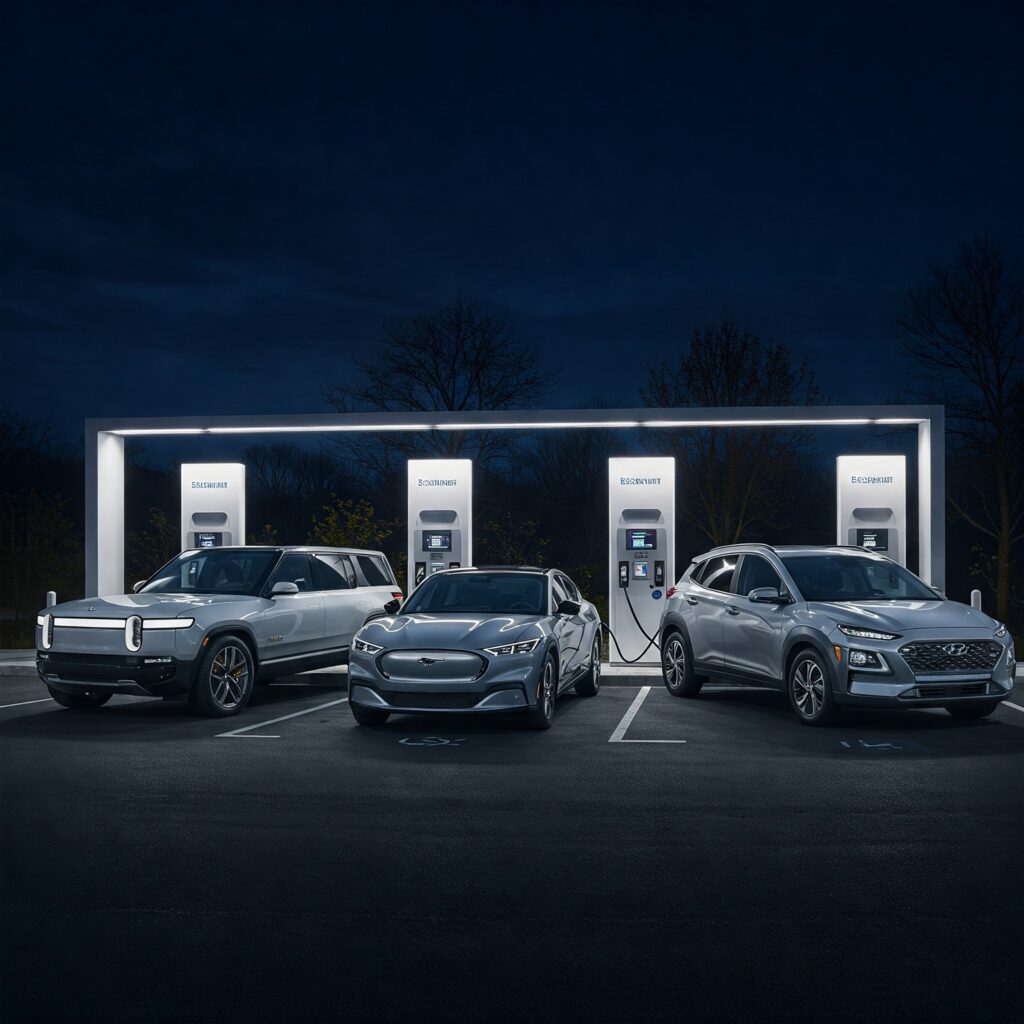
The surge came despite a turbulent year for the auto industry. Federal policy shifts rolled back the $7,500 EV tax credit and revised CAFE standards to favor gasoline vehicles, while tariff uncertainty pressured automaker margins and prompted many brands to refocus on near-term profits from trucks and SUVs. Charging companies, however, pressed ahead.
Momentum peaked in the fourth quarter, the strongest period on record for fast-charger deployment. Networks added 5,769 new ports between October and December alone, a 44% year-over-year increase, even as EV sales softened late in the year. That demand surge is already translating into usage, with charging sessions in January up 20% from a year earlier.
The result is a steadily improving driver experience: fewer broken or congested chargers and more reliable stations near food, restrooms, Wi-Fi, and other amenities. NACS ports also doubled to more than 2,200, NEVI-funded sites gained traction, and growth spread beyond traditional EV strongholds into states like Illinois, Georgia, South Carolina, Mississippi, and Maryland.
Public fast charging reached 141 million sessions in 2025, up 30% year over year, reflecting a new wave of EV buyers who rely on shared infrastructure rather than home charging. Challenges remain, including uneven geographic coverage, connector fragmentation, and lingering range anxiety, but the trajectory is clear.
Almost 100 new NEVI-funded EV charging stations came online in the U.S. last year, adding close to 500 new ports, according to Paren. That’s more than double the number of stations and about three times the number of NEVI-funded ports added in 2024.
States are going into higher gear commissioning and building these sites. According to EVstates.org, which tracks the progress of the NEVI program, 42 states have approval plans for 2026 and $632 million has gone out to charging companies to build EV chargers so far.
“There’s still a long road ahead,” Breton said. “But the EV industry isn’t dying. It’s growing, and 2026 will show just how far it can go.”
EVinfo.net’s Take: EV Adoption and EV Charging Will Keep Growing in the USA and Worldwide
Predictions of an electric vehicle slowdown have become a recurring headline, particularly in the United States. Yet the underlying data tells a different story. While growth rates may fluctuate year to year, EV adoption and the charging infrastructure that supports it continue to expand steadily, both in the U.S. and globally. What is happening now is not a retreat from electrification, but a transition from early adoption to long-term, large-scale deployment.
In the United States, EV sales growth has moderated compared with the post-pandemic surge, but the market continues to add new drivers every year. Automakers are broadening their lineups beyond premium models, introducing lower-cost vehicles, electric pickups, and SUVs aimed at mainstream buyers. At the same time, more consumers are entering the market without access to home charging, which is reshaping how and where charging infrastructure is built.
That shift is clearly visible in the rapid expansion of public fast charging. In 2025, the U.S. added a record number of DC fast-charging ports, even as foolish federal policy decisions and changing incentives created significant headwinds for automakers. The foolish and sudden cut of the federal EV tax credit cost Ford and GM billions of dollars in losses.
Charging networks, retailers, utilities, and automakers continued to invest, delivering larger, higher-powered stations with more reliable performance and better amenities. The result is a charging experience that increasingly resembles modern fueling, with predictable uptime and convenient locations.
Globally, the trend is even more pronounced. China remains the largest EV market in the world, with strong government support, aggressive domestic manufacturing, and dense urban charging networks. Europe continues to push electrification through emissions standards, fleet mandates, and urban air-quality regulations, while expanding high-power charging corridors across borders. Sales of fully electric cars outpaced petrol vehicles in the European Union for the first time in December 2025.
Emerging markets are also beginning to adopt EVs at scale, particularly for two- and three-wheelers, buses, and commercial fleets, where the economic case for electrification is already compelling. Global electric vehicle (EV) sales reached a staggering 20.7 million units in 2025, representing 20% year-on-year growth, according to new data from Benchmark Mineral Intelligence.
Standardization and technology improvements are accelerating this momentum. Higher-power chargers, improved vehicle efficiency, better battery thermal management, and more reliable software are reducing charging times and improving driver confidence. The gradual adoption of common charging standards, including the North American Charging Standard (NACS) in the U.S., is further lowering friction for consumers, even if a full transition will take time.
Importantly, EV adoption is no longer driven solely by early adopters or environmental motivations. Total cost of ownership, fuel savings, lower maintenance, and energy security are becoming central decision factors for households, fleets, and businesses. Utilities and grid operators are also becoming more sophisticated, using data and load management to integrate EV charging without compromising reliability.
Challenges remain. Charging coverage is still uneven, particularly in rural areas and parts of the Midwest. Affordability, grid upgrades, and consumer education continue to matter. But none of these obstacles are structural barriers to growth. They are implementation challenges that are already being addressed through investment, policy, and technology.
The long-term trajectory is clear. EV adoption is expanding, charging networks are scaling, and the ecosystem is maturing. Short-term market noise may obscure that reality, but the fundamentals are strong. In the United States and around the world, electric vehicles and the infrastructure that supports them are not slowing down. They are becoming a permanent and growing part of the global transportation system.
Autel Energy North America is one of the leading EV charging companies in this exciting transition.
Autel Energy Launches Maxicharger EV Charger With Integrated App-Free Credit Card Payments
Autel Energy has introduced its new MaxiCharger AC Single configuration for the U.S. market, now equipped with an integrated Nayax Uno Mini payment device. This enhancement enables drivers to make app-free credit card payments directly at the charger, streamlining the user experience. Designed to support rapid, large-scale AC charging deployments, the solution targets key sectors including destination, workplace, hospitality, fleet, and multi-family residential charging applications.
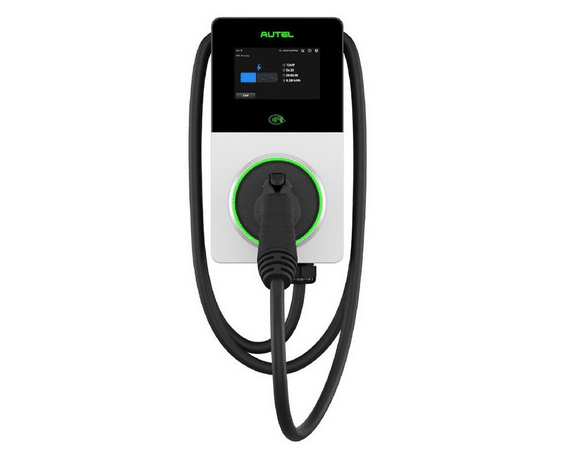
Autel Energy is a global provider of electric vehicle charging and smart energy solutions, offering a comprehensive portfolio of AC and DC fast chargers designed for commercial, fleet, workplace, and public charging applications. With a strong presence across North America and Europe, Autel combines high-performance hardware with cloud-based management software and a growing global service network to help operators deploy, monitor, and scale charging infrastructure reliably. The company’s focus on interoperability, ease of deployment, and long-term operational uptime positions Autel Energy as a key enabler of the expanding EV charging ecosystem.

Electric Vehicle Marketing Consultant, Writer and Editor. Publisher EVinfo.net.
Services