Rivian and Energyhub Partner on Managed Charging
Rivian and EnergyHub announced a strategic partnership to integrate utility-managed charging directly into Rivian vehicles nationwide. Through the collaboration, Rivian EVs will become controllable assets on EnergyHub’s distributed energy resource management system, giving more than 150 utilities the ability to dispatch charging flexibility during periods of grid stress. Latitude Media covered the news on February 24, 2026.
According to EnergyHub’s head of EV strategy, Jeff Huron, the initiative reflects a broader shift in how utilities view EVs. Rather than using them solely for traditional peak demand response events, direct OEM telematics integration enables continuous, feeder-level load shaping while ensuring drivers have sufficient range when needed. This approach supports constrained local grids by dynamically shifting charging loads.
Huron cited a January report from the Brattle Group, commissioned by EnergyHub, which found that managed charging could increase system hosting capacity by up to threefold. By optimizing when EVs charge, utilities may defer costly substation and transformer upgrades for years, effectively accelerating available grid capacity.
The partnership follows EnergyHub’s acquisition of EV telematics provider Bridge to Renewables, adding 12 automaker relationships and more than 500,000 connected vehicles to its platform. Direct OEM integrations reduce customer acquisition costs and improve data reliability compared to third-party data scraping.
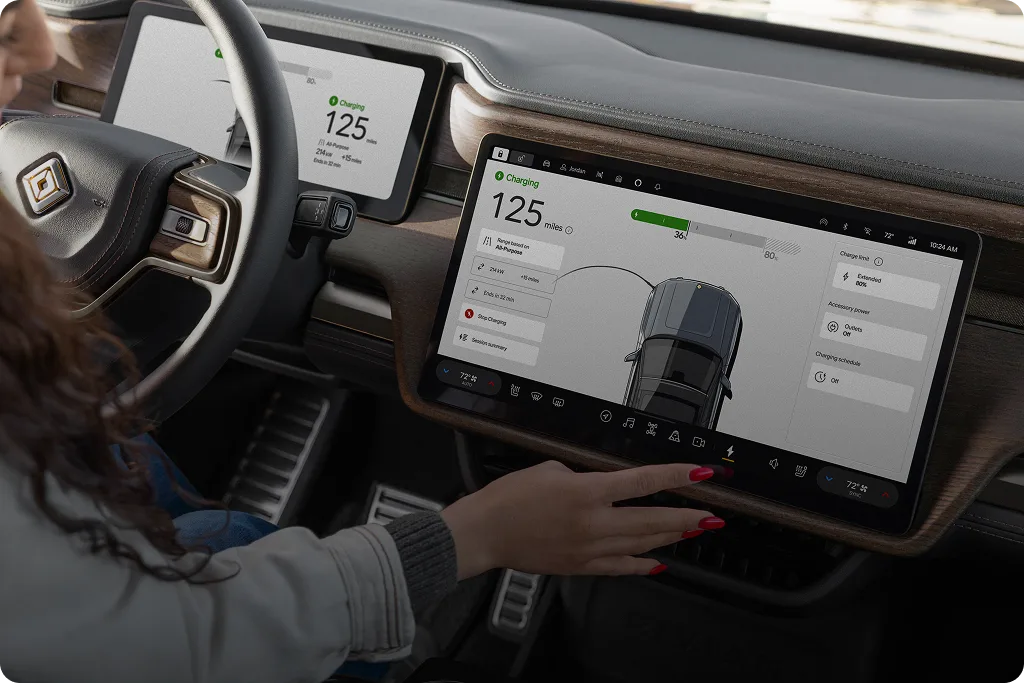
Rivian’s foray into smart charging kicked off via a partnership with WeaveGrid, announced last summer, which takes much the same approach as EnergyHub, focusing on helping drivers shift their charging to cheaper and cleaner times on the grid, giving utilities more visibility into how and when Rivian EVs are charging, and turning those electric vehicles into grid resources that can be actively put into virtual power plants (VPPs) rather than only moving toward off-peak charging.
While the collaboration does not yet include vehicle-to-grid capabilities, Huron described managed charging as foundational to future bidirectional programs. EnergyHub is already piloting V2G initiatives with commercial fleets and preparing a residential pilot with DTE Energy and General Motors.
Glowing Reviews of Exciting Rivian R2 Prototype
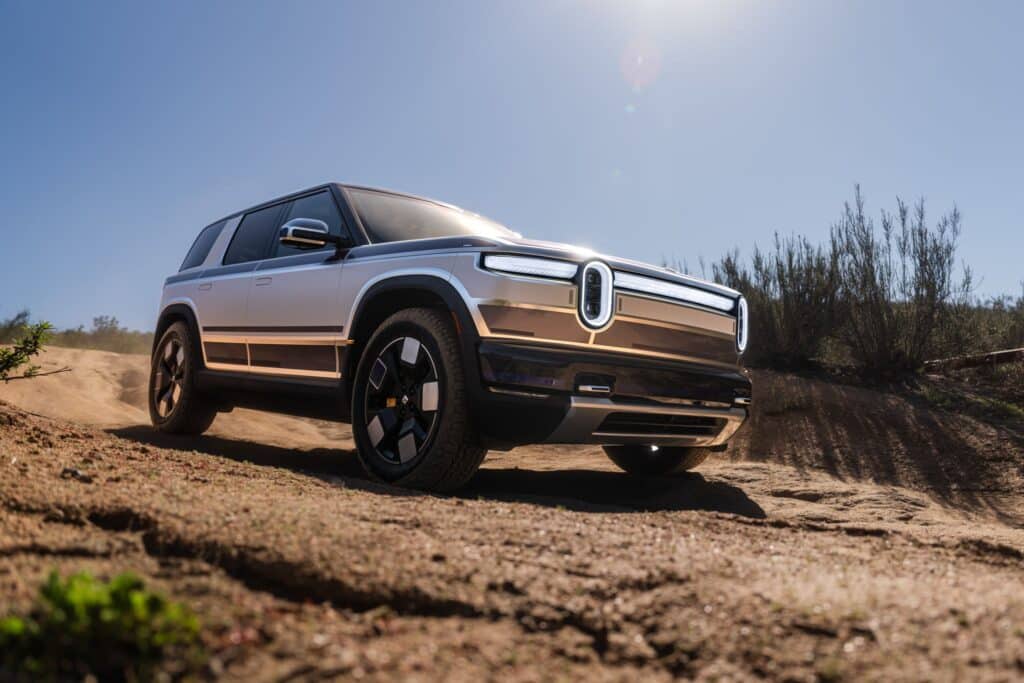
Rivian has unveiled early media drives of its upcoming R2, and first impressions from major automotive outlets have been overwhelmingly positive. The dual-motor, all-wheel-drive prototype is quoted at around 656 horsepower, 0 to 60 mph in roughly 3.6 seconds, and more than 300 miles of range. Reviewers consistently describe the R2 as delivering about 90 percent of the R1 experience at roughly half the expected starting price of around $45,000, positioning it as a potential sweet spot in the mainstream EV market.
EnergyHub Connects More Than 150 Utilities With Millions of Customer Devices
EnergyHub is a distributed energy resource management system provider that enables utilities to orchestrate flexible load across residential and commercial assets, including EVs, thermostats, batteries, and water heaters. Its platform connects more than 150 utilities with millions of customer devices, allowing grid operators to dispatch demand response, manage peak load, and shape distribution-level demand in near real time. By integrating directly with OEM telematics platforms, EnergyHub gives utilities secure, persistent access to vehicle charging data and control pathways, positioning EVs as dispatchable grid assets rather than passive loads.
The company has expanded its EV capabilities through more than 500,000 connected vehicles and relationships with a dozen automakers. This OEM-first strategy reduces customer acquisition friction and improves data integrity compared with third-party integrations. EnergyHub increasingly frames managed charging not as a standalone incentive program, but as foundational grid infrastructure that can increase hosting capacity, defer capital upgrades, and prepare utilities for eventual vehicle-to-grid deployment.