BYD’s New Flash Chargers and 2nd-Generation Blade Battery Leave Western EV Tech in the Dust
On March 5, 2026, China’s BYD unveiled its second-generation Blade battery, and the charging speed numbers are jaw-dropping.
10 to 70% in just 5 minutes.
10 to 97% in under 10 minutes.
And in brutal -22°F cold? 20 to 97% in about 12 minutes.
That last stat is the one that stands out. Cold weather has always been the enemy of fast charging, slowing electron transfer and killing efficiency. BYD appears to have cracked it.
To put it in real-world terms: a Denza Z9GT plugged in at 9% charged to 97%, adding 626 miles of range, in under 10 minutes. That is roughly the same time it takes to fill a gas tank.
This is no longer a future promise. BYD says the new battery is ready now, across 10 production models.
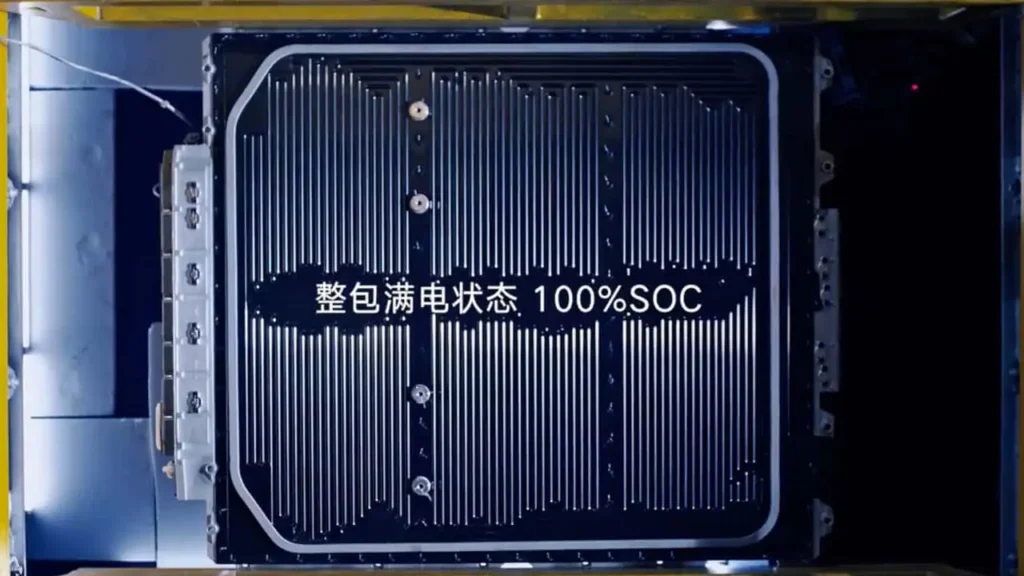
Safety is not an afterthought either. China now enforces the world’s toughest battery safety standards, requiring batteries to resist fire or explosion for at least two hours after a single cell enters thermal runaway. BYD’s new Blade battery passed multiple nail penetration tests without catching fire.
BYD just saw its steepest sales drop since the pandemic, with February sales falling 41%, due to the current chaos in China’s EV industry. But with technology this significant, a comeback looks very possible. The gap between EVs and gas cars just got a lot smaller.
BYD’s New Flash Chargers Make EV Charging as Quick as Getting Gas
A year ago, BYD blew minds with megawatt chargers delivering 1,000+ kilowatts, adding 250 miles of range in just five minutes. That apparently was not fast enough. BYD just unveiled its new Flash charging stations, capable of delivering 1,500 kilowatts of peak power, 1.5 megawatts, using 1,500 amps of current and a 1,000-volt architecture. For comparison, the fastest public chargers in the U.S. top out around 500 kilowatts, and even those are rarely available.
That is three times the charging speed. And the gap is growing. The design matches the ambition. Flash stations are arranged like a neighborhood gas station: drive in, charge fast, drive out. T-shaped towers feature lightweight “zero-gravity” charging guns and plug-and-charge functionality, so there are no apps, no payment fumbles, just power.
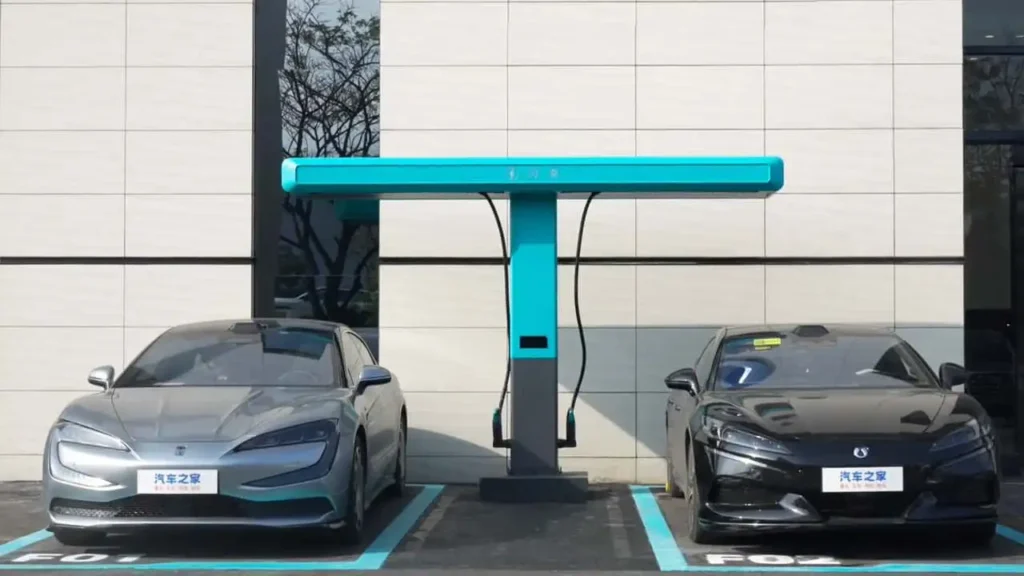
BYD has already built 4,200 Flash stations across China and is targeting 20,000 by end of year, putting a Flash charger within 3 miles of more than 90% of Chinese urban areas. The stations are also coming to Europe, Latin America, the Middle East, Africa, and Asia Pacific.
Grid strain is addressed too: on-site battery storage buffers peak demand and stores surplus renewable energy, a solution also gaining traction in North America. Meanwhile, U.S. tariffs were meant to protect the American auto industry. Instead they have created a widening technology gap, while Chinese automakers race into the future, American brands remain focused on gas trucks and profitable SUVs.
The US federal government seems content with staying in last place in the global EV race, which will devastate the US economy, but smart state leaders like California Governor Gavin Newsom are doing what they can to be a foil to that.
In California, pollution is down, and the economy is up. Greenhouse gas emissions in California are down 21% since 2000, even as the state’s GDP increased 81% in that same time period, all while becoming the world’s fourth largest economy. California leads the nation in EV adoption as of March 2026.
The most cutting-edge EV technology is not coming to American shores anytime soon. The charging revolution is happening. Just not here yet.

Electric Vehicle Marketing Consultant, Writer and Editor. Publisher EVinfo.net.
Services