Used EVs Are Booming in U.S. Market, Bolstered by Surging Wartime Fuel Costs
Used electric vehicle (EV) sales are booming in the USA. Surging fuel costs from the Iran war are causing more drivers to realize the many benefits EVs provide. One of those is protection from wartime price shocks.
Cox Automotive’s Q1 2026 Industry Insights and Sales Forecast Call, held March 25, 2026, reported that Americans purchased 93,500 used EVs in the first quarter, a 17% increase from Q4 2025 and nearly 12% above Q1 2025 levels. Used EV market share reached approximately 2.1%. Cox analyst Stephanie Valdez Streaty noted that while the segment remains relatively small, its growth trajectory is the more meaningful story.
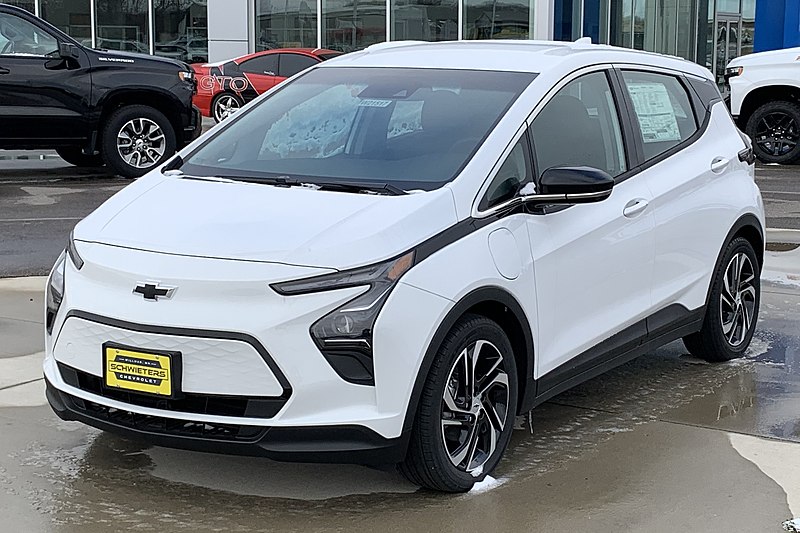
A widening selection of used models is driving that momentum. Where budget-conscious buyers once chose primarily among Chevy Bolts, Nissan Leaf hatchbacks, and Tesla Model 3s, the market now includes discounted BMWs, long-range Hyundais, and a broader mix of vehicles. Pricing has followed suit: 44% of used EV transactions in February fell below $25,000, and on a value-per-dollar basis, used EVs now compare favorably to comparable combustion vehicles. Used EV pricing has narrowed considerably, with the average used EV now priced within $1,300 of a comparable gas-powered vehicle.
Research from Recurrent, which tracks the used EV market, found that the average used EV priced between $20,000 and $30,000 carries roughly 33,000 miles and is a 2022 model year vehicle, while combustion vehicles in the same price range tend to have closer to 50,000 miles and be a year older.
Supply is expected to grow as off-lease EVs, including vehicles originally financed through the Inflation Reduction Act’s leasing provision, begin returning to dealerships in volume. Cox projects monthly lease returns will rise steadily to 240,000 over the next year, with approximately 20% of those, or nearly 50,000 vehicles per month, being electric.
High Oil and Gas Prices Could Outlast War With Iran, Staying High for Some Time After Conflict Ends
Elevated gas prices due to the Iran war represent an additional tailwind for used EV demand going forward. When fuel prices rise, used EVs benefit first, since they are immediately available and priced lower than new EVs. New EVs could definitely see increased sales like these as well from the conflict.
On March 24, 2026, The New York Times reported that as the conflict with Iran drove oil and gas prices sharply higher, the President characterized the economic fallout as temporary. “When this is over,” he told reporters, “oil prices are going to go down very, very rapidly.”
Economists and industry executives are less certain. Even if hostilities were to end soon, American families and businesses could be waiting weeks or months after that for meaningful relief at the pump. A ceasefire would ease the geopolitical pressure and likely help reopen congested Middle East shipping lanes, pushing prices down from recent highs, but the benefits would arrive gradually and may not be enough to reverse the broader economic damage already underway.
Markets reflected that skepticism by midday Tuesday. Brent crude hovered around $100 per barrel, up nearly 40% since the war began, and the national average for a gallon of gasoline crossed $3.97 according to AAA, roughly a dollar higher than a month ago.
Mark Zandi, chief economist at Moody’s Analytics, told the New York Times that a familiar energy industry saying to frame the outlook is: “Prices rise like a rocket, fall like a feather.” Even in a best-case scenario where the conflict ends quickly, Zandi estimated it would take six to eight weeks for oil production and shipments to normalize. At that point, Brent crude might settle around $80 per barrel, still above pre-war levels, with pump prices declining slowly behind it.
In addition to these concerns, another energy crisis could surface again at any time, without warning, when this conflict is over. This could even happen during the current crisis. Fuel costs could easily skyrocket again at the drop of a hat.
EVinfo.net’s Take: The New and Used EV Sales Boom Has Begun
Something has shifted in the car market, and it is not subtle. Electric vehicle sales, both new and used, are climbing fast, and a confluence of forces is making the case for going electric stronger than it has ever been. The stats are clear for the used EV market. For the new EV market, the sales stats will take some time to release. But we expect to see large increases in both.
The most immediate driver is fuel prices. The ongoing Iran war has sent gas prices surging, and drivers are feeling it every time they pull up to a pump. For anyone who has been on the fence about switching to an EV, that recurring sting is becoming impossible to ignore. When the math gets this obvious, behavior changes.
Electric-vehicles.com reported this week that GM Board member and former Tesla President Jon McNeill said that rising oil prices are already driving US consumers toward electric vehicles, despite policy-related uncertainty.
Speaking on CNBC‘s Squawk on the Street segment, McNeill pointed to research notes from Goldman Sachs and TD Cowen that flag a potential hardening of EV demand, a result of the current conflict in the Middle East, leading to elevated fuel costs.
The appeal of electric vehicles has never been just about fuel costs. EVs offer a fundamentally lower cost of ownership across the board. Fewer moving parts means less maintenance. No oil changes, no transmission service, no exhaust system repairs. Combined with cheaper per-mile energy costs even before fuel prices spiked, the total savings over the life of a vehicle are substantial. Add cleaner air in cities and neighborhoods, and the benefits extend well beyond the owner’s wallet.
There is also the bigger picture. Transportation is one of the largest sources of human-caused greenhouse gas emissions, and every EV on the road is a direct reduction in that output. Climate change is not a distant threat; it is reshaping weather patterns, coastlines, and ecosystems right now. Widespread EV adoption is one of the most scalable tools available for slowing that damage, and the current sales surge means more people are participating in that solution whether they think of it that way or not.
On the product side, the technology keeps improving. Nearly every new EV model arriving on the market is pushing the boundaries on range and charging speed. Anxiety about running out of charge, once a genuine barrier for many buyers, is becoming increasingly outdated as 300-plus mile ranges and ultra-fast charging become more common across price points.
For buyers watching their budgets, the options have never been better. The Nissan Leaf and the Chevrolet Bolt remain two of the most accessible EVs in North America, offering reliable electric driving at price points that make the switch achievable for a much wider range of households.
Energy Independence: Why Supporting EVs and Renewables Is a Vital National Security Issue
The ongoing tensions between the United States, Israel, and Iran in 2026 have renewed a debate that should never have gone quiet: how vulnerable are we when our transportation system runs on someone else’s oil?
The answer is very.
Every time a geopolitical crisis flares up in an oil-producing region, gas prices spike, supply chains wobble, and ordinary people feel it at the pump within days. This isn’t a coincidence; it’s a structural weakness baked into any economy that depends on imported fossil fuels to keep its cars and trucks moving. The cure isn’t stockpiling more reserves or negotiating better trade deals. It’s changing what our vehicles run on.
Electric vehicles, charged by electricity generated at home, break that dependency at the root. Wind turbines, solar panels, and hydroelectric plants don’t sit in politically unstable regions. They don’t travel through contested shipping lanes. They produce power locally, and that power can be stored, distributed, and used without anyone in a foreign capital having a say in the matter.
The grid itself becomes more resilient in the process. A decentralized energy system built on local generation, battery storage, and smart distribution doesn’t have the same catastrophic single points of failure that centralized fossil fuel infrastructure does. And increasingly, EVs aren’t just consumers of that grid; they can feed back into it. Vehicle-to-grid technology turns parked cars into emergency power reserves, capable of keeping homes, clinics, and emergency services running when the broader system comes under stress.

None of this is theoretical. The 1970s oil embargo showed exactly what happens when a nation’s mobility depends on the goodwill of foreign suppliers. Economies froze. Governments scrambled. Decades later, the underlying vulnerability remains, patched over but never truly fixed. EVs offer the fix.
There are economic benefits layered on top of the security ones. Money spent charging an electric vehicle stays domestic. It flows toward local utilities, renewable energy developers, grid workers, and charging infrastructure installers rather than overseas to oil exporters. That’s a meaningful shift in where wealth goes and who it employs.
Global EV adoption is accelerating regardless. Sales topped 20.7 million units in 2025, up 20% from the year before. Other nations are moving fast. The question for the United States is whether it leads that transition or gets left behind while clinging to an energy model that makes it weaker, not stronger.
Rolling back EV incentives and emissions standards, as the current U.S. administration has done, isn’t a neutral policy choice. It’s a decision to remain dependent, to keep sending energy dollars abroad, and to leave American drivers exposed to the next price shock that a distant conflict triggers. That’s not energy pragmatism. It’s a strategic own goal.
The personal and the patriotic align here more neatly than they usually do. Driving electric and generating your own solar power protects your household budget from oil market chaos while simultaneously reducing the national exposure that makes that chaos matter in the first place. In that sense, going electric isn’t just a consumer preference; it’s a form of infrastructure resilience, one driveway at a time.

Electric Vehicle Marketing Consultant, Writer and Editor. Publisher EVinfo.net.
Services