SRP’s Goal Is Enabling One Million EVs by 2035, Managing 90% of Charging Load, Reducing Need for New Infrastructure
Salt River Project (SRP) announced bold new plans, using distributed energy resources such as solar, batteries, and electric vehicles, to meet fast-growing electricity demand from data centers and more.
On April 17, 2026, Tom Cooper, Senior Director, Future System Assets and Strategy at Salt River Project, said on his Linkedin account: “One of SRP’s 2035 Sustainability Goals is enabling one million electric vehicles in our service territory by 2035, while managing 90% of EV charging load to reduce the need for new infrastructure. To achieve this goal and support the Valley’s continued growth, SRP is leveraging its microgrid and Distribution Enablement (DE) Lab to research the impact of EVs on the grid in real time – but without the cost and risks associated with making system-wide investments.”
Cooper continued: “In the case of EVs, we’re able to test and learn how new tech integrates with existing resources, and which technologies are going to offer long-term reliability and affordability for customers. Since the DE lab was designed to be flexible, SRP research teams can test a variety of different scenarios in real time, with added flexibility to look at the potential impact of future technologies as they evolve. This allows SRP to identify and pressure test new strategies to manage EV growth, helping us support customers today while preparing for the future.”
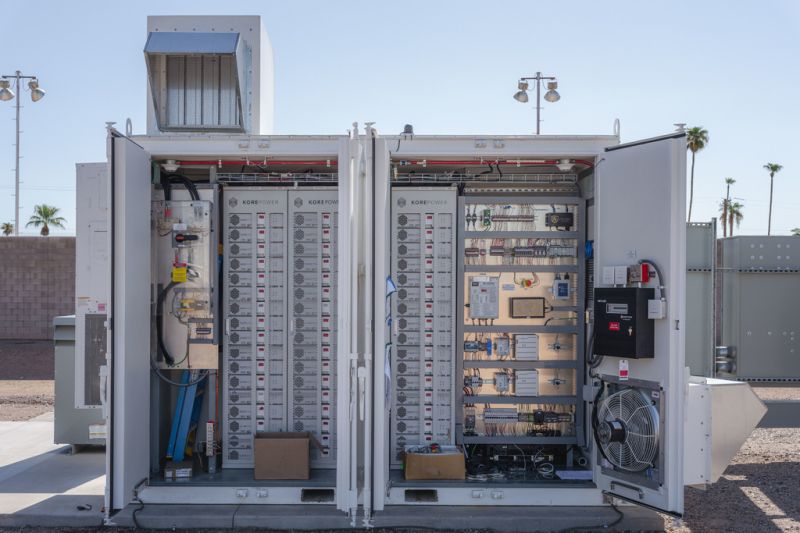
Salt River Project’s Plan Uses Distributed Energy Resources Such as Solar, Batteries, and Electric Vehicles
Salt River Project’s plan is to modernize the electric grid to meet growing energy demand, using distributed energy resources such as solar, batteries, and electric vehicles. The strategy focuses on building a more intelligent, flexible, and resilient grid while maintaining reliability and affordability for customers. The strategy also reduces the need for new infrastructure.
At its core, the plan emphasizes transitioning from a traditional one way power system to a dynamic, two way network that integrates customer owned energy resources. This shift enables better energy management, improved efficiency, and greater sustainability, while also enhancing grid resilience against outages and extreme weather.
The strategy is built around four main goals: improving grid planning, strengthening energy offerings for customers, advancing grid operations, and developing a skilled workforce. To achieve these goals, SRP has organized its efforts into six key initiatives: Advanced Planning, Advanced Operations, Sensing and Control, Interconnection Improvements, Research and Development, and Workforce Strategy.
These initiatives focus on deploying advanced technologies such as smart sensors, automated control systems, and data driven analytics to optimize grid performance. They also aim to streamline the process of connecting customer owned energy systems, making it easier and faster to adopt EVs, solar, and storage solutions.
A major priority is improving grid visibility and control through systems like advanced distribution management and distributed energy resource management platforms. These tools allow utilities to predict issues, prevent outages, and manage power flow more efficiently in real time.
The strategy also highlights the importance of innovation and workforce development. SRP is investing in research, pilot programs, and training to ensure both technology and employees are prepared for a rapidly evolving energy landscape.
Overall, the plan positions the grid as a more interactive and intelligent system that benefits both the utility and its customers. By enabling greater participation in energy generation and management, SRP aims to create a more sustainable, reliable, and cost effective energy future.
For more than 120 years, SRP has delivered essential water and power services to the Phoenix, Arizona metropolitan area, building lasting relationships and deep connections with its customers. SRP is headquartered in Tempe, Arizona.
EVinfo.net’s Take: V2G-Enabled EVs are Mobile Power Units
We commend SRP on its wise and commendable goals, using the power of EVs. Electric vehicles are often framed as a cleaner and cheaper way to get from point A to point B, but that view misses a much bigger opportunity. When EVs are equipped with vehicle to grid capability, they become active energy assets that can reshape how homes and the grid operate.
V2G has many benefits, including reducing the need for new infrastructure, as SRP’s goal states. Below are many more benefits.
V2G, (Vehicle-to-Grid), allows an EV to both draw power from and send power back to the grid or a home. This two way flow turns a parked car into a flexible battery that can be used when it matters most.
For owners, the financial benefits can be significant. Instead of only consuming electricity, a V2G enabled EV can store energy when rates are low and send it back during peak demand when electricity is more expensive. Utilities are increasingly exploring compensation models that pay EV owners for supporting the grid in this way, effectively turning vehicles into income generating assets.
V2G also plays a critical role in enabling more renewable energy. Solar and wind are variable by nature, producing energy when the sun shines or the wind blows, not always when demand is highest. EV batteries can absorb excess renewable generation and discharge it later, helping balance supply and demand while reducing reliance on fossil fuels. This fights global human-caused climate change, and reduces pollution, increasing health benefits.
There is also a resilience advantage. In a power outage, a V2G capable EV can provide backup electricity to a home, keeping essential systems running. At a broader level, fleets of connected EVs can support utilities during emergencies by stabilizing the grid and reducing strain on infrastructure.
From a national perspective, this technology strengthens energy security. By reducing dependence on centralized generation and imported fuels, and by distributing energy storage across vehicles, the grid becomes more decentralized and less vulnerable to disruption.
The bottom line is simple. EVs are not just transportation devices. With V2G, they become part of the energy system itself, saving money, supporting clean energy, improving resilience, and strengthening the overall grid.

Electric Vehicle Marketing Consultant, Writer and Editor. Publisher EVinfo.net.
Services