Heil and Autocar Deliver Fully Integrated Electric Refuse Truck to Recology in WA
Heil Environmental and Autocar Trucks will deliver a fully integrated electric refuse truck to Recology for service in Issaquah, Washington, introducing a purpose-built solution designed specifically for the demands of waste collection.
The vehicle pairs Autocar’s DC-64E electric chassis with a Heil refuse body that has been engineered as a single, cohesive system. Unlike retrofit approaches that adapt diesel platforms, this integration aligns the electric drivetrain, body controls, and hydraulic systems from the ground up. The result is a truck designed to optimize energy usage, operational efficiency, and long-term durability under real-world collection conditions.
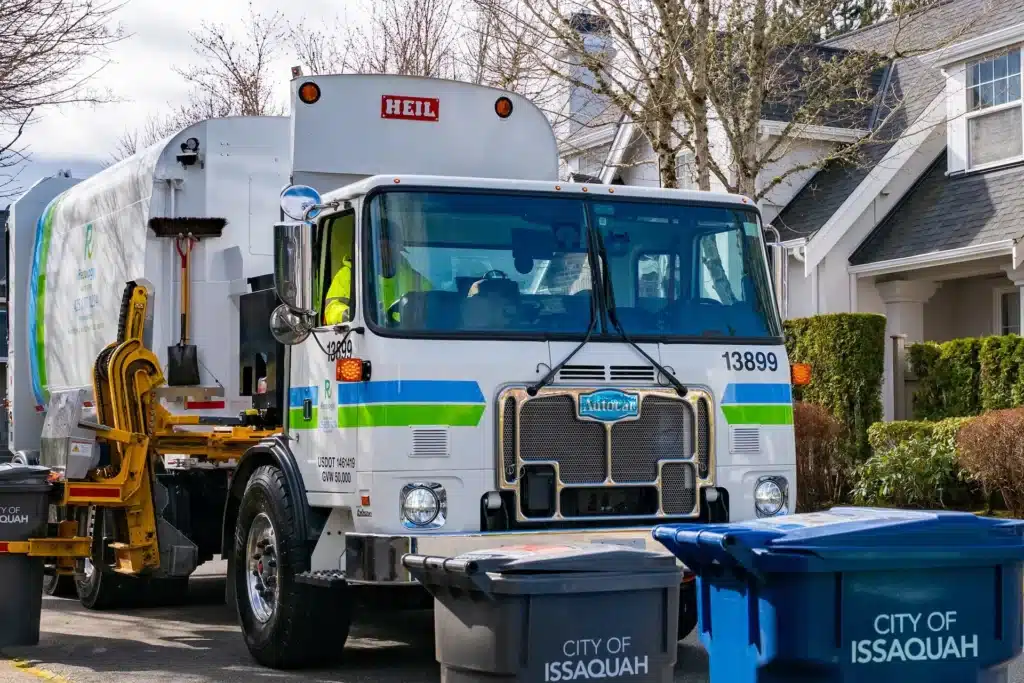
The electric refuse truck is equipped with a high-capacity battery system capable of supporting full-route operations, including repeated stop-and-go driving, compaction cycles, and route variability. The system also incorporates regenerative braking to capture energy during operation, improving overall efficiency and extending usable range throughout the workday.
Advanced control systems enable seamless communication between the chassis and body, allowing operators to manage key functions through a unified interface. In addition, onboard telematics and diagnostics provide real-time performance data, helping fleet managers monitor vehicle health, track energy consumption, and schedule maintenance proactively.
For Recology, the deployment represents continued progress toward reducing emissions across its fleet. Transitioning to electric refuse vehicles supports broader environmental goals while also delivering operational benefits such as lower noise levels and reduced maintenance requirements compared to traditional diesel trucks.
The collaboration reflects a broader shift in the refuse industry toward fully integrated electric platforms that are engineered for specific vocational applications. By designing the vehicle architecture holistically, manufacturers can better address the unique performance demands of waste collection while supporting fleet electrification at scale.
Recology is Pushing the Boundaries of Sustainable Resource Recovery
Recology has released its 2025 Sustainability Update, outlining progress across emissions reduction, resource recovery, workforce engagement, and community partnerships. The report reflects company-wide performance for the fiscal year ending September 30, 2024, and highlights ongoing efforts to advance circular economy goals while strengthening operational sustainability.
The company’s greenhouse gas emissions data for Scope 1 and Scope 2 has been independently verified by Cameron-Cole, LLC in accordance with ISO 14064-3 standards, the Greenhouse Gas Protocol, and The Climate Registry verification guidelines.
In a statement, CEO Salvatore M. Coniglio emphasized the company’s long-standing role in advancing sustainability, from its origins in early recycling efforts in San Francisco to launching one of the first curbside organics collection programs in the United States. Today, Recology operates a network of resource recovery facilities at a ratio of ten facilities for every active landfill, reinforcing its strategy to reduce landfill dependency.
In 2024, the company reported recovering 45% more material for reuse than it sent to landfills by weight. It also expanded organics processing capacity and increased access to recycling programs for hard-to-process materials across the communities it serves.
Looking ahead, Recology outlined several operational targets. By 2028, the company aims to power all facilities with 100% renewable or carbon-free electricity, transition 95% of its fleet and equipment to renewable or alternative fuels, and utilize 75% of captured landfill gas for renewable energy generation.
The report also highlights the company’s employee ownership structure, with 100% employee ownership and approximately 76% of shares held by field employees. Recology serves more than 1.1 million customers across California, Oregon, and Washington, and has reduced combined Scope 1 and 2 emissions by 23% since 2018. Additionally, recycling and composting operations avoided ten times more greenhouse gas emissions than the company generated through its own operations.
The update underscores Recology’s continued focus on scaling resource recovery, investing in infrastructure, and aligning operations with long-term climate and sustainability objectives.

Electric Vehicle Marketing Consultant, Writer and Editor. Publisher EVinfo.net.
Services