Why Today’s Gas Vehicles Are Remarkably Similar to the Horse Drawn Carriage
The modern debate between gasoline-powered vehicles and electric cars may seem like a product of the 21st century, but the same arguments were taking place more than 100 years ago. Concerns about driving range, charging infrastructure, battery technology, affordability, and consumer adoption have been part of the conversation since the earliest days of the automobile. When the first gas vehicles began making an appearance, there was a lot of anti-gas vehicle criticism by horse-drawn carriage owners at the time, which is now eerily similar to the arguments from EV critics.
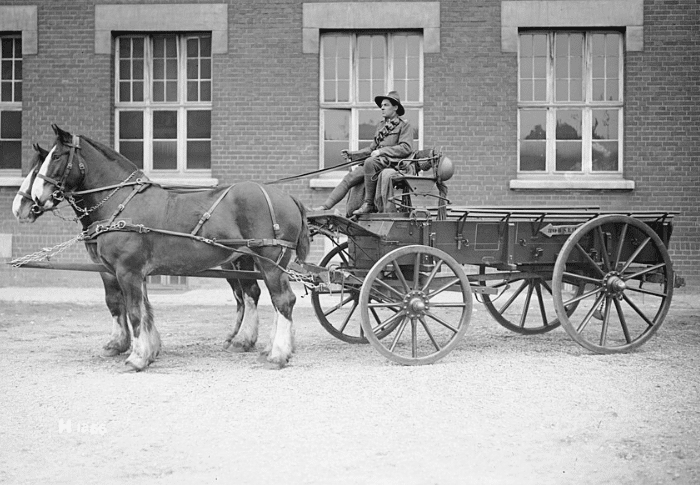
The Origins of Electric Vehicles
Electric vehicles trace their roots back to the early development of electric motors. One of the earliest examples appeared in 1827 when Hungarian inventor Ányos Jedlik used his experimental motor to power a small model vehicle. However, electric transportation did not begin gaining real momentum until the late 19th century.
The expansion of electric streetcars helped familiarize the public with electrically powered transportation. Technologies developed for trolleys, including motors, batteries, and control systems, could be adapted for use in personal vehicles, creating new opportunities for electric automobile development.
During this period, gasoline-powered cars were also emerging. Henry Ford’s 1894 Quadricycle impressed many observers, including Thomas Edison. While Edison later became one of the biggest supporters of electric vehicles, he recognized that gasoline cars had an important advantage: they carried their own fuel supply and were not dependent on nearby power sources.
The Electrobat and Early Electric Transportation
Among the most advanced electric vehicles of the era was the Electrobat, developed by Philadelphia innovators Pedro Salom and Henry Morris. The first version could travel between 50 and 100 miles on a charge and reach speeds of approximately 15 mph.
Despite these achievements, electric vehicles faced significant obstacles. Batteries were heavy, expensive, and difficult to maintain. Salom criticized gasoline vehicles for their emissions and complexity, arguing that electric cars were easier to operate and required far less mechanical expertise.
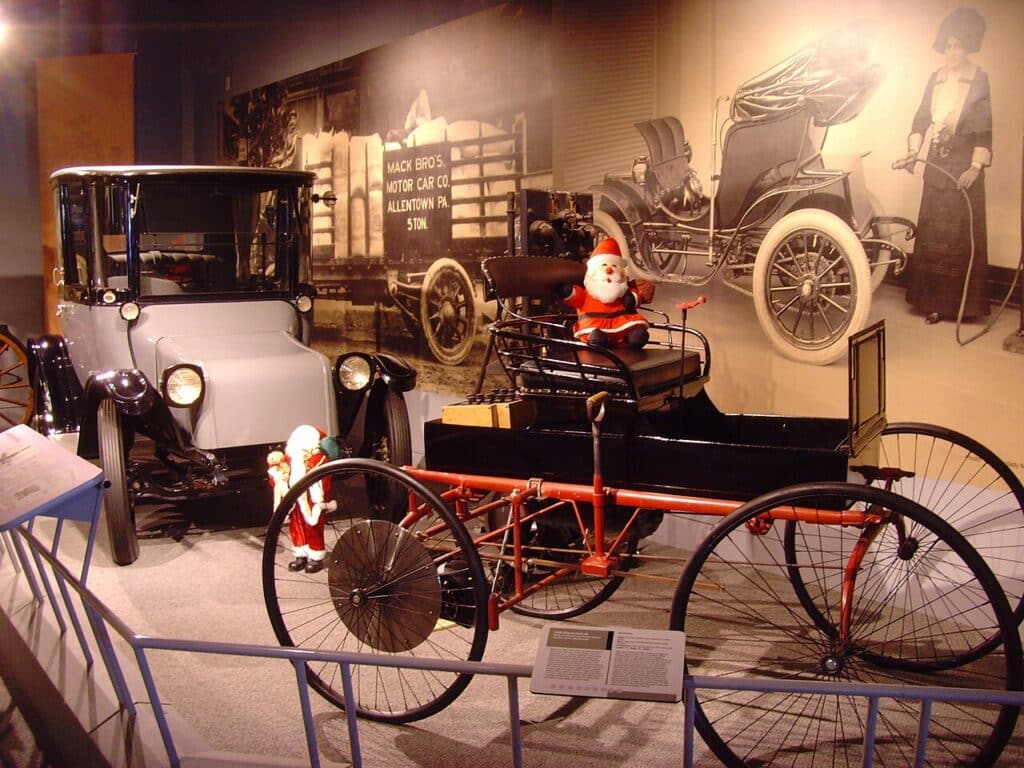

Infrastructure Challenges
A major obstacle for electric vehicles at the turn of the century was the lack of electrical infrastructure. Most homes did not yet have access to electricity, making charging difficult.
In 1900, author C.E. Woods proposed a nationwide network of public charging stations where drivers could recharge while eating or resting. The concept sounds remarkably similar to today’s highway charging networks, yet standardization issues and limited infrastructure prevented widespread implementation.
Battery maintenance was another major concern. Lead-acid batteries required frequent inspection, cleaning, and servicing. Owners often had to remove battery packs weighing hundreds of pounds for maintenance. Reliability issues further damaged public confidence, especially after electric taxi fleets experienced premature battery failures.
Edison Enters the Scene
As urban electrification expanded during the early 1900s, utility companies began viewing electric vehicles as a potential source of electricity demand. At the same time, Thomas Edison launched the Edison Storage Battery Company with the goal of developing a superior battery technology.
Expectations were high, but early designs suffered from leaks, explosions, and declining performance. After years of development, Edison introduced his nickel-iron battery in 1908. Although more expensive than conventional batteries, it offered greater durability and significantly reduced maintenance requirements.
The Rise of Detroit Electric
Improved batteries helped spark renewed interest in electric vehicles. Companies such as Detroit Electric and Baker Motor Vehicle produced increasingly capable models. Some electric cars could travel close to 100 miles and achieve speeds comparable to many gasoline vehicles of the period.
Manufacturers focused on urban customers, particularly affluent buyers. Electric vehicles were quiet, clean, and easy to operate. Unlike gasoline cars, they did not require dangerous hand-cranking to start. Wealthy consumers, including Clara Ford, embraced the technology.
Electric trucks also found success in commercial applications, offering advantages over horse-drawn transportation and many early gasoline-powered vehicles.
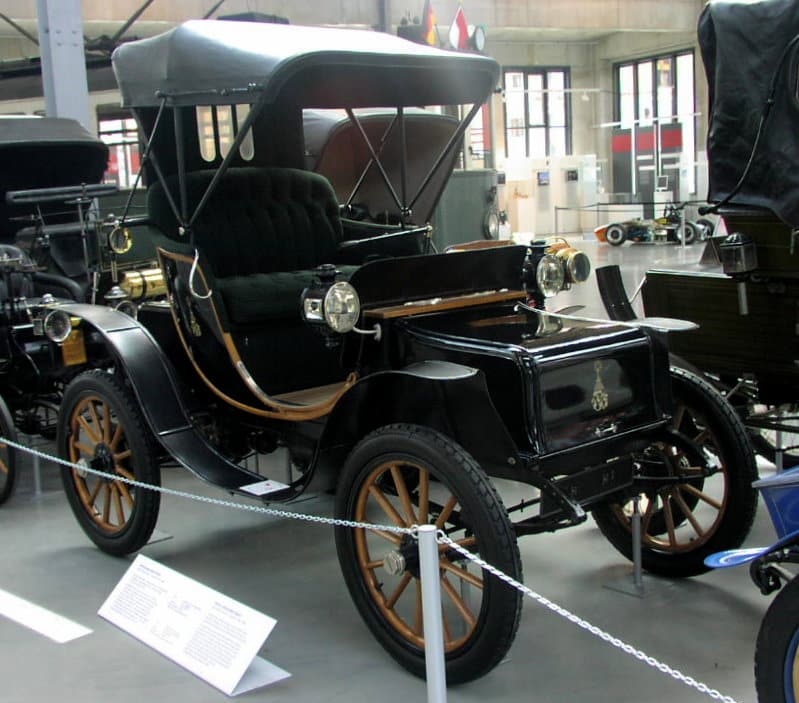

Ford Model T, Edison, and the Search for an Affordable EV
By the early 1910s, electric vehicle sales were increasing, though they remained far behind Ford’s rapidly growing Model T production.
The Ford Model T was produced by the Ford Motor Company from October 1, 1908, to May 26, 1927.
One of the biggest factors behind the decline of early electric vehicles was the overwhelming success of Ford’s Model T. The Model T transformed the automobile from a luxury product into something ordinary Americans could afford. Through mass production and assembly-line manufacturing, Ford dramatically reduced costs, allowing the Model T to be sold at prices far below most electric cars.
While electric vehicles appealed primarily to wealthy urban buyers, the Model T offered greater range, easy refueling, and the freedom to travel beyond city limits. As roads improved and Americans embraced long-distance driving, gasoline-powered vehicles became the practical choice for most consumers.
In 1914, Ford and Thomas Edison collaborated on an experimental electric vehicle project. Public interest was considerable, but technical challenges limited the program’s success. The vehicles never reached production, and the effort eventually ended without delivering a commercially viable electric car.
The Electric Starter Changes Everything
A major turning point arrived in 1912 when Charles Kettering introduced the electric starter. This innovation eliminated one of the biggest disadvantages of gasoline vehicles by removing the need for manual cranking.
As a result, interest in electric vehicles steadily declined. Most manufacturers disappeared after World War I. Detroit Electric remained one of the last survivors, producing vehicles until 1939.
Today’s Gas Vehicles Are Remarkably Similar to the Horse Drawn Carriage
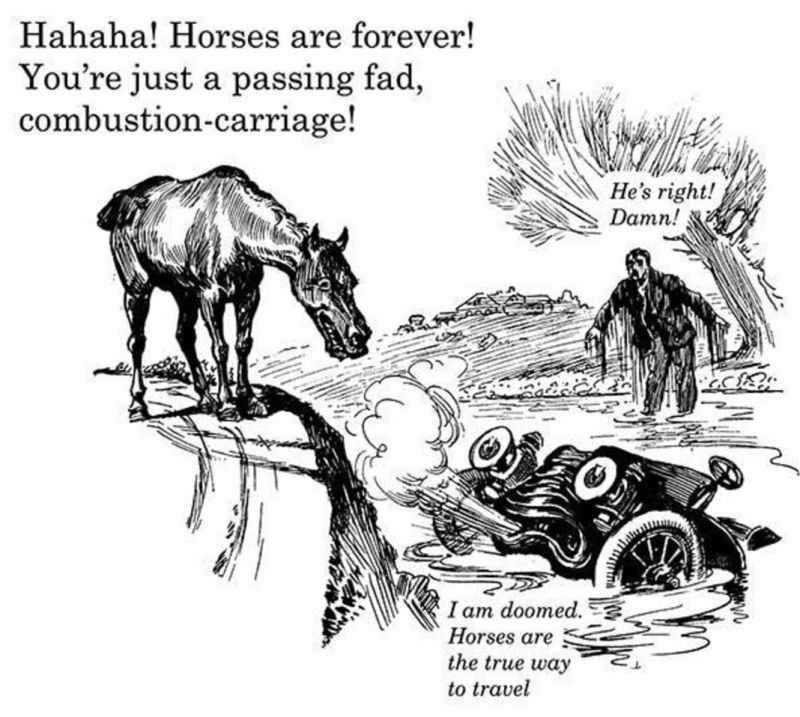
For many people today, gasoline-powered vehicles feel permanent, reliable, and familiar. Yet a century ago, horse owners felt exactly the same way about horse-drawn transportation. When automobiles first appeared, horse drawn carriage owners argued gas cars were too expensive, lacked infrastructure, were unreliable, couldn’t travel far enough, and were unnecessary because horses already worked well. Sound familiar?
Many of the objections raised against early automobiles mirror criticisms often directed at electric vehicles today. Horse owners questioned where drivers would find fuel, worried about breakdowns, and pointed to the limited number of roads suitable for cars. They argued that horses were proven technology with an established support network. In hindsight, those concerns were understandable, but they ultimately failed to stop a superior technology from gaining momentum.
Today’s gasoline vehicles occupy a position similar to horse-drawn carriages in the early 1900s. They dominate the transportation landscape, benefit from decades of infrastructure investment, and are deeply ingrained in everyday life. But as electric vehicles become more capable, affordable, and convenient, the advantages of the older technology become less compelling.
Just as automobiles gradually replaced horses despite early skepticism, electric vehicles are beginning to challenge the dominance of gasoline-powered transportation. The debate may feel new, but the pattern is surprisingly familiar.
Martin Sander, VW’s sales and marketing boss, agreed with my points. See “Cars are like horses: people will soon realise EVs are just better, claims VW boss,” on AutoExpress.
History Repeating Itself, EVs are Replacing Gas Cars Globally at an Astounding Rate
For decades, gasoline-powered vehicles dominated the automotive market. Electric vehicles experienced occasional revivals, but widespread adoption remained elusive, until now.
Today, many of the same debates continue. Range anxiety, charging availability, battery innovation, vehicle affordability, and consumer confidence remain central topics. Visionary entrepreneurs champion electric transportation much as Edison did more than a century ago.
On May 20, 2026, the IEA reported that after strong growth in 2025, global electric car sales are expected to rise again in 2026, reaching 23 million and accounting for close to 30% of all cars sold worldwide, according to the 2026 edition of the IEA’s annual Global EV Outlook.
In 2025, global electric car sales grew by 20% to exceed 20 million, meaning that a quarter of all new cars sold worldwide were electric, IEA’s report said.
The similarities between the early automotive era and today’s EV transition are striking.
Global electric vehicle sales continue to climb, and every new EV sold represents one less gasoline-powered vehicle entering the world’s roads. While internal combustion vehicles still dominate the global fleet, the momentum is clearly shifting. Markets such as China, Europe, and parts of North America are seeing record EV adoption, driven by improving technology, expanding charging networks, and a growing selection of affordable models.
The real story is not just how many EVs are being sold, but how quickly they are replacing future gasoline vehicle sales. Every consumer who chooses an electric car instead of a traditional gas-powered model reduces future fuel demand and tailpipe emissions. As EV market share grows, automakers are investing more heavily in electric platforms and scaling back development of combustion-only vehicles.
The transition will not happen overnight. Gasoline vehicles will remain on roads for many years, especially in developing markets. However, current EV sales trends show that the shift away from internal combustion is already underway. The question is no longer whether EVs will displace gasoline vehicles, but how quickly that transition will accelerate over the coming decade.

Electric Vehicle Marketing Consultant, Writer and Editor. Publisher EVinfo.net.
Services