Rolls-Royce EV Gets 18% More WLTP Range and 14% Faster Charging
The Rolls-Royce Spectre, the brand’s first all-electric model, has received a subtle but meaningful update. Visually, the Series II remains virtually unchanged, with identical bodywork carrying over, but beneath the surface, Rolls-Royce has implemented a series of technical refinements and efficiency upgrades.
Charging performance has improved, with total charging time reduced by 14%. While Rolls-Royce does not disclose revised peak charging figures, the pre-update Spectre was capable of 10–80% charging in 34 minutes at up to 205 kW under ideal conditions. With no stated increase in peak power, the improvement likely comes from an optimized charging curve that sustains higher rates for longer.
Range has also increased significantly, rising by 18% to 390 miles (628 km) under WLTP testing. This gain is attributed to improved efficiency, now rated at around 3.1 miles per kWh (20.2 kWh/100 km). Rolls-Royce also references “re-engineered battery cell technology,” though it has not confirmed whether the battery capacity has changed from the outgoing pack, which was approximately 120 kWh (102 kWh usable).
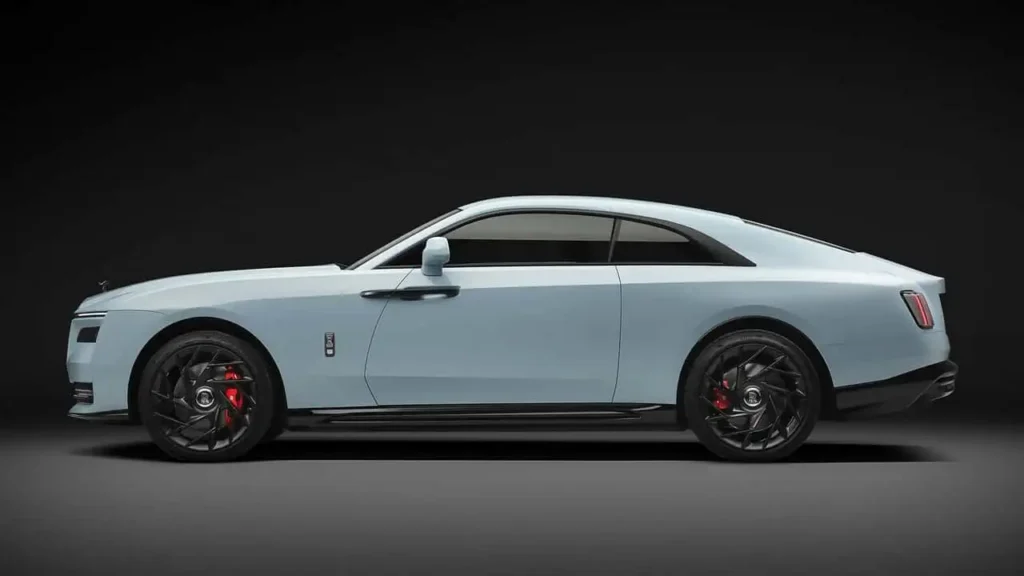
Performance gains are reserved for the Black Badge variant. Output rises to 670 horsepower in Infinity Mode, up from 592 hp, while torque increases to 811 lb-ft (1,100 Nm) in Spirited Mode, compared with 748 lb-ft (1,015 Nm) previously.
Externally, the design remains unchanged, but the Black Badge version introduces an “Iced Matte Black” treatment across exterior trim elements, including the grille surround, bumper accents, side details, door handles, and Spirit of Ecstasy mascot, while retaining polished grille vanes. A new 23-inch wheel design is also offered, with both part-polished and fully polished options, alongside a unique Black Badge wheel variant finished to match the darker exterior theme.
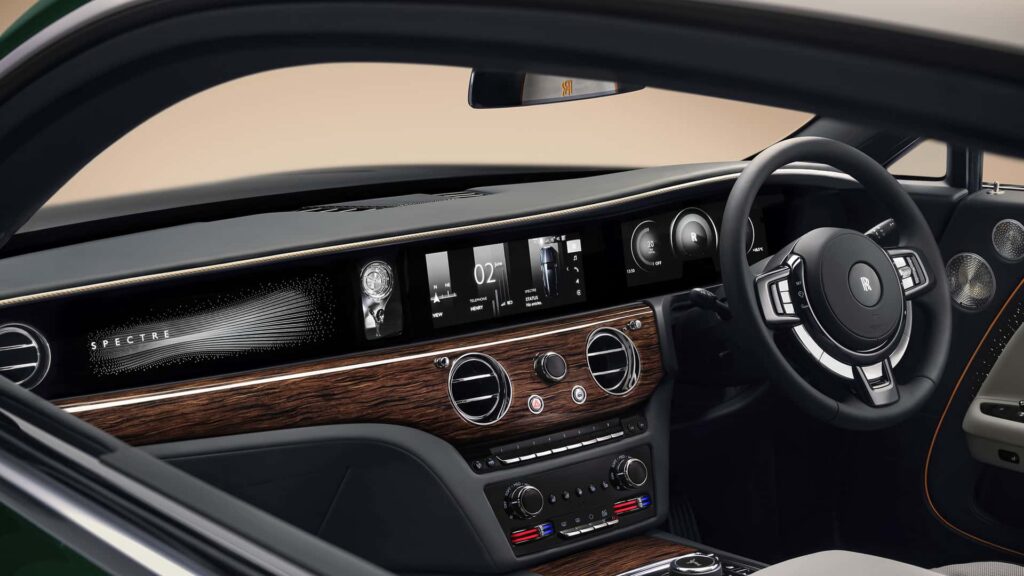
Inside, the updates are more noticeable. The cabin gains new leather options, updated textiles, revised veneers, and refreshed dashboard treatments. A new illuminated dashboard motif, comprising 8,108 individually lit points arranged in a directional wave pattern, adds a bespoke visual signature, while the clock has been redesigned with an aviation-inspired aesthetic, featuring cast metal hands and simplified graphics.
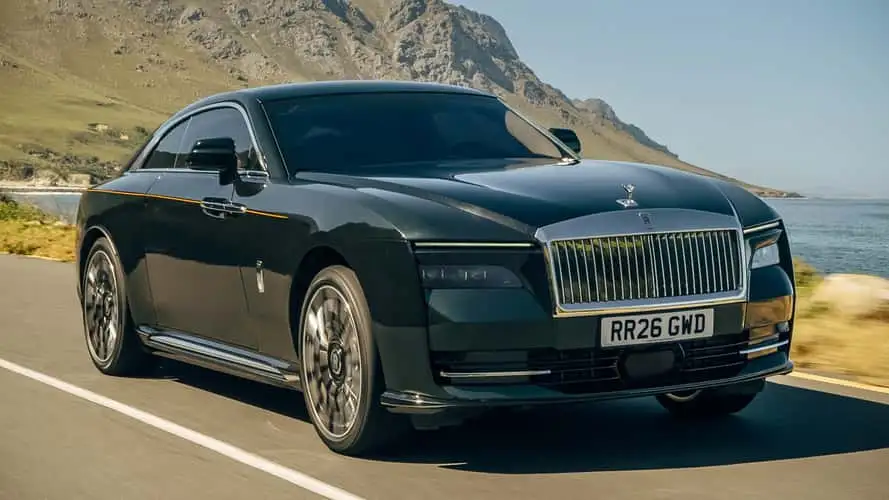
Rolls-Royce also notes that the Spectre has already become a commercial success, ranking as the brand’s second-best-selling model after the Cullinan SUV and reportedly outselling the Ghost sedan. The company highlights real-world usage patterns as well, with some vehicles exceeding 30,000 miles (50,000 km), though average mileage remains closer to 4,000 miles (6,500 km). Most Spectres are reportedly charged at home and driven primarily for personal use, often by a single occupant.
While Rolls-Royce does not disclose total sales figures, the strong uptake suggests that ultra-luxury buyers are embracing electrification when it is integrated without compromising brand identity. The Spectre’s success stands in contrast to more controversial EV launches elsewhere, underscoring that in this segment, continuity of experience can matter more than radical reinvention.
EVinfo.net’s Take: Low Cost and Used EVs Drive Adoption More Than Luxury Models
I’m impressed for sure with this all-electric, highly expensive marvel, but you won’t see me driving one, not on my unpredictable, young startup budget. Affordable EVs are for me, as well as for EV adoption.
Electric vehicle adoption is often associated with premium brands and high-end technology, but mass-market growth is being driven primarily by affordability and the used EV market.
Luxury EVs play an important early role. They fund innovation, showcase new technology, and help normalize electric drivetrains. However, they represent a small share of total buyers and remain out of reach for most consumers.
The real expansion comes from lower-cost new EVs and, increasingly, used electric vehicles. As more affordable models enter the market and early leases cycle out, prices drop to levels that compete directly with gasoline cars on total cost of ownership. This is where adoption broadens beyond early adopters into mainstream households.
The used EV market is especially important. It provides lower entry prices, making EV ownership accessible to buyers who cannot afford new models. At the same time, improving battery longevity data is reducing concerns about degradation and resale value. Used EV sales rose 17 percent year-over-year in April in the U.S.
Infrastructure growth, including home and public charging, further supports this shift by reducing ownership friction, particularly for lower-cost vehicles.

Electric Vehicle Marketing Consultant, Writer and Editor. Publisher EVinfo.net.
Services