Chevy’s Patriotic Red, White and Blue Bolt EV Display Highlights BEVs as America’s Best Vehicle Choice
On July 10, 2026, Michael Youngs, Plant Director at GM’s Fairfax facility, posted to Linkedin a compelling story about GM’s recent Chevrolet Bolt electric vehicle (EV) display for America’s Independence day celebrations.
Youngs said: “I’ve worked at many manufacturing facilities over my 30 years with General Motors, but I’m not sure I’ve ever been prouder than I am today to lead the GM Fairfax Assembly Plant.
In the weeks leading up to the July 4th holiday, our team did something special. We adjusted production to build only red, white and blue Chevrolet Bolts — and thanks to Fairfax’s unique batch-build process, the plant was filled with patriotic colors for days.
Then our engineering team helped bring the idea to life in an even bigger way, creating a massive American flag in our shipping yard using 350 parked Bolts. For a city welcoming visitors from around the world to enjoy the World Cup soccer event, it was a powerful way to show our pride in our team, our product and our country.
What makes me proudest is not just the final result, but how this team made it happen. Employees adjusted schedules, coordinated parts, and executed something truly memorable — all without wavering on quality.
That’s Fairfax. That’s GM. And that’s the kind of teamwork that makes all the difference.
Thank you to everyone at Fairfax who helped make this happen. I’m proud to lead this plant, and even prouder of the people who make it great.”
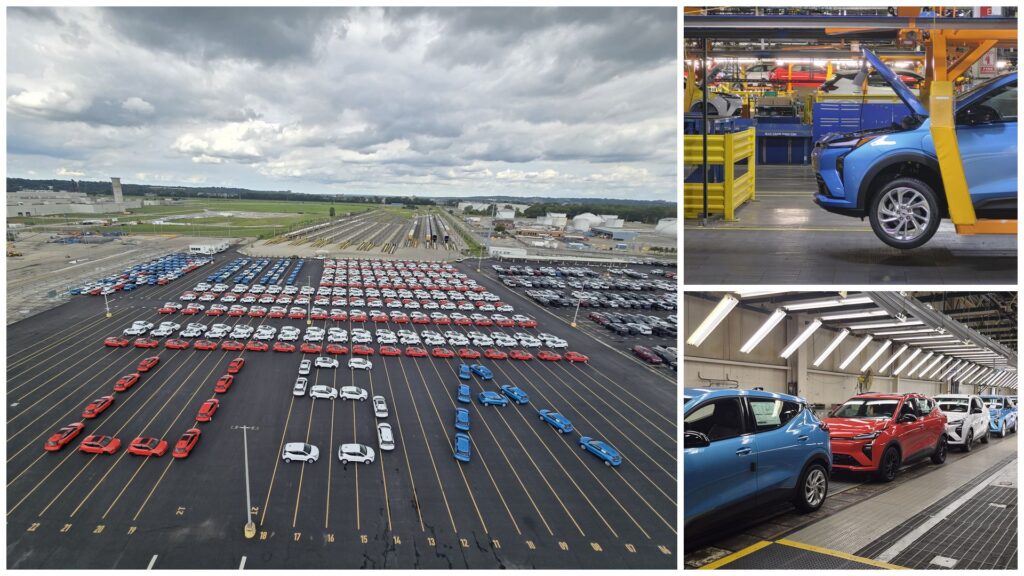
EVinfo.net’s Take: Why BEVs are America’s Best Choice of Vehicle
Kudos to GM for this compelling display, highlighting why BEVs are America’s best choice of vehicle. On December 25, 2025, EV Charging Stations, Brought to you by State of Charge, reported that the new, exciting 2027 Chevrolet Bolt will charge more than twice as fast as previous Bolt models, based on their studies. The next-generation Bolt is positioned as a more affordable entry-level EV, starting below $30,000, while delivering major improvements in DC fast-charging performance and adopting a North American Charging Standard (SAE J3400) port.
As a patriotic American, I’m dismayed by the many mistakes of the current federal administration.
Since January 2025, a concerning pattern has emerged in federal transportation and environmental policy. Instead of accelerating the transition away from fossil fuels, the U.S. administration is removing incentives and loosening standards that protect public health and the climate. These decisions are not minor regulatory adjustments. They have decreased EV adoption, which is increasing harmful smog, worsening air pollution, undermining climate progress, and costing drivers more money over time.
Recent geopolitical events, including conflict involving Iran and growing instability in global energy markets, serve as another reminder of how deeply the world remains tied to oil. For decades, oil has shaped foreign policy, fueled conflicts, and exposed economies to price shocks that ripple through households and businesses. The solution is increasingly clear: electrify transportation and power it with renewable energy.
Electric vehicles offer benefits that go far beyond reducing tailpipe emissions. They represent a major public health opportunity. Transportation remains one of the largest sources of air pollution in the United States, contributing to asthma, heart disease, respiratory illnesses, and premature deaths. Unlike gasoline and diesel vehicles, EVs produce zero tailpipe emissions, helping improve air quality in cities, ports, and freight corridors where pollution often impacts vulnerable communities the most.
The economic advantages are equally compelling. EVs are significantly more efficient than internal combustion vehicles, converting far more energy into motion. Drivers typically spend less on fuel and maintenance, while businesses operating electric fleets can reduce operating costs over time. As battery prices continue to decline and charging infrastructure expands, the financial case for EV adoption grows stronger every year.
Perhaps the most overlooked benefit is national security. The United States still spends enormous resources protecting global oil supply routes and navigating geopolitical risks tied to petroleum-producing regions. Oil price spikes caused by wars, political instability, or production cuts can quickly impact American consumers. Electricity, by contrast, can be generated domestically from a diverse mix of sources, including solar, wind, hydroelectric, and geothermal power.
When EVs are paired with renewable energy, the benefits multiply. Solar and wind energy are not subject to global commodity markets, foreign embargoes, or military conflicts. Every rooftop solar system, wind farm, battery storage project, and electric vehicle reduces dependence on imported fuels and volatile oil markets. Instead of sending billions of dollars overseas for petroleum, more energy dollars stay within local communities and support domestic jobs.
The transition to EVs is not just an environmental strategy. It is a public health strategy, an economic strategy, and a national security strategy. The lessons from global oil market disruptions are becoming increasingly difficult to ignore. America has the technology to reduce its dependence on oil. Accelerating the adoption of EVs powered by clean, domestically produced renewable energy is one of the most effective ways to build a healthier, more resilient, and more secure future.

Electric Vehicle Marketing Consultant, Writer and Editor. Publisher EVinfo.net.
Services