Clean Motion’s EVIG Shows Why Smaller Electric Vehicles Could Transform Urban Deliveries
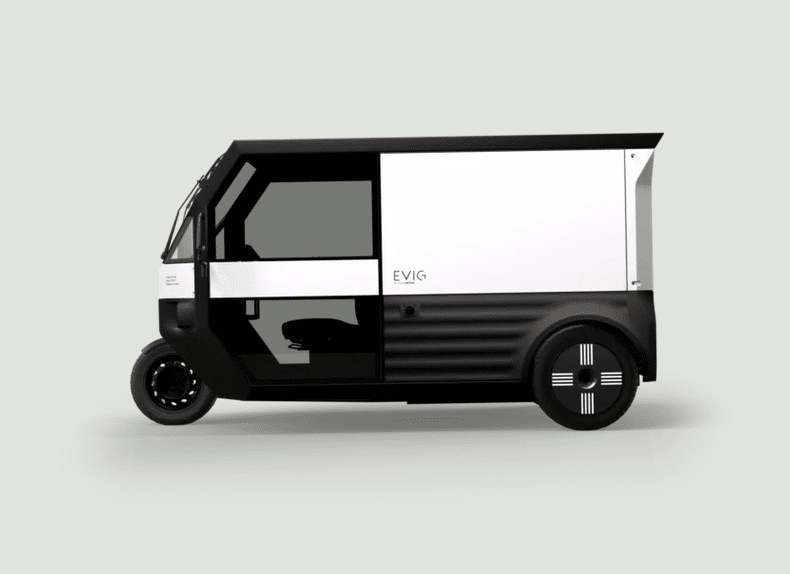
Electric commercial vehicles are getting larger, more powerful, and more expensive. Swedish company Clean Motion is taking the opposite approach with EVIG, a lightweight three-wheeled electric cargo vehicle designed specifically for city logistics. Instead of trying to replace every delivery van, EVIG focuses on the urban trips that make up a significant portion of last-mile deliveries, where large vans are often carrying relatively small loads through congested streets.
The vehicle was developed around one core principle: energy efficiency. Weighing approximately 350 kg, EVIG consumes just 0.9 kWh per 10 kilometers, making it roughly five times more energy efficient than a conventional electric passenger car. That efficiency comes from its lightweight construction, compact size, and low aerodynamic drag rather than relying on an oversized battery.
Unlike most commercial EVs, EVIG also incorporates solar power directly into its design. A roof-mounted solar array helps recharge the battery throughout the day, reducing dependence on charging infrastructure while extending operating range. In ideal conditions, the system can generate approximately 570 watts of power, helping delivery fleets reduce charging frequency and operating costs. The vehicle is also compatible with standard Type 2 charging when additional charging is needed.
The cargo-focused design offers up to 2.3 cubic meters of storage with a payload capacity of 300 kg, making it suitable for parcel delivery, postal services, food distribution, facility maintenance, and municipal operations. Despite its compact footprint of just 1.4 meters wide, EVIG is equipped with modern fleet features including over-the-air software updates, geofencing, remote diagnostics, smart key functionality, and fleet management integration.
Performance is intentionally tailored for city driving rather than highways. The vehicle reaches a top speed of 60 km/h, offers a driving range of about 100 km with its standard 10 kWh battery, and can be fully charged in approximately four to eight hours depending on the charging equipment used. As an L5e three-wheel vehicle, it is designed specifically for dense urban environments where maneuverability and parking are often more valuable than outright speed.
Clean Motion has continued to refine the platform since its launch. The company received European Whole Vehicle Type Approval in 2024, allowing EVIG to be sold throughout the European Union, Norway, and Switzerland. Production has since begun, and the company has expanded the platform into specialized applications, including a funeral transport vehicle and battery-swapping pilot projects for commercial fleets.
One of the latest developments is the introduction of two optional upgrades. The Solar+ package adds deployable solar panels integrated into the cargo compartment, increasing solar output by as much as 80% compared with the standard roof. Under favorable sunlight, the expanded array can generate power at roughly the same rate as plugging into a wall outlet. Clean Motion also introduced a Range+ option that extends driving range to as much as 150 km for customers with longer delivery routes.
Stefan Janols, VP of Sales and Marketing at Clean Motion, said: “We are in a prolonged launch phase and are building up a network of retailers around Europe. The company has no current plans for entering the U.S., but we believe it would be perfect for many of the southern states with an abundance of sunshine!”
EVinfo.net’s Take: EVIG’s Concept Would be Very Useful in the USA
While EVIG was designed for European cities, its concept is equally relevant in the United States. The rapid growth of e-commerce has dramatically increased the number of last-mile delivery vehicles on urban streets, even though many trips involve relatively small packages that do not require a full-size cargo van.
A lightweight electric cargo vehicle like EVIG can reduce energy consumption, ease traffic congestion, simplify parking, and lower operating costs for delivery fleets. It is particularly well suited for dense downtown areas, university campuses, airports, corporate parks, and neighborhoods where frequent stops and short routes are the norm. As more U.S. cities pursue emissions reductions and seek to improve urban mobility, purpose-built electric cargo vehicles could help fleets complete deliveries more efficiently while reducing their environmental impact.

Electric Vehicle Marketing Consultant, Writer and Editor. Publisher EVinfo.net.
Services