Blue Bird’s Vision Electric School Bus Named ‘Coolest Thing Made in Georgia’
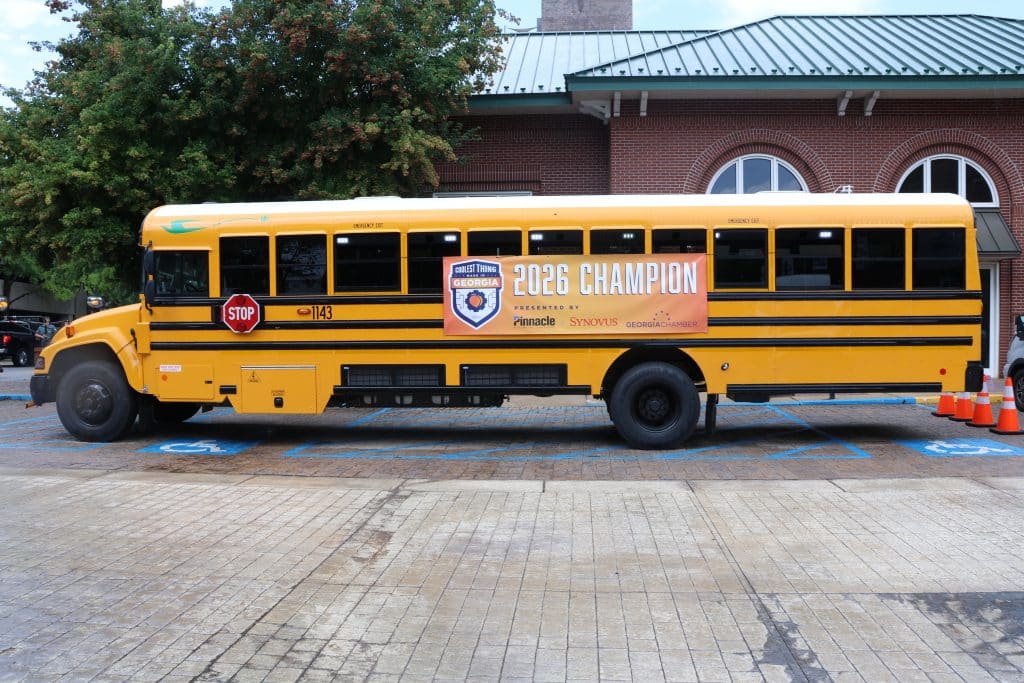
On August 5, 2026, Blue Bird Corporation reported it has earned the title of “The Coolest Thing Made in Georgia” at the Georgia Chamber’s annual Congressional Luncheon held at The Classic Center. The winner was determined through a public social media bracket competition that featured products from manufacturers, makers, and creators across the state.
Blue Bird received the recognition for its Vision Electric school bus, which is manufactured in Fort Valley, Georgia. The company has been part of Georgia’s manufacturing industry for nearly a century and has become a leader in low- and zero-emission student transportation. Blue Bird sells more alternative-fuel school buses than any other manufacturer, with propane, natural gas, and electric models accounting for the highest percentage of non-diesel school buses in the industry.
“We’d like to thank the Georgia Chamber and all of the voters for being named ‘The Coolest Thing Made in Georgia’ for our zero-emissions electric school bus. This recognition reflects years of innovation, dedication and a shared belief that student transportation can be safer, cleaner and, yes, apparently cooler than we ever imagined,” said John Wyskiel, Blue Bird’s president and CEO.
Founded in 1927, Blue Bird designs, engineers, and manufactures school buses with a focus on safety, reliability, and durability. The company has delivered more than 25,000 propane-, natural gas-, and electric-powered school buses and continues to advance cleaner transportation solutions for school districts across North America. Each day, approximately 25 million children ride school buses, making them the nation’s most trusted form of student transportation.
Why Electric School Buses Are Cool and Good for Students, Communities
Electric school buses are very cool.
But they offer benefits that go far beyond replacing expensive, volatile, polluting diesel with clean and cheap electricity. By eliminating tailpipe emissions, they improve air quality around schools and in neighborhoods, helping reduce students’ exposure to harmful pollutants. They also provide a quieter, smoother ride, creating a more comfortable environment for both students and drivers. Many drivers prefer electric buses because of their instant torque, reduced vibration, and simpler operation.
Electric buses also give students firsthand exposure to clean transportation technology, helping them understand the role electric vehicles can play in reducing emissions and combating climate change. For school districts, lower fuel and maintenance costs can reduce operating expenses over the life of the vehicle, freeing up resources for other educational priorities.
When equipped with vehicle-to-grid (V2G) technology, electric school buses provide even greater value. See EVinfo.net’s report about a recent event in New York City, where the NYCSBUS team demonstrated the potential of vehicle-to-grid (V2G) technology in a creative way by using an electric school bus to power a SnoKone machine at a summer gathering during the unveiling of the Electric School Bus (ESB) Mural at the NYCSBUS Zerega Avenue depot.
The large batteries of electric school buses can send electricity back to the grid during periods of high demand, helping utilities improve grid reliability while creating new revenue opportunities for school districts. During power outages, they can also supply emergency backup power to schools, shelters, and other critical facilities, making electric school buses valuable community assets as well as student transportation.
EVinfo.net’s Take: EV School Buses Are COOL
EV school buses transport our children, our most precious cargo. We shouldn’t be exposing the children and school staff to noise and pollutants with dirty, loud, polluting diesel buses that cost schools more money.
Encourage your school board to consider switching to EV school buses.
EV school buses and charging bring jobs and economic growth to communities, for example Blue Bird’s facility in Fort Valley, Georgia.
Camber Charging Leads School Bus Charging
Camber Charging is a leader in school bus charging. I had the honor of working with Chris Thorson and the stellar team.
Electric school bus adoption is accelerating as school districts gain access to funding programs that can help offset the cost of buses and charging infrastructure. Camber Charging notes that more than 1,500 U.S. school districts have committed to nearly 14,000 electric school buses. The EPA’s $5 billion Clean School Bus Program has awarded nearly $2.8 billion to more than 1,200 districts, while states and utilities are adding grants, rebates and other incentives. California’s Zero-Emission School Bus and Infrastructure program, for example, offers $500 million for electric buses and charging stations. Combining federal, state, local and utility funding can make fleet electrification more financially achievable for school districts.
Charging infrastructure is just as important as purchasing the buses. Camber recommends involving the local utility early to determine available electrical capacity, required grid upgrades and potential incentives or make-ready programs. Districts should also design charging systems for future expansion rather than only their initial fleet, while smart charging software can stagger charging, reduce peak demand costs and ensure buses are ready for their routes. Level 2 and DC fast charging can be selected according to route requirements, while modular and overhead charging systems can reduce installation costs.

Electric Vehicle Marketing Consultant, Writer and Editor. Publisher EVinfo.net.
Services