Electric Vehicles Save New Zealand $90 Million in Oil Imports Amid Fuel Crisis
Electric cars, trucks and buses are reducing New Zealand’s dependence on imported fossil fuels, saving the country hundreds of millions of dollars since the beginning of 2024, according to a Newsroom analysis.
As fuel prices surge, the economic value of that shift is becoming increasingly significant. The transport sector is consuming more electricity, but every three kilowatt-hours used to charge an electric vehicle represents roughly one less litre of oil that New Zealand needs to import.
Before the current fuel crisis, EVs were saving New Zealand approximately $10 million a month in petrol and diesel imports. During the three months through June, however, monthly savings increased to more than $17 million as fuel prices climbed.
Newsroom’s analysis found that electric vehicles saved New Zealand $119 million in oil imports during 2024, another $129 million in 2025 and $92 million during the first six months of 2026. Altogether, the country avoided importing approximately 320 million litres of oil since the beginning of 2024.
The dollar figures are based on the cost of oil imports before petrol and diesel are marked up through domestic taxes, retail costs and profit margins.
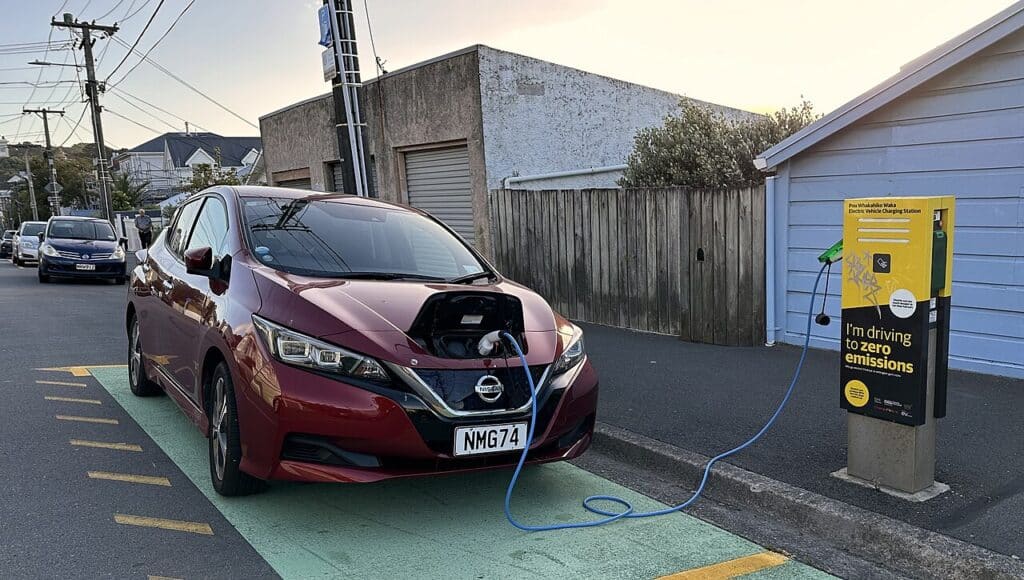

“Essentially, every litre of fuel that we’re not buying, it’s a lot of money we’re not spending offshore,” Josh Ellison, co-founder of Rewiring Aotearoa told Newsroom. He said money spent on charging EVs instead remains within New Zealand’s economy through local electricity companies and businesses.
New Zealand imports approximately $10 billion worth of oil products each year. That is roughly comparable to the amount of money that leaves the country to purchase fuel as New Zealand earns from its largest physical export product, concentrated milk.
Ellison said the economic opportunity is particularly significant because importing fuel requires the country to send money overseas, while electricity generated domestically keeps more spending within New Zealand. He argued that moving industrial equipment, vehicles and other machinery toward New Zealand-produced electricity could provide an economic benefit approaching the scale of one of the country’s major industries.
The fuel crisis has strengthened that economic argument because imported petrol and diesel prices have risen much faster than electricity costs.
Kirsten Corson, chair of the Drive Electric lobby group, told Newsroom the fuel crisis has also made EVs more compelling from a household financial perspective. She said electric vehicles accounted for approximately one in nine new vehicles purchased in New Zealand the previous year, compared with about one in four currently.
Corson pointed to the long time required to replace an existing vehicle fleet. She cited Norway, where sustained electrification efforts began in the 1990s. Although approximately 95% of new cars sold there are now electric, she said only about 35% of the total vehicle fleet is electric.
While Corson expects New Zealand’s transition could happen faster because EV technology has advanced significantly since the 1990s, she said the experience demonstrates the importance of beginning the transition now.
As New Zealand’s election campaign develops, political parties are competing over subsidies and support for technologies including home solar and electric appliances such as hot-water heat pumps. EV incentives have received less attention, with the Greens the only party identified as proposing a return of EV incentives.
Corson said EV adoption could also be supported through policies that do not involve direct subsidies. These include a “right to charge,” preventing landlords from refusing permission for EV charger installations, requiring new buildings to include appropriate electrical wiring for charging and potentially requiring new car parks to provide charging access.
She also called for the Road User Charge exemption for heavy electric trucks to be extended at least through 2030. Such an extension, she said, would give freight companies greater certainty about operating costs when considering new electric vehicles.
Rewiring Aotearoa has proposed an “EV Salary Boost” that would allow employees to pay for an EV lease from pre-tax income. Ellison said a similar arrangement in Australia has supported half of new EV purchases there.
Ellison argued that EV subsidies can be viewed as an investment in New Zealand’s economy and modernization rather than simply as a transportation incentive. He said increased use of domestically produced energy could reduce money flowing offshore, benefit household finances, lower emissions and improve energy resilience through technologies such as vehicle-to-grid charging.
Corson similarly emphasized New Zealand’s renewable electricity resources. She noted that approximately 90% of the country’s electricity is renewable and argued that domestically generated electricity is not subject to the same international supply risks as imported oil.
The Newsroom analysis used conservative assumptions for EV efficiency and the fuel efficiency of New Zealand’s existing fossil-fuel vehicle fleet. Import savings were calculated using costs faced by importers and excluded domestic taxes, retail costs and profit margins. Newsroom estimated that every $1 saved on imported petrol avoids approximately $2.50 in costs at the pump, before accounting for EV road taxes and electricity costs.

Electric Vehicle Marketing Consultant, Writer and Editor. Publisher EVinfo.net.
Services