Concerns and Problems in EV Charger Licensing are Largely Misunderstandings and Misconceptions
In 2024, global EV sales topped 17 million units, capturing over 20% of the new car market, according to the International Energy Agency (IEA’s) Global EV Outlook 2025. That’s a more than 25% increase from 2023, and the additional 3.5 million EVs sold in 2024 exceeded total EV sales in all of 2020.
Global electric vehicle (EV) sales continue to surge in 2025, with Rho Motion, a company specializing in EV supply chain research, reporting that 1.6 million EVs were sold worldwide in July. That figure marks a 21% increase compared to July 2024.
Between January and July 2025, global EV sales reached 10.7 million units, representing a robust 27% increase over the same period in 2024. China remains the powerhouse of the EV market, with 6.5 million sales in the first seven months of the year, up 29% year-over-year. Europe also posted strong growth, with 2.3 million sales, a 30% increase compared to the previous year.
North America’s EV market grew, with about one million units sold so far in 2025, representing a 2% increase. Meanwhile, emerging markets across Asia, Latin America, and other regions outpaced all others with 900,000 units sold, translating to a 42% year-over-year jump.
The data underscores both the global momentum and regional disparities in EV adoption. While China and Europe continue to drive the bulk of growth, the rapid uptake in emerging markets suggests that EV adoption is spreading beyond traditional strongholds.
North America’s slower growth highlights ongoing challenges in consumer adoption and policy uncertainty, but the global trend remains clear: EVs are firmly establishing themselves as a mainstream choice for drivers worldwide, saving drivers significant money on long-term costs.
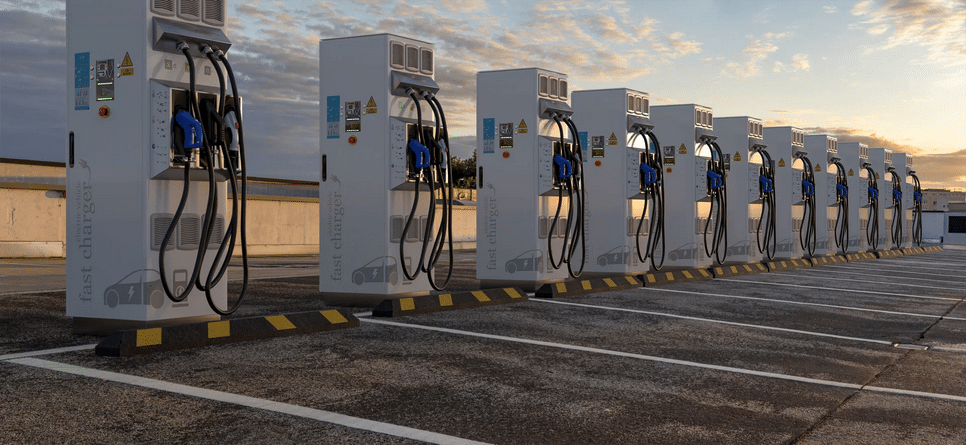
The Rapid Growth of Cellular-Connected EV Chargers
The rapid growth of electric vehicles (EVs) worldwide is reshaping not just how people drive, but how they fuel their mobility. With global EV sales rising sharply, the demand for smarter and more efficient charging infrastructure has never been greater. One of the most important innovations driving this transition is the rise of cellular-connected EV chargers, which are revolutionizing how charging stations communicate, operate, and integrate with the broader energy ecosystem.
Smarter Charging Through Connectivity
Unlike traditional charging systems, cellular-connected EV chargers use mobile networks to enable real-time communication. This allows for continuous monitoring, diagnostics, and reporting, while also providing critical updates on charging status. More importantly, cellular connectivity makes it possible for chargers to be remotely managed, reducing downtime and maintenance costs.
The integration of connectivity transforms EV chargers from being static energy dispensers into intelligent, networked devices. By interacting with EVs, utility grids, and cloud-based services, these chargers facilitate smarter energy consumption, load balancing, and even dynamic pricing models that adjust in real time to grid demand. This makes them not only more efficient but also an essential tool in managing the increased electricity loads expected as EV adoption accelerates.
Growth Outlook and Market Drivers
Industry forecasts project cellular-connected charger installations will grow at a 40% compound annual growth rate, with over 80 million units expected to be in place by 2030. Several factors are driving this growth.
The first is the urgent need for scalable and intelligent infrastructure. As EV penetration increases, charging networks must expand rapidly while remaining cost-efficient and reliable. Cellular-connected chargers are easier to deploy than wired alternatives, making them more adaptable for both public and private use.
Second, these smart chargers enable grid optimization. By communicating with utility operators, they can distribute charging loads evenly, preventing localized congestion and supporting a more stable energy supply. This role will be crucial as countries transition to renewable energy sources, which often bring variability to the grid.
Finally, consumer expectations are accelerating adoption. Today’s EV drivers demand greater control and convenience, from mobile app payments to real-time status updates. The ability to remotely monitor charging progress or locate available stations enhances the user experience significantly, making cellular-enabled chargers the preferred option.
Addressing Misunderstandings and Misconceptions in EV charger Licensing
The growth of connected charging also introduces new challenges, particularly in the area of intellectual property rights. Many of the cellular technologies embedded in these chargers are protected by patents, and securing licenses has historically been a complicated and fragmented process, with unpredictable costs. This has created many misunderstandings and misconceptions in EV charger licensing.
To address this, Avanci, an independent global leader in joint licensing, launched its EV Charger program in 2023. This initiative simplifies the licensing process for charger manufacturers and network operators by offering a single, standardized agreement that covers the majority of relevant essential cellular patents at published rates. The program has attracted 14 brands to date as licensees.
Marianne Frydenlund, Vice President at Avanci, Interviewed by EVinfo.net
We had the great honor of catching up with Marianne Frydenlund, who heads Internet of Things licensing for Avanci, to understand some of the challenges she has faced in signing EV charger makers to the program, often due to misunderstandings.

Bill Pierce:
Marianne, the Avanci EV Charger program was developed together with some of your initial licensees. What was their understanding at that time of the need to license the connectivity patents used by their connected chargers?
Marianne Frydenlund:
I’d say they were unusual, in that they were aware of that need and reached out to us to create a program for them, based on what they had seen of our success in licensing automakers for connected vehicles. That enabled us to build a program customized to the needs of EV charger makers across several different categories of chargers, which has now been adopted by 14 (and counting) brands.
Bill Pierce:
What’s the typical flow of communications with an EV charger maker?
Marianne Frydenlund:
We identify companies who we believe are producing cellular connected chargers, and we write to them – typically the CEO, or the chief legal officer or head of IP or procurement, introducing ourselves and asking for an initial meeting to discuss the option of an Avanci license. Over the past couple of years, we have reached out to more than 200 companies.
Bill Pierce:
What is the typical response?
Marianne Frydenlund:
Responses are generally positive, but cautious – after all, they weren’t expecting our contact. Sometimes they don’t respond to our initial approaches, and so a level of perseverance is needed. In some cases, our contact prompts them to discuss with their component supplier for the cellular modules they use, and this is where they can receive misleading information. Some module suppliers will tell them that either they have the necessary licenses, or that they will indemnify them against claims.
Bill Pierce:
And is it true that many of the module makers have licenses, or can indemnify their customers?
Marianne Frydenlund:
In my experience, it is very misleading. To our knowledge, there are no module makers that have licenses with all of the patent owners in our platform, or can offer such a broad indemnity. So, a big part of our job is in educating the charger makers as to the realities of them needing to take a license themselves, either through bilateral license discussions with each patent owner, or through Avanci. Avanci is only ever an option – there always remains the option of taking separate licenses with individual patent owners.
But we believe our option of a license covering dozens of patent owners with a single signature and at fixed, published rates, is a simpler and more efficient option. The challenge is to help the OEMs and CPOs understand they need licenses to thousands of patents, when they may have thought the modules, or in the CPO’s case, the chargers, came with all necessary rights included.
Bill Pierce:
So, let’s assume you’ve now got an OEM (Original Equipment Manufacturer) who understands the need to license these patents– is it all plain sailing from there?
Marianne Frydenlund:
Mostly, yes, but sometimes there are further questions over the rates, so we do explain how they were developed, based on the principle generally used for all cellular licensing, which reflects the value that the connectivity brings to the final product. The scope of the license is also something we often need to explain. We license all 2G, 3G, and 4G standard essential patents that each licensor owns, those they will become owners of in the future, and those patents owned by licensors who may join in the future. This is as such a license that grows in value over time, though at no additional cost for the OEMs.
Bill Pierce:
Once the license is signed, is that the end of the interaction with the charger maker?
Marianne Frydenlund:
No, far from it. We then work with them to make the ongoing process as simple as possible. Rather than needing to report sales to multiple individual licensors, they just send us a quarterly or half-yearly report of sales volumes by category, we then invoice them for one payment. After that, we take care of the distribution to all of the licensors in the program, who are in countries around the world, each with different tax regimes, and we handle all of that complexity.
Bill Pierce:
So, what would your message to EV charger makers be?
Marianne Frydenlund:
If you are making cellular connected chargers, you need to have a license for the cellular patents used by your products. That doesn’t have to be an Avanci license, but we believe ours is the simplest and most efficient option to get your products licensed, and we’ll be happy to have a conversation to help you understand more. If you have an email from us, please don’t ignore it!
Bill Pierce:
And would you have any advice for the charge point operators (CPOs) around the world?
Marianne Frydenlund:
Yes, absolutely. They need to ensure that all of the chargers they are deploying are licensed – and there are two ways of doing that. Either ask every charger supplier to certify that they are licensed (our existing licensees can do that), or they can choose to take a license with us directly to cover any chargers from any manufacturers which they deploy. Our program provides such flexibility, as well as making sure that if they are buying from a licensed manufacturer, they don’t end up paying twice. And the same advice goes here, if you have an email from us, don’t ignore it. Chances are that many chargers in your network are not licensed, and this has to be dealt with, either by you or your supplier.

Key Benefits of the Avanci Program
The Avanci program provides multiple advantages to stakeholders in the EV charging ecosystem.
First, it offers simplicity and efficiency. Instead of negotiating individually with dozens of patent holders, manufacturers can secure the rights they need through one agreement, reducing administrative overhead and legal complexity.
Second, the program ensures fair and transparent pricing. Rates are published openly and apply for the lifetime of the charger, eliminating the uncertainty of recurring fees or renegotiations. This predictability provides stability for both manufacturers and charging network operators.
Third, coverage is comprehensive. The program spans 2G, 3G, and 4G patents essential for connected chargers, ensuring that critical features such as remote monitoring, payment integration, and grid interaction are fully licensed.
Fourth, the program is designed for global reach. Whether a company produces a few residential chargers or operates a vast public network, the licensing structure applies worldwide, making it easier to scale internationally.
Finally, Avanci’s approach is future-proof. As additional licensors join or expand their patent portfolios, existing licensees gain coverage automatically at no extra cost. This ensures that the value of participation grows over time.
Building the Future of Charging
The rise of cellular-connected EV chargers reflects a broader shift toward digital and connected infrastructure in transportation. As EV adoption accelerates, the charging ecosystem must evolve to meet rising expectations for convenience, efficiency, and grid stability. Connectivity is the enabler that makes this possible.
At the same time, solutions like Avanci’s licensing program ensure that innovation can scale without being slowed by legal or financial uncertainty. By simplifying access to essential patents, the program allows manufacturers and operators to focus on deploying infrastructure rather than navigating complex negotiations.
Together, these trends highlight how the convergence of connectivity, energy management, and streamlined licensing is reshaping the EV charging landscape. Cellular-connected chargers are not just a technological upgrade, they represent a foundational shift in how EVs will interact with the grid, consumers, and the broader clean energy economy.
As the world moves toward an electrified future, these smart chargers will play a pivotal role in ensuring that the EV revolution is both sustainable and scalable.
EVinfo.net’s Take
If you have an email from Avanci, don`t ignore it!
Avanci’s EV charger licensing program is the most cost-effective, innovative and simple solution we have seen on the market. It was a great honor to speak once again with Marianne Frydenlund, one of our industry’s top leaders. Avanci’s EV Charger Program is highly recommended by EVinfo.net.
Today, Avanci joined this year’s World EV Day campaign! Join EVinfo.net and Avanci in supporting World EV Day, a celebration of global EV (electric vehicle) adoption, which saves drivers money while saving the environment at the same time.

Electric Vehicle Marketing Consultant, Writer and Editor. Publisher EVinfo.net.
Services