Jaguar Says Battery-Electric Power Is the Only Way Forward for Its Brand
Jaguar has firmly denied a report suggesting it is reconsidering its all-electric strategy, reaffirming that battery-electric vehicles remain the sole path forward for the storied British brand. Road & Track reported the news on January 26, 2026.
The denial follows a weekend report from The Times of London claiming Jaguar was quietly exploring a partially gasoline-powered, range-extended model to address concerns about driving range. Citing unnamed sources, the newspaper said the vehicle could travel up to 621 miles with the help of an internal combustion engine.
Jaguar Land Rover rejected the claim outright. “Our plans to reinvent Jaguar as an electric-only luxury automotive brand are unchanged,” a JLR spokesperson told Autocar, adding that the company is preparing to unveil its first new electric Jaguar later this year. An anonymous company source went further, dismissing the report as “rubbish.” Similar statements were issued to Automotive News.
Jaguar’s EV roadmap remains intact, with three high-performance electric models planned. The first, expected in March or April 2026, is a striking four-door grand tourer producing roughly 1,030 horsepower. Jaguar engineers have said the brand’s new Electric Architecture is not designed to accommodate a range-extender engine, citing battery packaging constraints. Prototype testing points to a 120-kWh battery and an estimated 400 miles of EPA-rated range, along with a focus on ride comfort and refined dynamics.
The electric reboot is central to Jaguar’s ambition to move upmarket and compete more directly with ultra-luxury brands like Bentley. Two additional EVs, likely an SUV and either a sports car or large luxury sedan, are expected later in the decade. For now, Jaguar has paused production entirely as it retools factories and prepares for its all-electric relaunch.
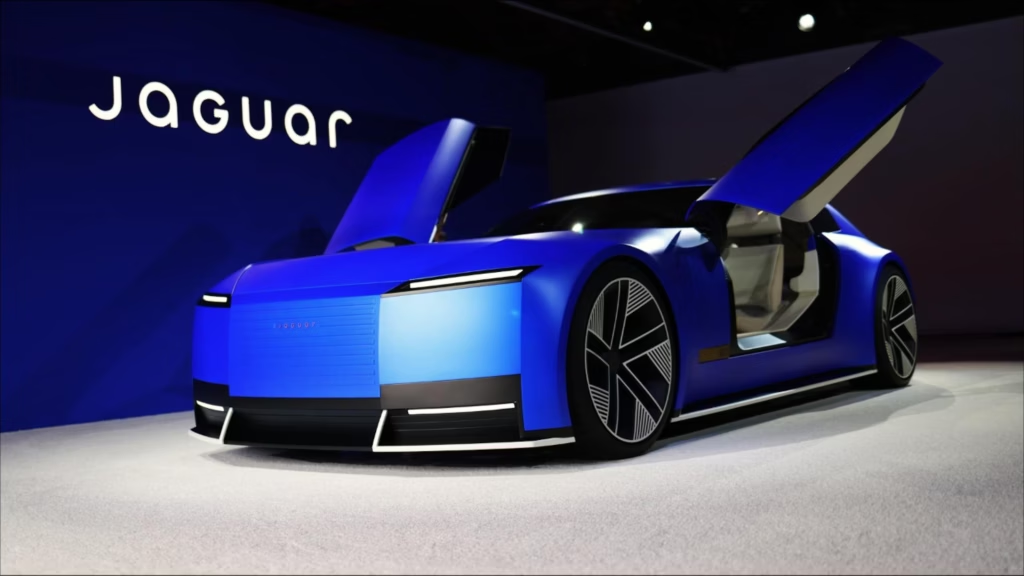
Jaguar’s Type 00 is a bold concept car that symbolizes the British automaker’s commitment to an all‑electric future. Unveiled in 2025 as part of a broad corporate overhaul, the Type 00 departs from Jaguar’s traditional design language with a futuristic, brutalist aesthetic and high‑performance focus. It’s intended to showcase the brand’s next chapter: a fully battery‑electric lineup that elevates Jaguar as a luxury EV rival to brands like Bentley and Porsche.
The Type 00 concept emphasizes Jaguar’s new Electric Architecture, a purpose‑built EV platform designed for performance, efficiency, and dynamic capability. Early prototypes tested with a large battery pack suggest competitive range and power while maintaining refined ride quality, core traits Jaguar says are critical to its brand identity.
Jaguar’s Internal Combustion Engine Era Ends
Production at Jaguar’s Solihull plant briefly paused on December 19, 2025, as the final F-PACE rolled off the assembly line. Its departure marked more than the end of a decade-long model run. It closed the chapter on internal combustion engines at Jaguar, bringing an entire era of the brand’s history to an end.
EVinfo.net’s Take: The Shift is Inevitable: EVs Are the Future, and Other OEMs Will Follow Jaguar
Jaguar’s bold commitment to an all-electric future is more than just a strategic gamble. It is a clear signal to the automotive industry that the era of gasoline-powered vehicles is winding down. With its Type 00 concept and upcoming lineup of high-performance EVs, Jaguar has positioned itself as a leader in the luxury electric segment, demonstrating that battery-electric power can deliver performance, style, and innovation without compromise.
The move by Jaguar reflects a broader trend that other automakers are unlikely to ignore for long. As governments tighten emissions regulations, consumer demand for cleaner transportation grows, and battery technology improves, traditional internal combustion engines are becoming increasingly untenable. Major OEMs will soon face a stark choice: invest in electrification or risk falling behind. The writing is on the wall. Gas-powered cars will gradually vanish from mainstream production as EVs take center stage.
For consumers, this shift brings exciting possibilities. Electric vehicles offer instant torque, lower operating costs, and zero tailpipe emissions while helping address climate change and urban air quality. For the industry, it is a chance to innovate, rethink vehicle design, and redefine the driving experience. Jaguar is leading the charge, but it will not be alone for long. Other OEMs will follow, and the future of transportation is electric.
Jaguar’s commitment is impressive as other makers cut back on EV. This cutting back has caused a huge amount of anti EV misinfo and disinfo.
Don’t be fooled by anti-EV misinfo and disinfo. Turning back from cost-saving EVs in favor of polluting, inefficient gas vehicles is a BIG MISTAKE that helps China and hurts the USA.
EVs save drivers money while saving the planet, are faster, more fun to drive, and along with renewable energy, support greater national security.
V2G-enabled EVs are growing fast, providing power during blackouts and saving lives in natural disasters.
EVs and renewable energy bring great economic growth and a stronger electric grid. Electrek.co reported that 99%+ of new US capacity in 2026 will be solar, wind + storage, according to the EIA.
Vote for EVs and renewable energy at the ballot box and with your pocketbooks.

Electric Vehicle Marketing Consultant, Writer and Editor. Publisher EVinfo.net.
Services