Energy Vault, Peak Energy’s 1.5 GWh Sodium-Ion Deal May Benefit US EV Battery Production
The AI power crunch is the hottest energy topic right now in the United States. A whole lot more electric capacity is needed, and companies are looking to new technology, such as sodium-ion batteries to help create much needed power.
AI training and inference workloads generate steep, irregular power surges that differ significantly from traditional load profiles. Most battery energy storage systems (BESS) were engineered to manage relatively stable grid demand, not rapid, high-amplitude fluctuations. Energy Vault and Peak Energy state they are developing a purpose-built storage architecture designed from inception to absorb and respond to this volatility.
On February 9, 2026, Energy Vault Holdings, Inc., a leader in grid-scale energy storage and AI power infrastructure, and Peak Energy, the first U.S. manufacturer of sodium-ion energy storage systems, announced a broad strategic partnership.
At the center of the collaboration is a purpose-built energy storage architecture designed specifically for AI neoclouds and AI-first data center operators. Conventional battery systems are optimized for relatively stable grid demand and struggle to accommodate the extreme, highly volatile power profiles created by AI training and inference. The new platform is engineered from the ground up to address those challenges.
The solution pairs Peak Energy’s sodium-ion battery technology, which emphasizes improved safety and reliability compared with traditional BESS, with Energy Vault’s proprietary system design and Vault OS™ control software. Together, the companies aim to enable faster deployment, lower capital costs, and enhanced operational safety. The integrated architecture will be exclusive to Energy Vault and serve as a key differentiator for its modular “powered shell” data center offering, reducing electrical complexity, limiting dependence on conventional UPS systems, lowering cooling needs, and improving performance under high-volatility AI workloads.
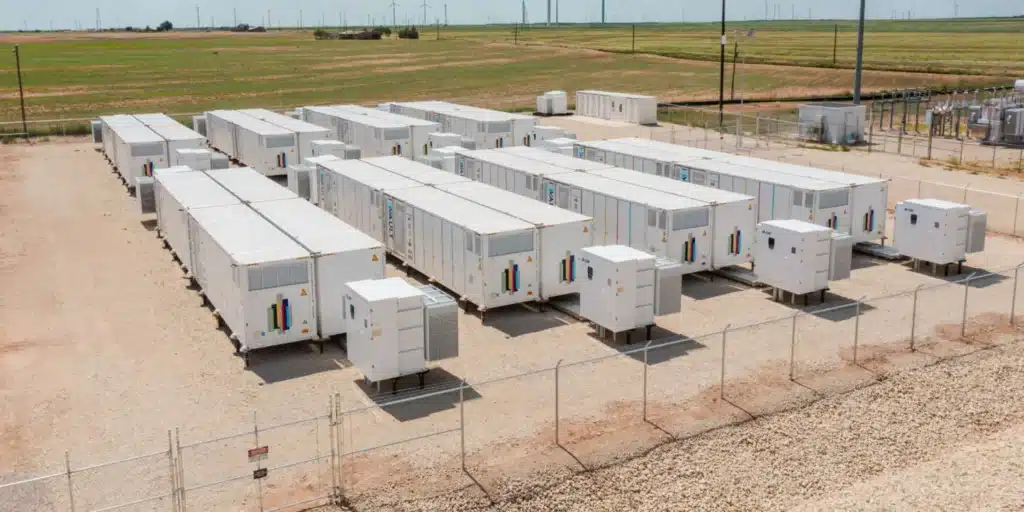
As part of the partnership, Energy Vault has signed a definitive agreement to secure 1.5 GWh of Peak Energy’s U.S.-manufactured sodium-ion battery systems. This domestic supply positions Energy Vault projects, spanning both grid-scale storage and AI infrastructure, to qualify for Domestic Content Investment Tax Credits, improving project economics relative to lithium-ion and foreign-sourced alternatives.
All deployed Peak Energy systems will be fully integrated with Vault OS™, Energy Vault’s technology-agnostic energy management platform. The software will manage sodium-ion operating characteristics, optimize dispatch, extend asset life, and preserve Energy Vault’s operational control.
World’s First Mass-Produced Sodium-Ion Battery EV Offers Little to No Range Loss in Extreme Cold
CATL and Changan Automobile plan to launch the world’s first mass-produced passenger EV powered by a sodium-ion battery by mid-2026. The CATL Naxtra battery will debut in the Changan Nevo A06 sedan, offering 249 miles (400 km) of range on China’s test cycle. CATL expects the chemistry to expand across additional Changan brands.
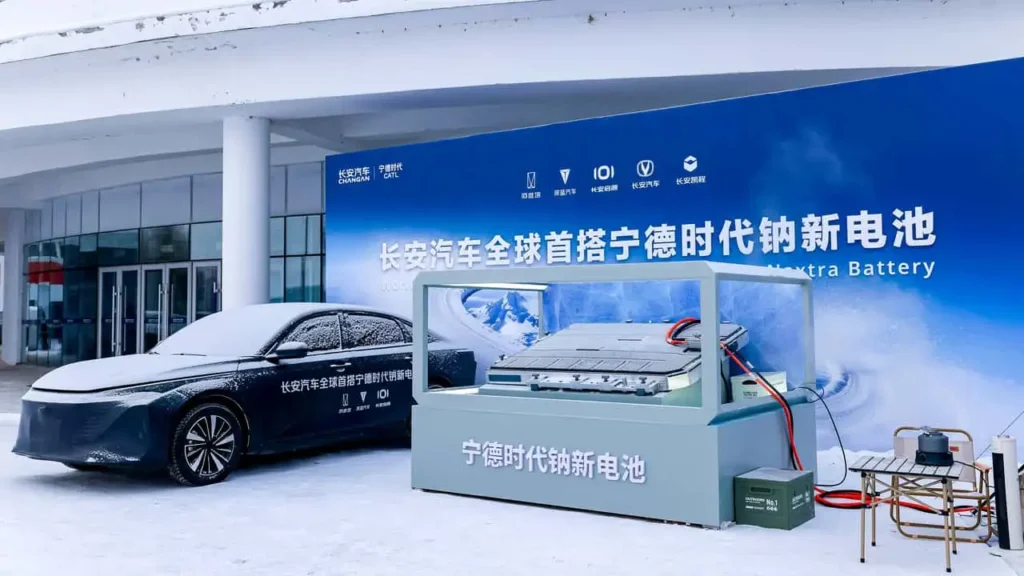
Sodium-ion batteries are positioned as a complement to lithium-ion, not a replacement. While their energy density (175 Wh/kg) is comparable to LFP and below high-nickel chemistries, they offer key advantages: lower fire risk, improved thermal stability, reduced reliance on lithium, and significantly stronger performance in extreme cold. CATL claims the Naxtra retains over 90% of its range at -40°C and delivers substantially higher discharge power at -30°C compared to LFP, addressing a major EV pain point in cold climates.
Future iterations could support up to 373 miles (600 km) in pure EVs. Although not currently planned for the U.S., the technology could be particularly valuable in colder regions. The broader takeaway is strategic. China is building a diversified battery ecosystem spanning LFP, high-nickel lithium-ion, and sodium-ion, optimizing for cost, safety, and climate resilience.
EVinfo.net’s Take: Energy Vault and Peak Energy’s Partnership on Sodium-Ion Storage for AI Data Centers Has Broader Implications for U.S. EV Batteries
The Energy Vault and Peak Energy collaboration has implications that extend beyond data centers. The 1.5 GWh domestic supply agreement provides meaningful production scale for sodium-ion manufacturing in the United States. Scale is essential in battery markets, where cost competitiveness is closely tied to manufacturing volume and supply chain maturity. Establishing U.S.-based sodium-ion production capacity could create downstream benefits for domestic sodium-ion electric vehicle battery development.
Sodium-ion batteries offer structural advantages that make them strategically attractive. They rely on abundant and inexpensive raw materials, demonstrate improved thermal stability, and perform more consistently in extreme cold. While their energy density does not yet match high-nickel lithium chemistries, it is comparable to lithium iron phosphate, positioning sodium-ion as a viable option for affordable electric vehicles, fleet applications, and cold-weather markets.
China is already moving quickly in this space. CATL and Changan Automobile are preparing to launch the world’s first mass-produced sodium-ion passenger vehicle by mid-2026.
The Energy Vault and Peak Energy agreement signals an early effort to establish a similar diversified foundation in the United States. Large-scale deployment in stationary storage can lower per-kilowatt-hour costs, strengthen domestic supply chains, and improve commercial bankability. If sodium-ion production scales successfully through AI infrastructure and grid storage, expansion into electric vehicle applications could follow.
The global battery race will likely be defined not by a single chemistry dominating, but by which regions build resilient, scalable, and adaptable ecosystems first.

Electric Vehicle Marketing Consultant, Writer and Editor. Publisher EVinfo.net.
Services