Exciting New 2027 Chevy Bolt EV, Starting at $28,995, Arrives at Dealerships
Chevrolet has confirmed the return of the Chevrolet Bolt, with the 2027 model introducing a series of substantive upgrades across range, technology, charging capability, and pricing. The low price offered by the Bolt comes at the perfect time, as 73% of Americans said the U.S. economy is getting worse.
The 2027 Bolt delivers an EPA-estimated range of up to 262 miles on a full charge, positioning it as the longest-range electric vehicle available in the United States with a starting price under $30,000. This directly reinforces Chevrolet’s focus on making EV ownership more accessible without compromising daily usability.
Inside the cabin, the Bolt features a redesigned interior centered around an 11.3-inch diagonal touchscreen equipped with built-in Google functionality, paired with an 11-inch diagonal driver information display. The vehicle also offers available Super Cruise, Chevrolet’s hands-free driver assistance system, making the Bolt the most affordable vehicle in the U.S. market to provide this capability. Units equipped with Super Cruise are already beginning to arrive at dealerships.
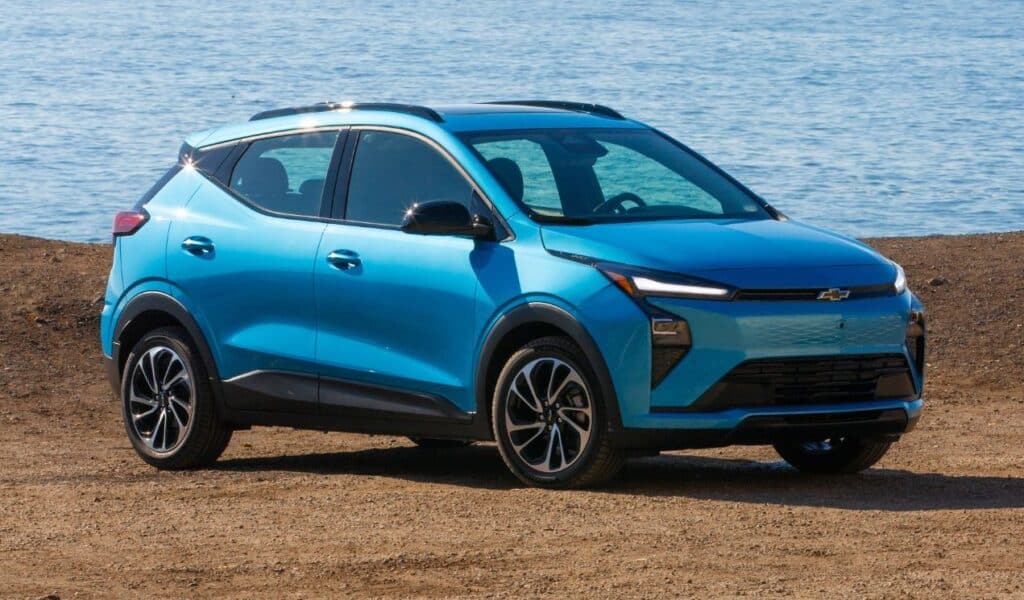
Charging performance has also been upgraded. The 2027 Bolt supports available DC fast charging at peak speeds of up to 150 kW, enabling the battery to charge from 10 percent to 80 percent in approximately 25 minutes when connected to a compatible public fast charger.
EVinfo.net reported that in December 2025, EV Charging Stations, said that the new Bolt will be able to charge more than twice as fast as previous Bolt models, based on their studies.
In addition, it becomes the first Chevrolet electric vehicle to include a native NACS charging port, expanding access to a rapidly growing public charging infrastructure.
Pricing remains a central component of the Bolt’s value proposition. The 2027 Bolt LT carries a starting MSRP of $28,995, making it the most affordable electric vehicle currently available in the United States.
Alongside these updates, the next-generation Bolt transitions to General Motors’ Ultium-based architecture, aligning it with the company’s broader EV strategy while enabling improvements in efficiency, scalability, and production flexibility. Chevrolet has also incorporated customer feedback into the redesign, with updates aimed at enhancing comfort, usability, and overall driving experience.
The Bolt nameplate continues to play a critical role in Chevrolet’s electrification strategy, particularly in the entry-level EV segment where affordability remains a key barrier to adoption. With increased range, upgraded technology, faster charging, and aggressive pricing, the 2027 Bolt is positioned to expand access to electric mobility while remaining competitive in a rapidly evolving market.

EVinfo.net’s Take: Exciting, Low Cost New 2027 Chevy Bolt EV Comes at the Perfect Time, Americans Are Struggling to Pay Bills
Americans are increasingly pessimistic about the economy, with multiple recent polls showing widespread concern over rising prices and economic direction. 73% said the economy is getting worse, and about 47% describe current conditions as poor, both figures rising compared to the previous month.
High costs, particularly for essentials like gas and everyday goods, are a major driver of dissatisfaction. Inflation expectations are also climbing, with about 7 in 10 Americans anticipating prices will continue to rise over the next year.
The economic outlook is also being shaped by external factors, including ongoing geopolitical tensions and elevated gas prices, which are reinforcing concerns about affordability and financial stability.
Overall, the polling reflects a broad sense that, despite underlying economic activity, Americans feel financially strained and expect conditions to worsen in the near term.
Cheap New EVs Like 2027 Bolt Are a Smarter Idea Than Ever Before
The case for affordable electric vehicles has always rested on long-term savings and environmental benefits. In 2026, that argument has shifted. It is no longer just about sustainability or future payoff. It is about immediate financial survival in a world where fuel prices are increasingly volatile and structurally elevated.
The Iran war has made one thing clear: high gasoline prices are not a temporary spike. They are becoming a persistent feature of the global economy. For everyday drivers, that translates into unpredictable monthly costs, tighter household budgets, and reduced financial flexibility.
This is exactly where vehicles like the Chevrolet Bolt, especially the 2027 model, become strategically important.
At a starting price under $30,000 and offering over 260 miles of range, the Bolt represents a category that has been largely underserved: genuinely affordable, practical electric transportation. This is not a luxury EV aimed at early adopters. It is a cost-control tool for mainstream consumers.
The economic logic is straightforward. Electricity prices, while not immune to fluctuation, are far more stable than gasoline. Charging at home, particularly during off-peak hours, allows drivers to lock in lower operating costs. Over time, this creates a predictable and significantly cheaper cost per mile compared to internal combustion vehicles.
What makes this moment different is urgency. In previous years, choosing an EV was often framed as forward-thinking or environmentally conscious. Today, it is increasingly a hedge against economic instability.
As fuel prices remain elevated due to prolonged geopolitical tensions and constrained supply chains, the total cost of ownership gap between gasoline vehicles and EVs will continue to widen. Affordable EVs will not just be attractive. They will be rational.
Models like the Bolt are positioned at the center of this shift. They lower the barrier to entry while directly addressing one of the most immediate financial pressures facing consumers.
In that context, the question is no longer whether affordable EVs make sense. It is how quickly they can scale to meet demand in a market that is rapidly recognizing their necessity.

Electric Vehicle Marketing Consultant, Writer and Editor. Publisher EVinfo.net.
Services