IEA Says Close to 30% of Cars Sold This Year Worldwide Are Set to Be EVs, Due to Current Energy Crisis
On May 20, 2026, A new report from the International Energy Agency highlights continued global momentum for electric vehicles in 2025 and projects even stronger growth ahead, despite geopolitical instability and shifting government policies.
According to the latest edition of the IEA’s Global EV Outlook 2026, worldwide electric car sales are expected to climb to 23 million units in 2026, representing nearly 30% of all new vehicle sales globally. The report examines EV market trends, charging infrastructure deployment, policy developments, and the impact growing EV adoption could have on electricity demand, oil consumption, and emissions.
In 2025, global EV sales surged 20% year-over-year, surpassing 20 million vehicles for the first time. Electric vehicles accounted for roughly one-quarter of all new cars sold worldwide, with nearly 40 countries seeing EVs make up at least 10% of new car sales. Chinese automakers continued to dominate the sector, supplying around 60% of EVs sold globally, while European and North American manufacturers each contributed about 15%.
The report notes that changes to EV policies in China and the United States contributed to an 8% decline in global EV sales during the first quarter of 2026 compared to the same period a year earlier. However, many other regions posted significant growth. Europe recorded nearly 30% sales growth, the Asia-Pacific region excluding China jumped 80%, and Latin America rose 75%. In March alone, close to 90 countries reported year-over-year EV sales increases, with around 30 nations reaching record monthly sales.
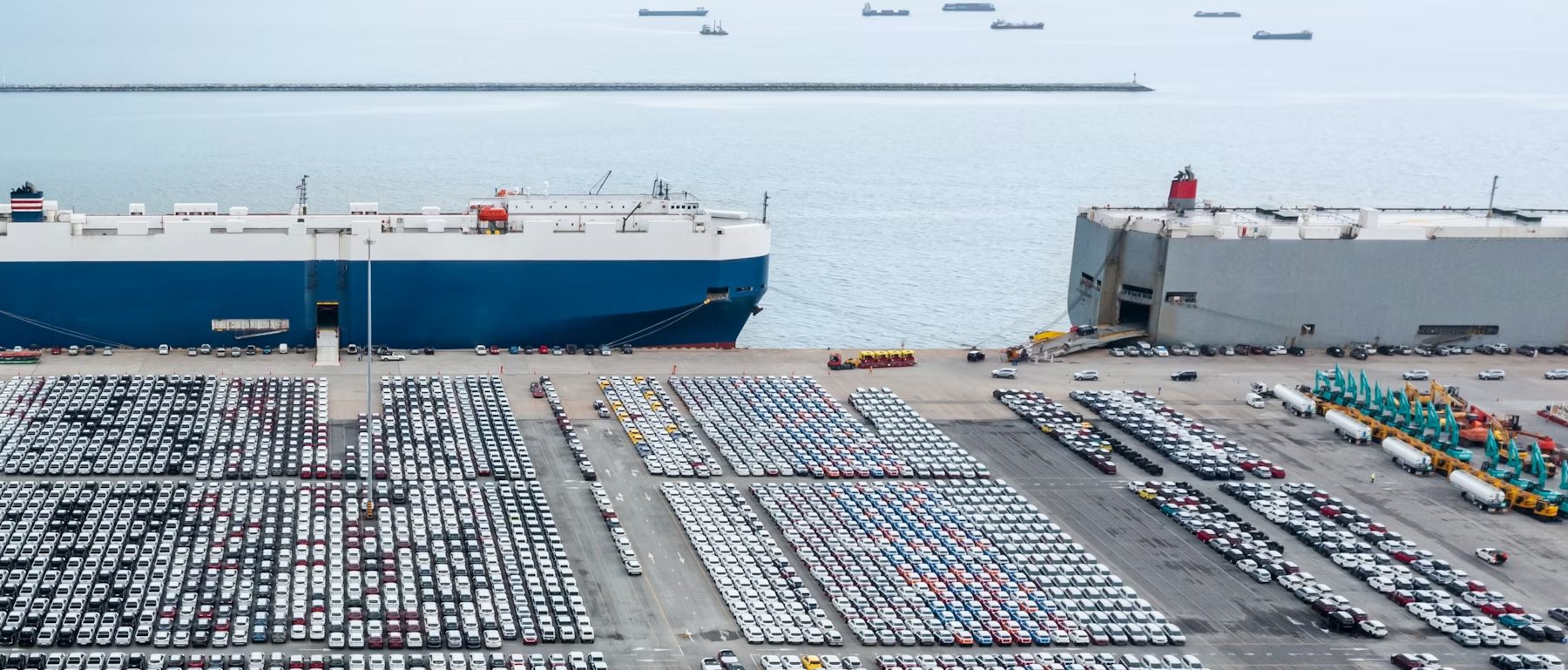
The IEA also found that EVs are becoming increasingly cost-competitive in major markets, particularly as consumers look for alternatives to volatile fuel prices amid the ongoing Middle East energy crisis. By 2035, the global EV fleet could expand from nearly 80 million vehicles today to as many as 510 million, even without additional policy measures.
Electric truck sales also accelerated sharply in 2025, more than doubling from the previous year, with China leading the market. Electric trucks accounted for nearly 10% of global truck sales last year, while electric two- and three-wheelers continued gaining market share worldwide.
Southeast Asia emerged as one of the fastest-growing EV regions, with annual electric car sales more than doubling and reaching nearly 20% market share. The IEA projects that figure could climb to 60% by 2035 as supportive policies and lower vehicle prices continue driving adoption.
EVinfo.net’s Take: Soaring Fuel Prices Driving an EV and Renewable Boom, Americans Have Spent $44.1B Extra on Fuel Since Beginning of War
Since the war with Iran began, the average American household has spent an additional $187.41 on gasoline. The New York Times reported the news on May 22, 2026.
For many families, that is roughly equal to an entire monthly electricity bill.
For others, it could cover a week of groceries for two people.
The gasoline estimate comes from an analysis by researchers at Brown University, as economists and policy analysts attempt to measure the broader financial toll of the prolonged conflict.
Putting a precise number on the cost of war is difficult. The impact often shows up in everyday sacrifices: fewer trips taken, tighter household budgets, or purchases postponed. But these estimates help illustrate how a conflict thousands of miles away can ripple through daily American life.
The burden has not been shared equally. As fuel prices surged, the national average for gasoline climbed to $4.56 per gallon. Since Feb. 28, when the United States and Israel launched attacks on Iran, Americans have collectively spent an estimated $44.1 billion more on gasoline and diesel.
Global EV adoption was already accelerating before the current fuel crisis tied to the Iran war, but soaring oil prices and energy uncertainty have added even more momentum to electric vehicles and renewable energy markets worldwide.
Despite federal policy supporting gas vehicles over EVs in the United States, electric vehicle growth continues both globally and domestically. Several major trends are driving that momentum. Battery prices continue falling, making EVs more affordable across multiple segments. At the same time, newer battery chemistries like LFP (lithium iron phosphate) are rapidly scaling because they offer lower costs, improved durability, and reduced dependence on expensive materials like nickel and cobalt.
Automakers are also launching a wave of new EV models with better performance, longer driving ranges, and significantly faster charging speeds. Just a few years ago, 200 miles of range was considered competitive. Today, many mainstream EVs exceed 300 miles, while charging networks continue improving reliability and reducing charging times.
The global fuel crisis caused by the conflict in the Middle East has further accelerated consumer interest in EVs and renewable energy. High gasoline and diesel prices historically push consumers toward more efficient transportation options, and the current environment appears to be reinforcing that pattern across Europe, Asia, and Latin America.
Many countries are also doubling down on energy independence strategies due to the war, which increasingly include EV adoption and renewable energy deployment. In April, Reuters reported that France is moving aggressively to expand the role of electricity across its economy, with the government outlining plans to double public financial support aimed at accelerating electrification through the end of the decade.
Renewables have been growing for many years, and have recently been booming. One example is Pakistan, which is undergoing an unprecedented, people-led solar energy revolution started in the last few years. Driven by skyrocketing grid electricity tariffs and an influx of cheap Chinese solar panels, solar generation now accounts for roughly a third of the country’s energy supply. Solar rooftop deployment and small-scale installations have rapidly overtaken traditional sources like coal to become a dominant part of the country’s power mix.
The United States presents a more mixed picture. New EV sales are still growing, but not at the explosive pace seen in some overseas markets. However, used EV sales have surged dramatically as lower prices make electric vehicles accessible to more consumers.
In March 2026, 42,924 used EVs sold in a single month in the US, up 54% from February, and up 28% year over year. Q1 as a whole hit over 100,000 units, the second-strongest quarter on record and up 12% on the same period last year.
The used market may become one of the most important growth drivers for EV adoption in America over the next several years.
Another important factor is consumer familiarity. As more EVs enter the market, buyers are becoming more comfortable with charging, ownership costs, and long-distance travel capabilities. Concerns around range anxiety continue to decline as public charging infrastructure expands.
The upcoming Q2 EV sales data for North America will be especially important to watch. With fuel prices remaining elevated and new EV models entering dealerships, the second quarter could provide a clearer picture of whether the current energy crisis is beginning to materially accelerate EV adoption across the region.

Electric Vehicle Marketing Consultant, Writer and Editor. Publisher EVinfo.net.
Services