Rewards Programs for EV Charging are Growing Fast
Rewards programs for EV charging are the hottest and fastest-growing part of the financial industry today, as EV charging is quickly growing in North America and around the world.
Rewards programs are a significant part of the financial industry, particularly within banking and credit card services. Financial institutions use rewards such as cashback, points, or discounts, as key tools for customer acquisition, retention, and increasing transaction volume.
Paren’s US EV Fast Charging — Q1 2026 report showed that fast-charging networks are holding steady across infrastructure, demand, pricing, and reliability. Despite continued expansion, utilization remained within a tight range. Pricing is stable, and reliability continues to improve, indicating controlled, sustainable scaling. Infrastructure growth continued without disrupting utilization. Deployment remains elevated, with about 3,300 new ports added in Q1.
EVs are still growing in North America, despite the cut of the EV credit last year, and other federal government policies slowing adoption in the U.S. As electric vehicles become more mainstream, a new wave of startups is focusing less on the charger itself and more on what happens during the charging session.
One of the newest entrants in that space is Nerava, a platform designed to turn electric vehicle (EV) charging downtime into an interactive rewards and local commerce experience, led by Founder and CEO James Kirk.
The concept behind Nerava is simple but strategically timed. EV drivers often spend between 15 and 45 minutes parked while charging. During that window, drivers are already physically near restaurants, coffee shops, retail stores, and other businesses, but many have little visibility into what is actually walkable nearby. Nerava aims to bridge that discovery gap by surfacing nearby merchants and rewarding drivers for engaging with the ecosystem.
The platform positions itself as “the programmable incentive layer for EV charging,” combining charging verification, rewards distribution, merchant advertising, and sponsor-funded campaigns into one system. Drivers can earn cash rewards for verified charging sessions, while businesses gain targeted exposure to customers already in their vicinity.
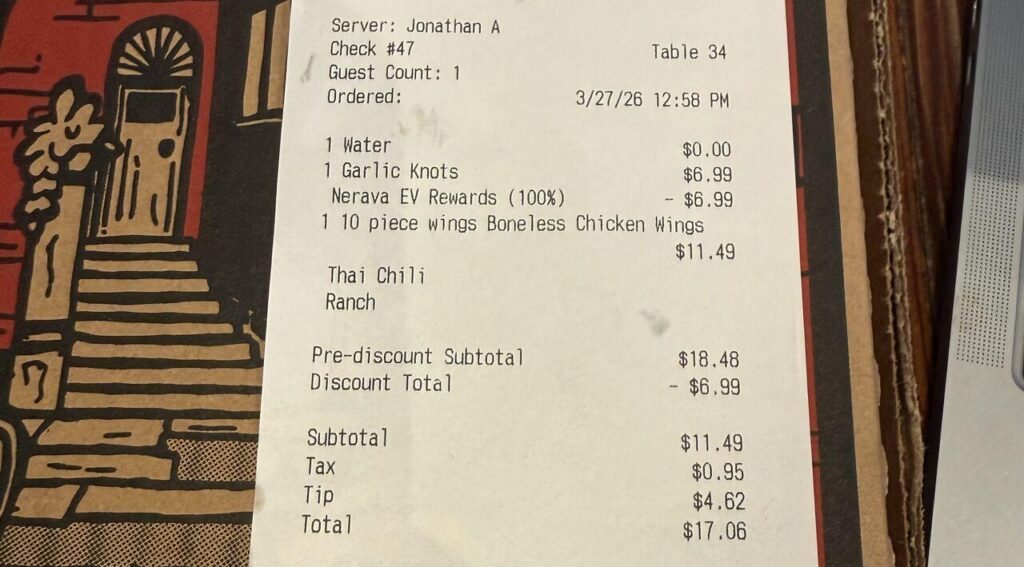
A major differentiator is Nerava’s integration with the Tesla Fleet API, which allows the platform to automatically detect charging sessions without requiring drivers to manually check in. The system also integrates with Tesla, Smartcar, and Stripe to manage session verification, vehicle connectivity, and payouts directly to users’ bank accounts.
For merchants, the value proposition is highly localized customer acquisition. Instead of broad digital advertising campaigns, businesses can target EV drivers who are actively charging nearby and likely looking for something to do while waiting. Nerava says businesses can set daily budget caps and participate without needing point-of-sale integrations or additional hardware.
The platform also opens opportunities for utilities, charging operators, and energy partners. Sponsors can create campaigns that incentivize charging behavior at specific locations or during certain hours, potentially helping balance charging demand or promote underutilized charging infrastructure. Nerava emphasizes that rewards are only distributed for verified charging sessions, using geolocation and anti-fraud scoring to validate activity.
The broader significance of platforms like Nerava is that they highlight how EV charging is evolving beyond simple energy delivery. Charging stations are increasingly becoming micro-destinations tied to retail, hospitality, and digital engagement ecosystems. Companies across the EV sector are beginning to recognize that the charging experience itself can become monetizable and service-oriented rather than merely transactional.
This trend aligns with broader industry efforts to make charging more convenient, engaging, and economically beneficial for both drivers and nearby businesses. As EV adoption continues to expand, platforms that improve the utilization of charging downtime could become an increasingly important layer within the overall EV infrastructure ecosystem.
For drivers, the appeal is straightforward: charging becomes less about waiting and more about earning, discovering, and interacting with nearby businesses. For merchants and sponsors, it creates a new channel to reach consumers at a moment when they are stationary, nearby, and actively deciding how to spend their time.

Electric Vehicle Marketing Consultant, Writer and Editor. Publisher EVinfo.net.
Services