Pursuit Launches World’s First Electric Ice Explorer Vehicle
At the Columbia Icefield in Alberta, Pursuit Attractions and Hospitality has launched the world’s first electric Ice Explorer as part of the Columbia Icefield Adventure in Jasper National Park, Alberta, Canada. The new vehicle now operates alongside the regular fleet on the Athabasca Glacier and charges using onboard bifacial solar panels and regenerative braking technology.
The project arrives as Canada’s national parks and tourism operators place increasing focus on sustainability and reducing environmental impact while still allowing visitors access to iconic natural destinations. Pursuit says the launch reflects its “Promise to Place” initiative, which centers on stewardship and long-term environmental responsibility.
“The Columbia Icefield is one of the most significant places where we operate and how we show up here matters,” said Stuart Back, Chief Operating Officer of Pursuit Banff Jasper Collection. “Starting with one vehicle is intentional. It allows us to deepen guest connection, learn in real-world conditions, and apply those learnings thoughtfully over time.”
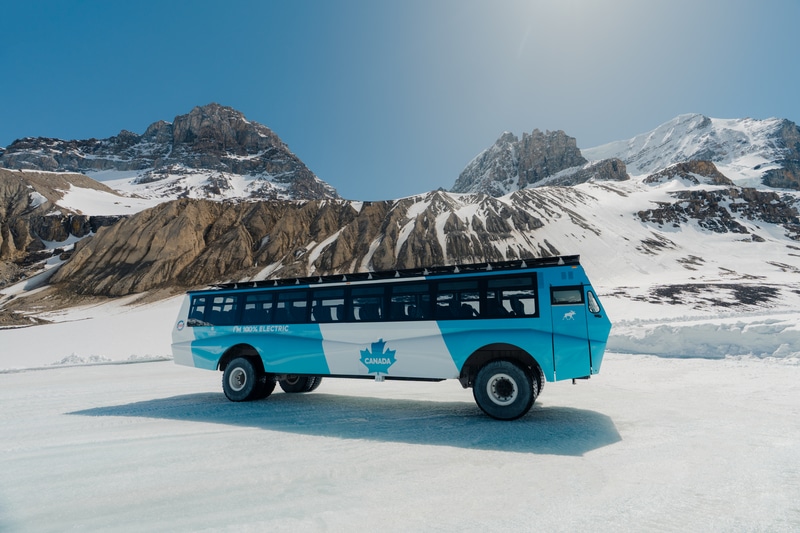
The Electric Ice Explorer was purpose-built in partnership with Noble Northern, a Manitoba-based company specializing in heavy-duty EV conversions for remote and extreme environments. Engineers redesigned the chassis from the ground up, making the vehicle more than 50% lighter than traditional Ice Explorers to improve efficiency and reduce energy consumption on glacial terrain.
The vehicle integrates several advanced technologies, including bifacial solar panels capable of capturing sunlight reflected off the glacier surface, regenerative braking systems, and geofencing safety technology that can automatically manage speed and braking in designated glacier zones.
Guest experience was also a major focus during development. The electric drivetrain creates a significantly quieter cabin environment, allowing passengers to hear the natural sounds of the glacier with less mechanical noise. The vehicle also includes radiant floor heating to help warm and dry guests after glacier walks.
According to Noble Northern President Tye Noble, the vehicle’s roof-mounted solar array produces more than six kilowatts of charging capacity, an advancement that would have been difficult to achieve just a few years ago. The vehicle operates on a planned cycle of four days on the glacier followed by three days dedicated to regeneration and charging.
Pursuit estimates the Electric Ice Explorer could reduce between 200 and 300 kilograms of CO₂ emissions per day compared to diesel-powered vehicles operating the same route. The company has already modernized much of its fleet with lower-emission engines and replaced diesel generators at the Columbia Icefield with propane systems, reducing the site’s carbon footprint by more than 30%.
The pilot program will allow Pursuit and Noble Northern to study how electrified heavy vehicles perform under harsh alpine conditions, including cold temperatures, steep terrain, and varying passenger loads. Both companies say the long-term goal is to better understand how electrification can expand into demanding off-grid tourism and industrial applications.