Polestar EVs Blocked From U.S. Market
Reuters reported that Polestar will no longer sell new vehicles in the United States beginning with the 2027 model year after the U.S. Department of Commerce denied the company authorization under the Connected Vehicle Rule, according to an announcement made June 25, 2026.
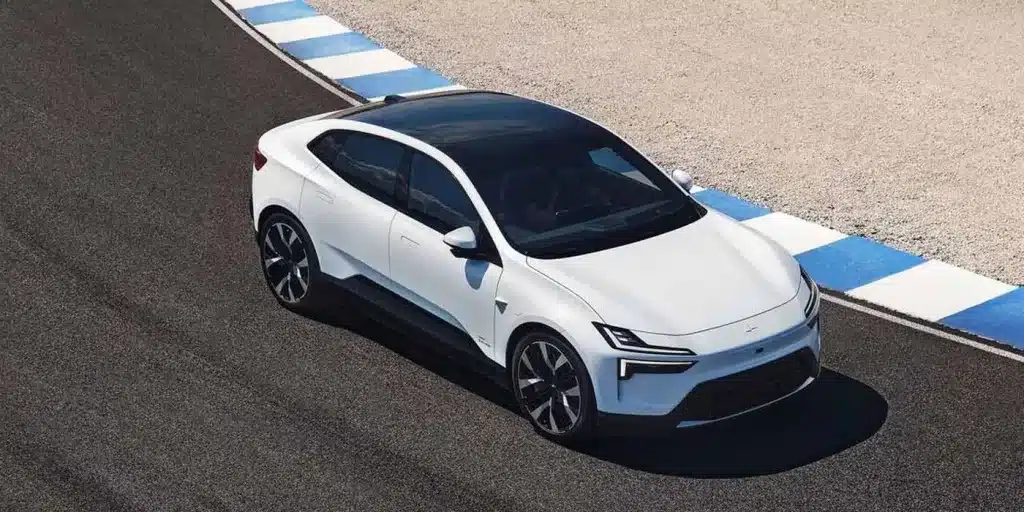
The Swedish EV manufacturer said it will continue selling its remaining U.S. inventory of the Polestar 3 SUV and Polestar 4 crossover while maintaining customer support through its existing service network. However, no new Polestar vehicles for the 2027 model year will be offered in the U.S. market.
A company spokesperson confirmed that customers will continue to have access to service centers and customer support, but the company will discontinue marketing and sales activities in the United States for future model years beginning in 2027.
The Connected Vehicle Rule restricts the sale of vehicles containing certain software and hardware linked to foreign entities of concern, including China. The regulation has created challenges for automakers with significant Chinese ownership or manufacturing connections.
Polestar is owned by Geely, the Chinese automotive group that also owns Volvo Cars. While the Polestar 3 is assembled at Volvo’s manufacturing facility in Charleston, South Carolina, the Polestar 4 is produced in Busan, South Korea, at a Renault-operated plant. Volvo recently received authorization to continue selling connected vehicles in the United States.
Despite its departure from the U.S. market, Polestar characterized the move as part of a broader strategic realignment. The company noted that Europe now represents nearly 80% of its retail sales, with that share rising to 94% in the first quarter when including other global markets outside the United States.
CEO Michael Lohscheller said the automotive industry is increasingly being shaped by regional market dynamics. He emphasized that Europe remains Polestar’s primary growth market and highlighted plans to manufacture the upcoming Polestar 7 in Europe. The company also intends to expand its presence in Southeast Asia, Eastern Europe, Latin America, and Canada.
The announcement comes despite strong global momentum for the brand. Polestar reported its best first-quarter sales performance to date, driven by growth in Europe, Australia, and South Korea. The automaker is also developing a next-generation Polestar 2 and the Polestar 7 crossover, which is expected to compete with the Tesla Model Y. Recently, Polestar upgraded the Polestar 3 with an 800-volt architecture, faster charging capabilities, and a more powerful Nvidia Drive AGX Orin computing platform.
EVinfo.net’s Take: Blocking Polestar Will Hurt U.S. Consumers
The decision to effectively force Polestar out of the U.S. market beginning with the 2027 model year is a mistake that will ultimately hurt American consumers more than it protects them. Yet another mistake by the current federal administration, a list that is growing miles long.
The justification centers around concerns related to connected vehicle technology and the possibility that vehicles linked to Chinese companies could pose security risks. While protecting national security is important, the notion that automakers like Polestar are secretly planning to install spyware in vehicles sold to American customers stretches credibility.
Polestar is not an unknown startup operating in the shadows. It is a globally recognized electric vehicle manufacturer with vehicles sold across Europe, North America, and Asia. Its products undergo extensive regulatory review, cybersecurity testing, and scrutiny from governments around the world. The company’s vehicles are also supported by software platforms and supply chains that are already deeply integrated into global automotive markets.
If the concern is data collection, consumers should recognize that nearly every modern vehicle collects data. American, European, Japanese, Korean, and Chinese automakers all gather vehicle diagnostics, location information, driving behavior metrics, and infotainment data to varying degrees. The challenge is not unique to Chinese automakers. It is an industry-wide issue that should be addressed through transparent regulations, cybersecurity standards, and consumer privacy protections that apply equally to all manufacturers.
Blocking companies based on ownership structures rather than demonstrated security violations risks creating a less competitive market. Consumers benefit when more automakers compete on price, technology, range, efficiency, and innovation. Removing brands like Polestar reduces choice and limits competition at a time when affordable electric vehicles are desperately needed in the United States.
The irony is that many of the world’s most advanced EV technologies, batteries, and supply chains are connected in some way to China. Attempting to isolate the U.S. market from that reality will not accelerate EV adoption or strengthen American competitiveness. Instead, it may slow innovation and increase costs for consumers.
The better approach would be rigorous cybersecurity standards, independent audits, and strict penalties for any manufacturer found violating privacy or security requirements. If a company is proven to be collecting data improperly, regulators should act decisively. But excluding automakers based on hypothetical scenarios rather than evidence sets a troubling precedent.
American consumers deserve access to the best electric vehicles available, regardless of where the parent company is headquartered. Competition drives innovation. Restricting that competition without clear evidence of wrongdoing is a step in the wrong direction.

Electric Vehicle Marketing Consultant, Writer and Editor. Publisher EVinfo.net.
Services