Autonomous EV Drone Company Zipline Accelerates U.S. Growth With 13x Marketplace Expansion
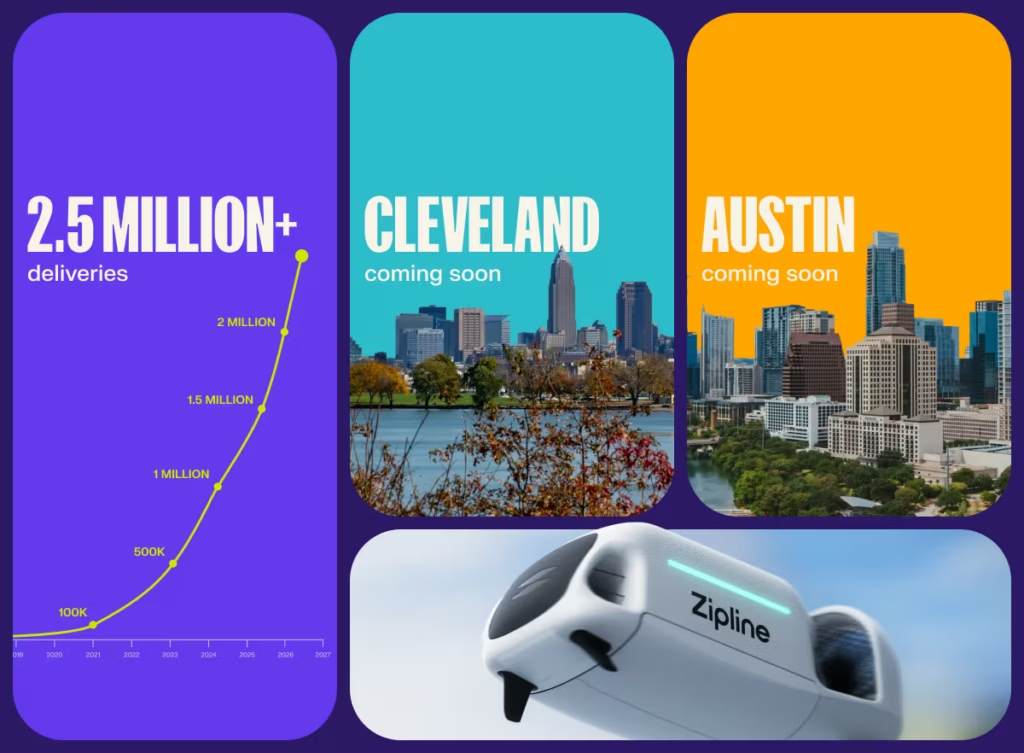
Zipline announced the next phase of its U.S. expansion on July 14, 2026, including upcoming launches in Cleveland and Austin, the addition of senior executives, and significant growth in business adoption of its autonomous delivery platform.
The company reported that the number of businesses offering delivery through the Zipline app increased 13-fold during the first half of 2026. Zipline has now completed more than 2.5 million commercial deliveries worldwide, including one million deliveries during the past year alone. According to the company, it currently operates more daily flights than major U.S. airlines, with every flight conducted autonomously. Approximately 70% of those flights take place in the United States.
New Markets and Expanded Services
In July, Zipline will launch its first U.S. healthcare home delivery service in partnership with Cleveland Clinic. The service will begin in the Beachwood suburb of Cleveland and allow eligible patients to receive certain prescription deliveries directly to their homes at no additional cost.
The healthcare delivery program is expected to expand beyond prescriptions over time. Future deliveries may include lab samples, medically tailored meals, medical and surgical supplies, and hospital-at-home materials transported between Cleveland Clinic facilities.
Zipline also plans to begin operations in Austin in the coming months. Customers in the Texas capital will be able to order food and retail products from local businesses through the Zipline app, with deliveries arriving in as little as five minutes.
Businesses Are Adopting Zipline at a Rapid Pace
Zipline said commercial adoption accelerated dramatically during the first half of 2026. Customers can currently order from national brands such as Chipotle alongside local businesses including Anothai Cuisine in Houston and Amelia’s Cocina Mexicana in Rowlett.
The company highlighted several recent commercial partnerships. Wonder announced plans to use Zipline delivery services at 50 upcoming food halls across Texas. Little Caesars is also expanding its use of Zipline, increasing from five participating locations to 65 locations in the coming months.
According to Zipline, new businesses continue joining the delivery network every week as demand for rapid autonomous delivery services grows.
Building a Leadership Team for Growth
To support its continued expansion, Zipline has strengthened its executive team with leaders from some of the world’s most influential technology and mobility companies.
Sendil Palani joins Zipline as Chief Financial Officer.
“Zipline has an incredibly talented team working toward an inspiring mission. This is a special opportunity to help save and improve lives globally, while reducing cost and energy use at scale,” Palani said. “I am excited to join at such a transformational moment, given the strong foundation the team has built, and the tremendous momentum behind its new products, partnerships, and growth.”
Kevin Vosen joins as Chief Legal Officer after nearly seven years serving as Chief Legal Officer at Waymo. Prior to joining Zipline, he most recently served as Chief Administrative and Legal Officer at Ohalo.
“Zipline is solving complex problems with meaningful real-world impact and the company is at a unique point in its journey,” Vosen said. “Zipline’s next chapter is about making its experience accessible to communities worldwide while continuing our track record of safe, trusted operations.”
Allen Penn joins the company as Head of Commercial. Before Zipline, Penn helped scale Uber from 25 employees to more than 25,000, led the company’s expansion across Asia, and played a major role in global operations at Uber Eats. At Zipline, he will oversee commercial strategy and execution as the company continues expanding its delivery network.
Zipline’s Electric Aircraft Technology
Zipline’s delivery aircraft are fully electric, zero-emission drones powered by onboard lithium-ion battery packs. The company’s aircraft utilize twin electric motors and can travel up to 155 to 160 miles (250 kilometers) on a round trip using a single charge. The drones have a top speed of approximately 80 mph (128 km/h) and typically cruise at around 63 mph (101 km/h).
To maximize efficiency, Zipline operates autonomous charging stations and robotic distribution hubs that automatically manage and recharge aircraft between deliveries. According to the company, its electric delivery system produces zero direct emissions and uses roughly 97% less energy per delivery than a conventional gasoline-powered vehicle, highlighting the environmental advantages of autonomous electric logistics.
A Decade of Autonomous Delivery Progress
Zipline said the past decade has been dedicated to building what it describes as the world’s largest autonomous delivery network.
The company reports that its medical delivery operations have helped save more than 60,000 lives, with current healthcare deliveries contributing to the saving of more than 12,000 lives annually. Zipline also cites a 22% reduction in childhood deaths from severe malnutrition and a 51% reduction in maternal mortality in areas served by its healthcare logistics network.
To date, Zipline aircraft have flown more than 135 million commercial autonomous miles and delivered more than 20 million items without a safety incident. The company notes that some individual aircraft have surpassed one million miles of operation, far exceeding the lifetime mileage of the average passenger vehicle.
Today, Zipline operates across four continents, serves more than 5,000 hospitals and healthcare facilities, and completes a delivery somewhere in the world every 20 seconds. The company’s fleet of electric aircraft continues to expand access to healthcare, food, and consumer products while reducing transportation emissions and providing logistics services at scale.

Electric Vehicle Marketing Consultant, Writer and Editor. Publisher EVinfo.net.
Services