Detroit’s EV Retreat Could Cost America the Future of the Auto Industry
For much of the last decade, the electric vehicle revolution appeared inevitable. Automakers invested billions in battery technology, governments offered incentives to accelerate adoption, and consumers increasingly embraced cleaner, more efficient transportation. The expectation was that the United States, home to some of the world’s most iconic automotive brands, would be a major beneficiary of this transition.
Instead, Detroit now finds itself at a crossroads.
Over the past two years, America’s largest automakers have dramatically scaled back many of their EV ambitions. Ford canceled its Lightning electric truck, and a planned three-row electric SUV after years of development. The company delayed major EV projects, and shifted attention toward hybrids and fully gas-powered vehicles. General Motors, Stellantis, Honda, Nissan, Volvo, and several other manufacturers have either delayed or canceled electric vehicle programs aimed at the U.S. market. The result has been billions of dollars in write-downs, shuttered facilities, and growing uncertainty about the future of American EV leadership.
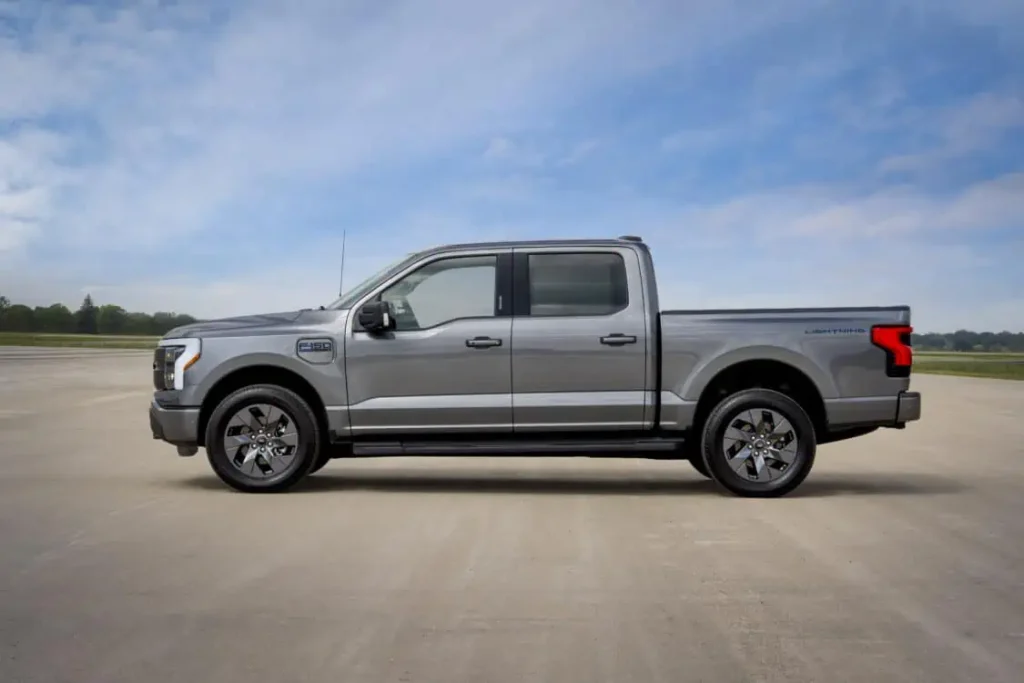
While Detroit pulls back, the rest of the world continues moving forward.
According to global industry data from IEA, battery electric vehicles accounted for roughly one-quarter of all vehicle sales worldwide in 2025, and that share is expected to grow significantly over the coming decade. China has emerged as the dominant force in EV manufacturing, producing approximately 75 percent of the world’s electric vehicles. By comparison, the United States accounts for only a small fraction of global EV production. Chinese manufacturers such as BYD have become major global competitors, benefiting from years of investment in batteries, manufacturing, and supply chain development.
This situation feels familiar because Detroit has been here before.
In the 1970s and 1980s, American automakers underestimated the growing appeal of smaller, fuel-efficient vehicles from Japan and South Korea. Companies like Hyundai, Honda and Toyota steadily gained market share while Detroit remained focused on larger vehicles and higher profit margins. By the time American manufacturers fully recognized the shift in consumer preferences, foreign competitors had already established a powerful foothold in the market.


This shift happened largely because of the 1970s fuel shocks. The 2020s have seen two major fossil fuel shocks. In 2022, Russia invaded Ukraine. In 2026, the Strait of Hormuz was shut by the US-Israel war with Iran.
The parallels with the 1970s oil shocks are striking, and so is the difference. For the first time, there are scalable, cost-competitive, clean alternatives. Solar, wind, batteries, EVs and other electric technology offer a permanent route out of fossil fuel dependence. The shock of the Iran war has jolted the electric age forward. Ember reported in April 2026 how the energy crises of the 2020s sped up the electric age.
Today, some analysts see troubling parallels between the 1970s and the current state of the American automotive industry. Rather than fully committing to electrification, many automakers have responded to changing political conditions and short-term market fluctuations by retreating to the products they know best: gas powered pickup trucks and SUVs. Those vehicles remain highly profitable, but relying too heavily on them could leave Detroit vulnerable if global demand continues shifting toward electrification.
The challenge facing American automakers is real. EV adoption in the United States has been slower than in many other countries due to factors including charging infrastructure limitations, consumer concerns about range, and inconsistent government policy. Incentives that encouraged EV purchases were expanded and later removed, creating uncertainty for both consumers and manufacturers planning investments years into the future.
Yet consumer interest remains strong. Surveys continue to show that many Americans are considering electric vehicles for their next purchase, especially as technology improves and battery costs decline, while gas prices continue to rise. Studies overwhelmingly show EV owners as very satisfied with their choices.
In February 2026, the J.D. Power 2026 U.S. Electric Vehicle Experience (EVX) Ownership Study said overall satisfaction among current battery electric vehicle owners stood at its highest point since the study began in 2021. Nearly all new BEV owners, 96 percent, said they would consider purchasing or leasing another BEV as their next vehicle.
Industry experts widely agree that electrification remains the long-term direction of the automotive market. The debate is no longer whether EVs will dominate future transportation, but how quickly that transition will occur.
The biggest risk for Detroit may not be temporary declines in EV demand. The greater danger is falling behind technologically while competitors continue advancing. Every year that Chinese, Korean, and European manufacturers invest in batteries, software, and electric platforms, the gap becomes more difficult to close. Industry observers warn that American automakers could find themselves isolated behind trade barriers while global competitors continue innovating and reducing costs.
There are still reasons for optimism. Ford is developing a new generation of smaller, more affordable electric vehicles. Startups such as Slate Auto are entering the market with electric pickups priced below many competitors. New battery technologies continue to improve performance while reducing costs. These developments suggest that opportunities remain for American companies willing to commit to the transition.

The question is whether Detroit will stay the course long enough to benefit.
History shows that the automotive industry rewards companies willing to invest through periods of uncertainty. The global market is steadily moving toward electrification, and manufacturers around the world are positioning themselves accordingly. If Detroit continues to retreat whenever conditions become difficult, it risks repeating the mistakes that allowed foreign competitors to gain ground decades ago.
The global EV revolution is not slowing down. The real question is whether America’s legacy automakers will lead it, follow it, or watch it happen from the sidelines.
TCIP Paper: America’s Retreat in EVs: Economic Security, Prosperity, and the Industrial Future
The Technology, Competitiveness, & Industrial Policy Center (TCIP.org) released a whitepaper in November 2025, titled America’s Retreat in EVs: Economic Security, Prosperity, and the Industrial Future, by Susan Helper, Martin Kenney, Laura Tyson, John Zysman and Anna Duffy.
The report argues that the shift from internal combustion vehicles to electric vehicles is reshaping the global economy, supply chains, and geopolitical power. China dominates EV technologies such as batteries, semiconductors, software, motors, and rare earth materials, which are increasingly important not only for transportation, but also for energy systems, advanced manufacturing, and national defense.
Meanwhile, the United States remains heavily invested in traditional internal combustion vehicle technologies and risks falling further behind in the global transition to electrification. The report warns that EV leadership should be viewed as an economic and national security priority rather than solely an environmental objective. Losing ground in EV technology could weaken U.S. competitiveness, energy independence, and strategic influence.
To address this challenge, the report calls for a comprehensive U.S. industrial strategy focused on rebuilding domestic capabilities in key EV technologies and supply chains. It recommends developing competitive, resilient, sustainable, and secure (CRSS) production networks, investing in innovation, strengthening partnerships with trusted allies, and carefully managing economic relations with China.
The central message is that the United States must act urgently to establish leadership in the next generation of transportation technology or risk being left behind as the global auto industry moves beyond the internal combustion era.
BYD Says It Could Dominate the Auto Industry Within Five Years. Should Detroit Be Worried?
For years, many Western automakers viewed China’s electric vehicle industry as a regional competitor. Today, that perception is rapidly changing. BYD, the Chinese EV giant that recently surpassed Tesla in global battery electric vehicle sales, has made it clear that it sees itself as much more than a domestic success story. Company executives have openly discussed ambitions to become the world’s dominant automaker.
On June 9, 2026, Reuters reported Wang Chuanfu, chairman of BYD, said he expected the Chinese firm to become the world’s largest automaker within five years.
If current trends continue, that goal may not be as far-fetched as it once seemed. The numbers are difficult to ignore.
Over the past decade, BYD has transformed from a battery manufacturer into the world’s largest producer of electric and plug-in hybrid vehicles. The company now sells millions of vehicles annually and continues expanding into Europe, Latin America, Southeast Asia, Australia, and other major markets. New factories are being built around the globe, while BYD’s vertically integrated business model gives it unusual control over battery production, supply chains, and manufacturing costs.
That combination has created a powerful competitive advantage. While many legacy automakers struggle to make electric vehicles profitable, BYD has become known for producing EVs at price points that competitors often cannot match. The company manufactures its own batteries, develops much of its own technology, and benefits from massive production scale. As volumes increase, costs continue to fall, creating a cycle that becomes increasingly difficult for rivals to challenge.
For Detroit, this development should serve as a wake-up call.
Chinese automakers are launching new models faster, improving battery technology at a rapid pace, and offering vehicles with features that often exceed those of established Western brands. As one sign of China’s dominance in the sector, two major Chinese companies announced breakthroughs in battery technology that could enable vehicles to drive hundreds of miles on a five-minute charge.
Some industry analysts warn that if current trends continue, Chinese manufacturers could become for electric vehicles what Japanese automakers became for fuel-efficient cars decades ago: dominant global competitors that permanently reshape the industry.
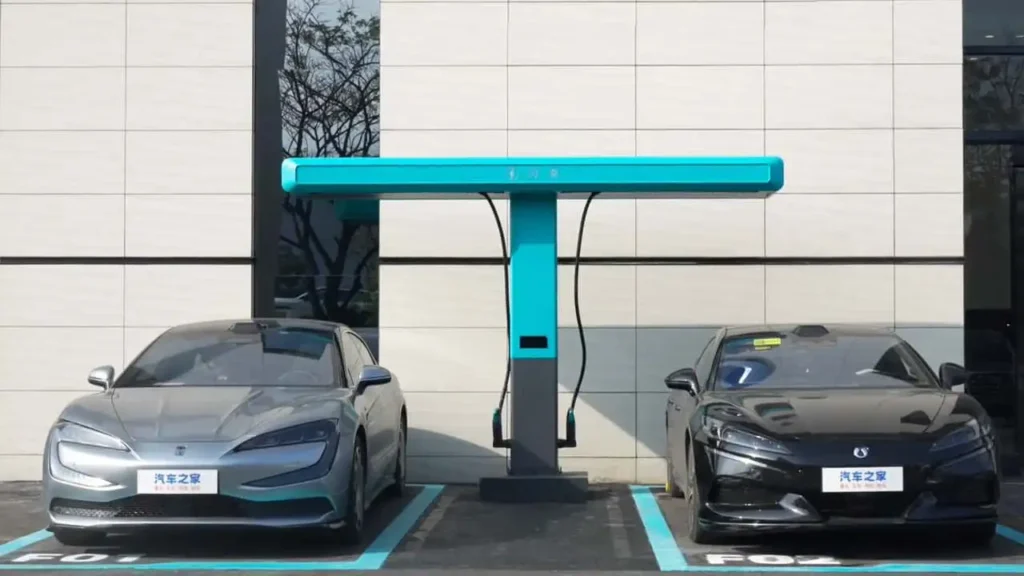
The challenge extends beyond vehicle sales. BYD is also one of the world’s largest battery manufacturers, giving it influence over one of the most important components in the EV supply chain. As battery technology continues to improve, that position could become even more valuable.
For now, tariffs and trade restrictions limit BYD’s and other Chinese brands direct access to the U.S. market. But the company does not need to dominate America immediately to become a global powerhouse. Success across Europe, Asia, Latin America, and emerging markets could provide enough scale to strengthen its leadership position while competitors struggle to catch up.
None of this means Detroit is doomed. American automakers still possess world-class engineering talent, strong brands, loyal customer bases, and significant manufacturing resources. Companies such as Ford, General Motors, Rivian, Lucid and emerging startups continue developing innovative electric vehicles.
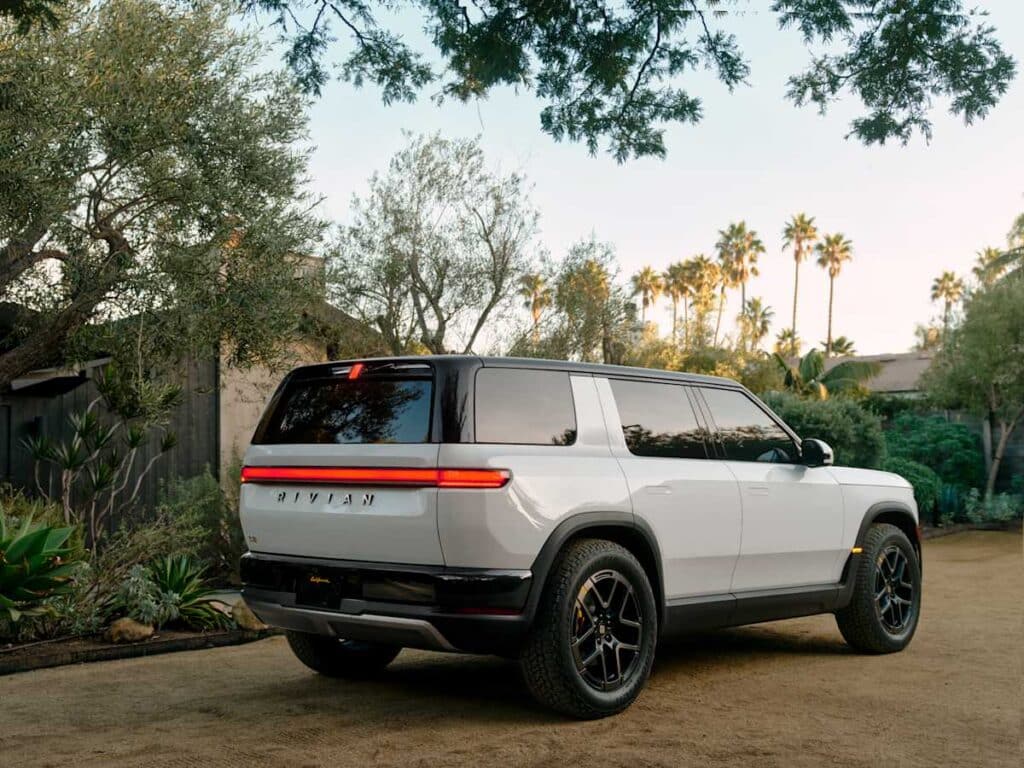
One example is Rivian’s R2, the company’s highly anticipated midsize, two-row, five-seat electric SUV. Deliveries began on June 9, 2026, starting with the top-tier Performance Launch Edition, while lower trims will roll out through late 2026 and 2027.
The industry’s future will likely belong to companies willing to make long-term investments rather than reacting to short-term market fluctuations. BYD appears to understand that reality. The company is betting that electrification will continue reshaping transportation worldwide and is investing accordingly.
Whether BYD ultimately takes over the global auto industry remains to be seen. But one thing is becoming increasingly clear: every year that Chinese manufacturers expand their technological and manufacturing advantages makes the competition more difficult. For Detroit, the question is no longer whether BYD and Chinese automakers are a serious threat. The question is whether America’s automakers can move quickly enough to keep pace.

Electric Vehicle Marketing Consultant, Writer and Editor. Publisher EVinfo.net.
Services