Europe’s Biggest New-Car Markets Ended the First Half of 2026 With Huge EV Growth
Europe’s transition to electric vehicles has entered a new phase of mass-market adoption. Strong government policies, expanding charging infrastructure, and increasingly competitive vehicle choices have helped drive record EV sales across major European markets.
High fuel prices have also strengthened the economic case for EV ownership. While energy markets remain sensitive to geopolitical tensions and disruptions in global oil supplies from the Iran war, consumers across Europe continue to face elevated gasoline and diesel costs compared with many other regions.
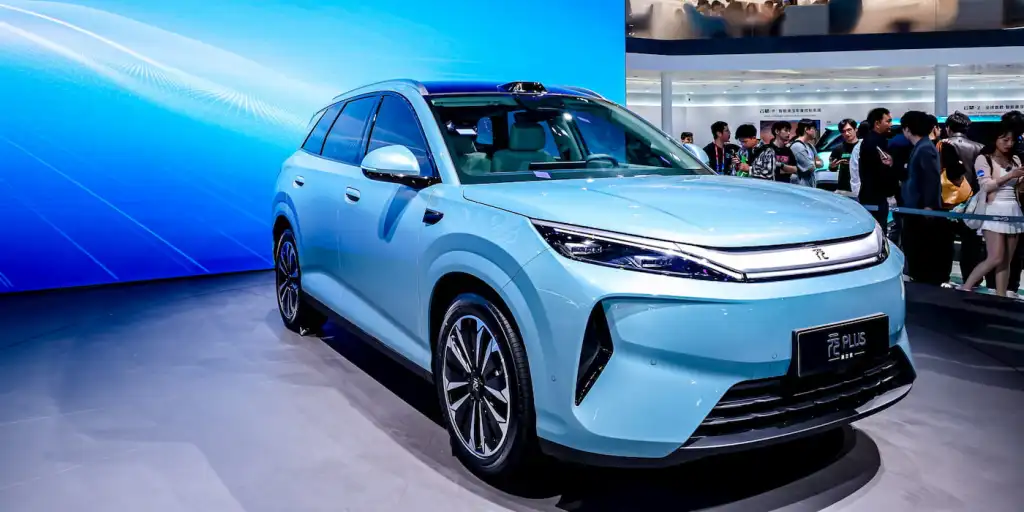
Another major factor accelerating adoption is the growing presence of affordable, high-quality Chinese electric vehicles. Manufacturers such as BYD, MG Motor, XPENG, and Leapmotor have introduced competitively priced models that often offer advanced technology, strong range, and attractive features.

All Five of Europe’s Largest New-Car Markets Posted Year-Over-Year Growth During the First Half of 2026, With BEVs Playing a Major Role
On July 17, 2026, JD Power reported that all five of Europe’s largest new-car markets posted year-over-year growth during the first half of 2026, with battery-electric vehicles (BEVs) playing a major role in driving those gains. While government incentives continue to influence purchasing decisions in some countries, the performance of all-electric vehicles has become a key factor in overall market growth across the region.
France’s new-car market ended the first half of 2026 up 1.8% year over year, according to figures from the PFA and AAA Data. The result came after a volatile start to the year and equated to 19,281 more registrations than during the same period in 2025, based on JD Power calculations. June was particularly strong, with BEV registrations soaring 91.7% year over year. A total of 55,851 all-electric vehicles were registered during the month, representing an increase of 26,712 units compared with June 2025.
BEVs were the strongest-performing powertrain in France during the first six months of the year. Registrations climbed 62.5% to 241,565 units, allowing the technology to secure a 28.2% share of the market. That made BEVs the second most popular powertrain in the country, trailing only hybrids.
Germany also enjoyed a strong first half, with new-car registrations increasing 5.8% year over year to 1,484,322 units, according to JD Power calculations of KBA data. June deliveries rose 15.7% to 296,364 units. Electrified vehicles were a major contributor to the growth, particularly BEVs, which led powertrain volumes during the month. Demand was boosted by the country’s new incentive program, which opened for applications in May. In June alone, BEV registrations reached 84,057 units, an increase of 78.2%.

During the first six months of 2026, Germany registered 368,006 BEVs, up 48% from the same period a year earlier. This represented an additional 119,280 all-electric vehicles on the road and gave BEVs a 24.8% market share. Hybrids remained the leading powertrain, but BEVs were only four percentage points behind by midyear.
Italy’s new-car market expanded in every month of the first half of 2026. June registrations increased 10.6% to 146,351 units, according to ANFIA, helping lift total first-half deliveries to 936,045 vehicles, a gain of 9.5% year over year. Although BEVs remain less popular in Italy than in France, Germany, or the United Kingdom, demand is growing rapidly. In June, BEV registrations rose 86.6% to 14,869 units, accounting for 10.2% of the market.
Plug-in hybrids performed even better in Italy. PHEV registrations increased 61.2% in June to 15,627 units, capturing a 10.7% market share. Nevertheless, both plug-in technologies continue to trail hybrids and gasoline-powered vehicles in overall popularity.
Over the first six months of the year, Italy registered 79,434 BEVs, a 77.7% increase from 2025, giving the technology an 8.5% market share. PHEVs grew 84.3% to 84,527 units and secured a 9.0% share.
Spain’s automotive market continued to outperform many of its European peers. June registrations increased 7.8% to 128,426 units, according to Faconauto. Despite a slight dip in May, total deliveries rose 6.2% during the first half of the year.
As in Italy, plug-in hybrids remained more popular than BEVs. All-electric vehicle registrations increased 26.5% in June to 14,224 units, representing an 11.1% market share. PHEVs rose 15% to 15,567 units, giving them a 12.1% share.
The pattern held throughout the first half of 2026. Spain registered 63,201 BEVs, a 36.7% increase that translated into a 9.8% market share. Meanwhile, PHEV registrations climbed 38.9% to 77,941 units, allowing the technology to claim 12% of the market.
The United Kingdom also delivered a strong performance. June registrations rose 11.4% year over year to 213,166 units, according to the Society of Motor Manufacturers and Traders (SMMT). This represented an increase of 21,850 vehicles compared with June 2025, based on JD Power calculations.
BEVs were the second most popular powertrain in the UK. However, the SMMT categorizes mild hybrids within gasoline and diesel segments, which makes direct comparisons with other markets more difficult and reduces reported hybrid totals. During June, the UK registered 63,950 BEVs, a 35% increase from a year earlier. The technology achieved its highest market share of 2026, accounting for 30% of all new-car registrations.
Between January and June, 284,579 BEVs were delivered to UK customers, up 26.6% year over year. All-electric vehicles represented 25% of total market volume during the period.
Despite this strong growth, BEVs remain below the level required under the UK’s Zero Emission Vehicle (ZEV) mandate. The regulation requires 33% of all new-car sales by manufacturers to be zero-emission vehicles in 2026. Because fuel-cell vehicles remain a niche technology, battery-electric vehicles are expected to carry the majority of that burden.
Across Europe, the first half of 2026 demonstrated the growing importance of battery-electric vehicles. While the pace of adoption varies from country to country and incentives continue to influence demand, BEVs are increasingly becoming a key driver of growth in the region’s largest automotive markets.

Electric Vehicle Marketing Consultant, Writer and Editor. Publisher EVinfo.net.
Services