U.S. Hybrid Sales Rose Nearly 20% Year Over Year to a Record Market Share of 15.4% in H2
CNBC reported on July 23, 2026, that hybrid vehicles are becoming one of the biggest success stories in the U.S. auto market, with sales surging nearly 20% year over year during the first half of 2026. According to data cited by CNBC from the Center for Automotive Research (CAR), hybrids captured a record 15.4% share of the U.S. market, nearly three times the market share of battery-electric vehicles.
CAR CEO Elizabeth Krear noted that hybrids are currently the only major vehicle segment gaining market share, while gasoline, diesel, and fully electric vehicles have all seen declines. The growing popularity of hybrids is rewarding automakers that invested early and consistently in the technology.
Toyota, Hyundai Motor Group, and Honda dominate the U.S. hybrid market, controlling approximately 86% of sales, according to automotive research firm Baum & Associates. Analysts say demand for hybrids is strong, but consumers still have relatively few options because many automakers focused their investments on battery-electric vehicles instead.
Toyota remains the clear leader, accounting for roughly half of all U.S. hybrid sales. The company sold more than 600,000 hybrids during the first six months of 2026 across its Toyota and Lexus brands. Hyundai Motor Group, which includes Hyundai, Kia, and Genesis, narrowly surpassed Honda in hybrid sales during the period after expanding hybrid offerings across a broader range of vehicles, including larger SUVs. Honda also posted record U.S. hybrid sales, with hybrids representing nearly one-third of its total American vehicle sales.
Several factors are driving consumer interest in hybrids, including fuel savings, rising fuel prices, and ongoing concerns about EV charging infrastructure and driving range. While hybrid vehicles generally cost more upfront than comparable gasoline models, experts say many buyers can recover that premium through lower fuel costs within just a few years.
Toyota and Honda have benefited from decades of investment in hybrid technology. Honda introduced the first hybrid sold in the United States with the Insight in 1999, while Toyota launched the Prius in 2000 and went on to dominate the segment. Both companies continued investing in hybrids even as much of the industry shifted its focus toward fully electric vehicles.
That long-term commitment now appears to be paying off. Analysts expect hybrid adoption to continue growing, with Baum & Associates forecasting hybrids could account for roughly one-quarter of all U.S. vehicle sales by 2030. Automakers are already preparing for that future, with Honda developing a next-generation hybrid system designed for larger vehicles and SUVs.
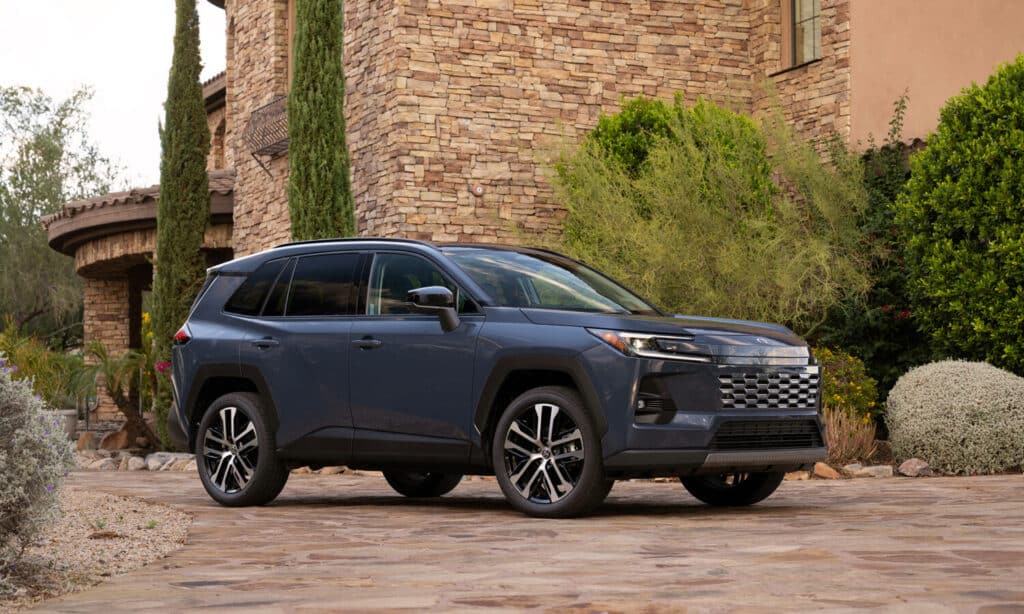
EVinfo.net’s Take: Hybrids Are a Bridge to a Fully Electric Future
The recent surge in hybrid vehicle sales is being celebrated by many automakers, and for good reason. Hybrids help drivers reduce fuel consumption, lower emissions, and become more familiar with electric drivetrains. But it is important to remember that hybrids are not the final destination. They are a bridge to battery electric vehicles (BEVs), which remain the most efficient and environmentally friendly option for most drivers.
Among electrified vehicles, plug-in hybrids (PHEVs) offer one of the strongest transitional solutions. Unlike conventional hybrids, PHEVs can drive significant distances using electricity alone before switching to gasoline. For drivers who are not yet comfortable relying entirely on public charging infrastructure, a plug-in hybrid can provide many of the benefits of electric driving while retaining the flexibility of a gas engine for longer trips.
The growing popularity of hybrids and plug-in hybrids will ultimately accelerate BEV adoption. Drivers who experience electric acceleration, regenerative braking, and reduced fuel costs often become more comfortable with electrification. Once consumers realize how convenient and cost-effective electric driving can be, the leap to a fully electric vehicle becomes much smaller.
However, the rapid growth of hybrids also highlights a continuing challenge: education. Many consumers still believe they need a hybrid because they worry about charging availability, driving range, or battery performance. In reality, a large percentage of drivers could switch directly to a BEV with little or no change to their daily routines. Most Americans drive far less than the range offered by modern electric vehicles, and home charging provides a level of convenience that gas stations simply cannot match. Toyota released a marketing campaign recently touting the benefits of BEVs.
Battery electric vehicles are also more energy efficient than hybrids because they do not carry the complexity of both a gasoline engine and an electric drivetrain. They produce no tailpipe emissions, require less maintenance, and can become even cleaner when powered by renewable energy.
The growth of hybrids should be viewed as positive news for the broader electrification movement. Every hybrid sold helps familiarize consumers with electric technology and moves the market further away from polluting and inefficient gasoline vehicles. At the same time, automakers, utilities, policymakers, and EV advocates must continue educating consumers about the capabilities of modern BEVs. For many drivers, the best next vehicle is not a hybrid at all. It is a fully electric car.

Electric Vehicle Marketing Consultant, Writer and Editor. Publisher EVinfo.net.
Services