U.S. Zero-Emission Truck Deployments Top 72,000 as Market Momentum Accelerates
A new report from CALSTART shows that the U.S. medium- and heavy-duty zero-emission truck (ZET) market regained momentum during the second half of 2025, with deployments nearly doubling compared to the first six months of the year.
According to CALSTART’s June 2026 Zeroing in on Zero-Emission Trucks market update, 12,996 new zero-emission trucks were deployed between July and December 2025, compared with 6,526 deployments during the first half of the year. As a result, cumulative U.S. ZET deployments reached 72,309 vehicles by the end of 2025.
Zero-emission trucks accounted for 4.14% of all truck deployments during the second half of 2025, a significant increase from 1.32% during the first half of the year. CALSTART says the rebound reflects growing fleet confidence, improved business certainty, and continued advances in zero-emission vehicle technology.
Cargo vans remained the largest contributor to market growth, adding 12,158 deployments during the second half of the year. Their success is attributed to lower deployment barriers, mature vehicle offerings, and operating cycles that are well suited for electrification.
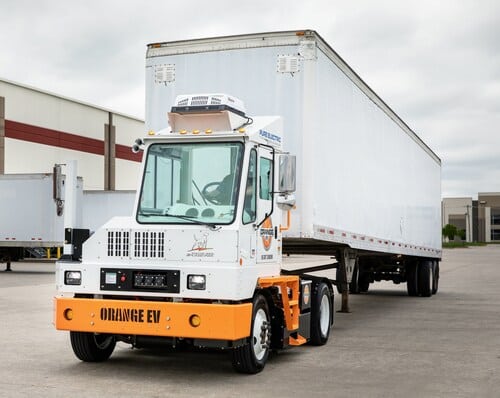
The report also highlights growing adoption across other commercial vehicle segments. Yard tractors continue to have the highest zero-emission market share, while refuse trucks and medium-duty step vans posted higher deployment rates than in previous reporting periods, demonstrating that electrification is expanding into a broader range of commercial applications.
State leadership continues to play a major role in accelerating adoption. California, Florida, and Texas lead the nation in total cumulative zero-emission truck deployments due to their large commercial vehicle markets. However, when deployments are adjusted for truck population, fleet size, and vehicle mix, California, New York, and Pennsylvania rank as the strongest performers. CALSTART says these results demonstrate that supportive state policies can significantly increase adoption beyond what market size alone would predict.
To maintain momentum, the report recommends expanding financing programs that reduce fleet risk, accelerating charging infrastructure through shared charging hubs, utility coordination, microgrids, and mobile charging solutions, providing long-term policy certainty, and increasing outreach to fleets, utilities, dealers, carriers, and other stakeholders.
Overall, CALSTART concludes that while the market experienced a slower start to 2025, the strong rebound during the second half of the year shows that zero-emission truck adoption continues to advance. Continued collaboration among policymakers, manufacturers, utilities, infrastructure providers, and fleet operators will be essential to making zero-emission trucks a practical business solution across more vehicle classes and regions.
EVinfo.net’s Take: The Future of Commercial EV Trucks
Commercial fleet electrification continues to accelerate as battery technology improves, charging infrastructure expands, and total cost of ownership becomes increasingly favorable compared with diesel vehicles. Delivery fleets, utilities, municipalities, refuse companies, ports, and regional freight operators are leading adoption because these applications benefit from predictable daily routes and lower operating costs.
Fleets of all kinds are going electric not just for the cost savings, but the environmental benefits as well. One example is Loomis. In June 2026, Loomis announced that its first electric armored car route went out from its Dallas, Texas branch. Commonly known as armored cars or armored trucks, the vehicles are officially known as cash-in-transit (CIT) vehicles.
Loomis, a global leader in cash management and high-value item transportation, has been one of Xos’s longest-running fleet customers.

With continued investment from manufacturers, utilities, charging providers, and policymakers, the commercial EV truck market is expected to remain one of the fastest-growing segments of the transportation industry throughout the remainder of the decade.

Electric Vehicle Marketing Consultant, Writer and Editor. Publisher EVinfo.net.
Services