BTC POWER Fuels Summit Charging’s NEVI-Backed U.S. Expansion
BTC POWER is supporting Summit Charging’s growing national EV charging network through a partnership focused on deploying charging infrastructure across the United States, including projects awarded funding through the National Electric Vehicle Infrastructure (NEVI) program.
The companies deepened their relationship in April 2026 and have worked together on technical specifications, Build America, Buy America (BABA) documentation, site development and project economics. Their current pipeline includes 17 sites, 107 chargers and 135 charging ports, while Summit Charging is targeting 100 EV charging locations by 2028.
Summit currently holds NEVI grant awards for eight sites across Washington, D.C., Texas and California. These projects include 40 DC fast chargers and 56 charging ports. The company is also developing four self-funded California sites with 42 chargers and 54 ports, while planning five additional locations in New York and Pennsylvania with 25 chargers and 25 ports.
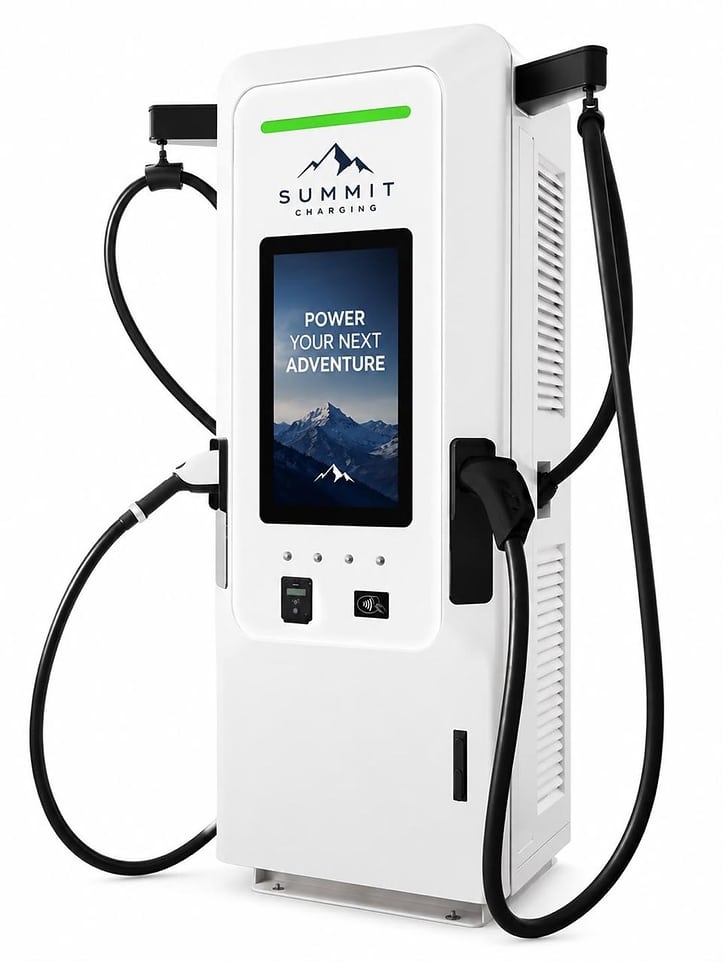
Summit handles site identification, planning, funding, development and construction for its charging infrastructure. BTC POWER’s 320 kW All-In-One (AiO) BABA-compliant charger is playing a central role in the expansion, helping Summit build stronger business cases for its NEVI applications.
BTC POWER’s All-In-One DC fast-charging platform is available in 180 kW, 240 kW and 320 kW configurations. This allows Summit to select charging equipment according to the power requirements, traffic patterns and economics of each location. The companies are also increasingly incorporating Battery Energy Storage Systems (BESS) into charging-site designs to manage peak power demand and reduce exposure to demand charges.
BTC POWER Chief Revenue Officer Seung June (SJ) Oh said Summit is demonstrating the potential of combining the right locations with appropriate charging technology and business models. Summit identifies properties where people already park, shop, work and travel and develops those locations into public EV charging destinations.
BTC POWER has been developing and deploying public EV charging technology in the United States since 2012. Oh said the company understands the equipment, site requirements and operating challenges involved in building reliable charging networks.
Summit evaluates potential charging locations individually rather than relying solely on traditional gas station or travel-center criteria. Its analysis considers parking, traffic, accessibility, electrical capacity, nearby competition, customer demographics and utility infrastructure before charging equipment and configurations are selected.
Summit Charging Founder and President Bruce Lee said BTC POWER provides more than charging equipment, bringing experience with equipment selection, technical requirements and project economics. He said Summit’s experience shows EV charging can work in many types of locations when businesses have sufficient parking, traffic and customer demand.
That creates opportunities for businesses to add public EV charging infrastructure and establish additional revenue streams. Summit’s expansion also demonstrates how EV charging is moving beyond traditional fueling locations as developers pursue NEVI funding and privately financed projects in a wider range of properties.
BTC POWER reports a 98% uptime rate across its deployed charging systems. The company has an operating history spanning 26 years and has deployed more than 25,000 charging systems across at least four continents. Its Irvine, California headquarters serves as a Buy America-compliant production facility, where BTC POWER handles the design, engineering, construction and ongoing support of its charging products.
The company offers Level 2 AC chargers and multiple DC fast-charging systems for charging point operators, fleet operators, fueling and convenience chains, retailers, government organizations and corporate campuses.
Summit plans to equip each charging location with at least eight DC fast-charging ports supporting both CCS and NACS connectors. Planned sites will also include Battery Energy Storage Systems, customer amenities and restrooms. By combining high-power charging, energy storage and amenities, Summit aims to create more convenient, reliable and accessible charging locations that can encourage greater EV adoption.
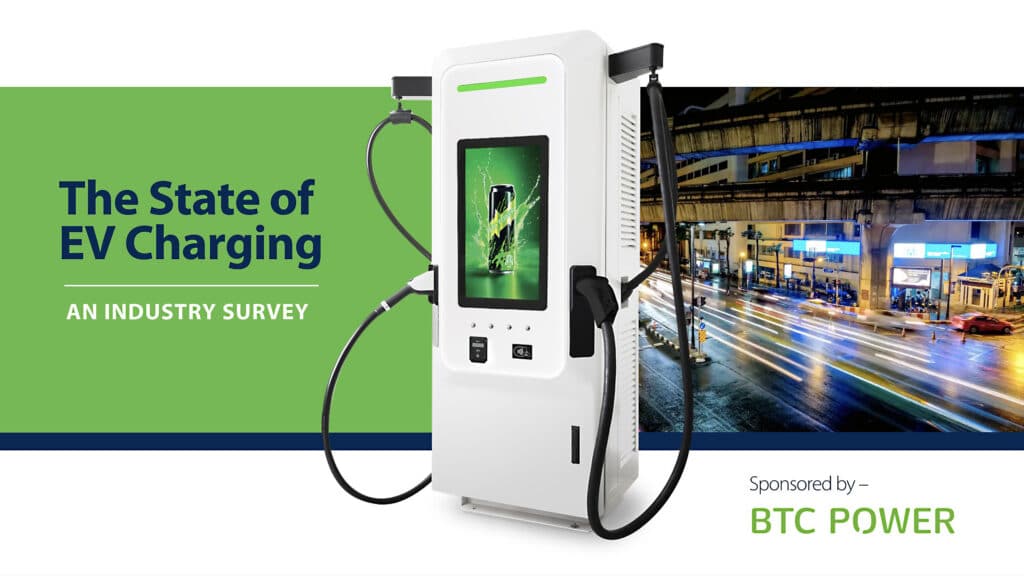
BTC POWER Survey Shows EV Charging Becoming Essential for Businesses
A 2026 BTC POWER survey of more than 200 commercial EV charging decision-makers shows that EV charging is moving from an optional sustainability initiative to essential business infrastructure. 94% of respondents said EV charging has become essential to how their organizations operate and compete, while 92% reported that their charging programs have produced a significant or moderate positive impact.
The survey also found strong expectations for continued investment. 97% of organizations plan to increase their EV charging investment, including 66% that are very likely to increase spending. An even larger 99% said EV charging provides a competitive advantage.
Reliability is becoming more important than simply finding the lowest equipment price. Performance and reliability were identified as leading reasons organizations switch charging vendors, reflecting growing concerns about downtime, maintenance costs, lost revenue and poor driver experiences. 60% of respondents prefer a full-service charging partner that can handle deployment and ongoing support, compared with just 17% who prefer a hardware-only provider.
Government policy also remains important. 90% of respondents expressed confidence that government and industry policies will continue supporting EV charging growth. Federal tax credits, NEVI funding and utility incentives influenced investment plans for 61% of respondents, while 58% cited state incentives.
Overall, the survey indicates that commercial EV charging is increasingly being viewed as a business investment that can improve operations, attract customers, generate revenue and provide a competitive advantage rather than simply satisfy sustainability goals.

Electric Vehicle Marketing Consultant, Writer and Editor. Publisher EVinfo.net.
Services