Audi A6 Sportback e-tron Sets Guinness World Record For Longest Drive on Single Charge
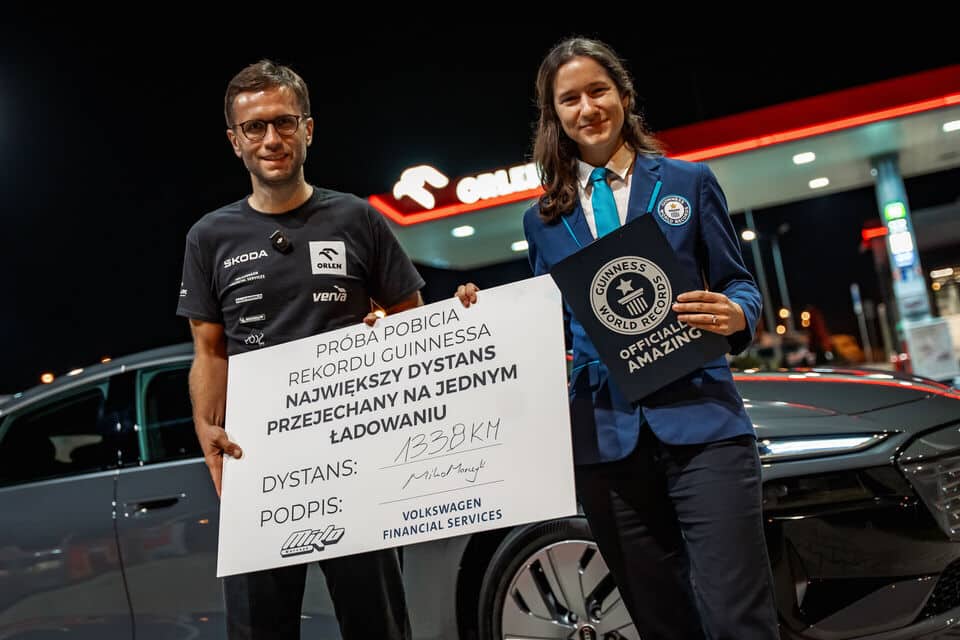
The Audi A6 Sportback e-tron performance has set a Guinness World Record after Miko Marczyk, the reigning European Rally Champion, covered 1,338 kilometers (831.394 miles) across Poland on a single battery charge. The drive produced final energy consumption of just 7.09 kWh per 100 kilometers, demonstrating the potential of the electric vehicle’s aerodynamics, powertrain and efficiency-focused driving.
The record attempt began September 11 at 1:55 a.m. Marczyk drove the Audi along a route following the Vistula River, traveling through Krakow, Sandomierz, Warsaw, Toruń and Grudziądz before reaching Hel on the Baltic Sea. He then returned along the same route.
Marczyk drove in normal traffic, including numerous stretches during rush hour. The average temperature was 15 degrees Celsius, while temperatures dropped to just 7 degrees Celsius during the early morning in Grudziądz. More than 45 hours after setting out, the journey ended between Toruń and Ciechocinek, with 1,338 kilometers completed.
“For the record attempt, I drove the Audi A6 Sportback e-tron performance,” Marczyk said. “The car delivers 367 hp and accelerates from 0 to 100 km/h in 5.4 seconds.” He noted that the vehicle’s 94.9-kWh net battery capacity and exceptionally low aerodynamic drag provided significant efficiency potential.
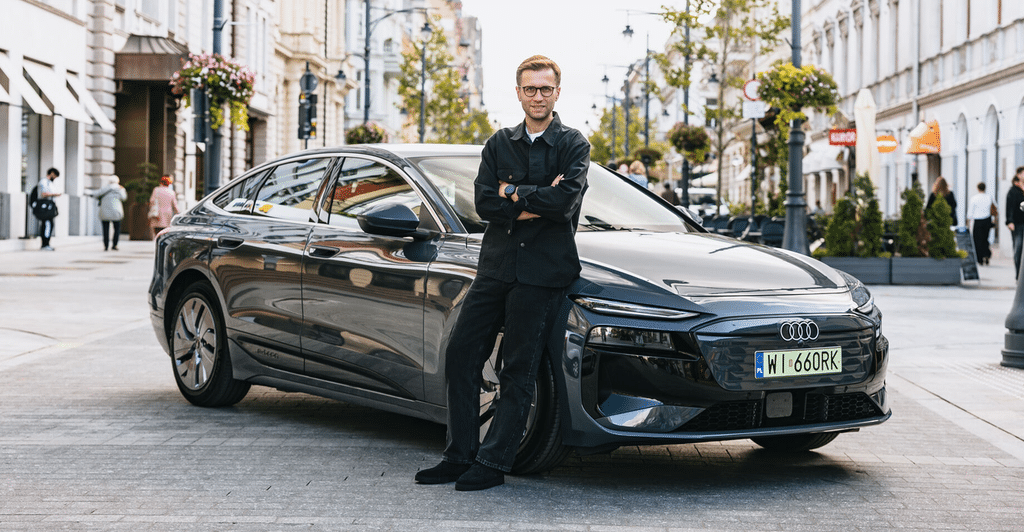
The Audi A6 Sportback e-tron performance has a WLTP range of up to 777 kilometers. Marczyk achieved the record by taking advantage of the vehicle’s efficiency and driving techniques including maximizing regenerative braking, maintaining correct tire pressure, anticipating road conditions and avoiding unnecessary acceleration and abrupt braking.
The A6 Sportback e-tron is built on Volkswagen Group’s Premium Platform Electric architecture and uses an 800-volt electrical system. Its battery has a gross capacity of 100 kWh and a net capacity of 94.9 kWh. Regenerative braking can handle approximately 95% of braking events during everyday driving, with regenerative braking power reaching up to 220 kW.
Aerodynamics were another critical factor. The Sportback has a drag coefficient of 0.21, making it Audi’s most aerodynamic vehicle to date. Audi says approximately 40% of the model’s energy consumption in the WLTP cycle is attributable to aerodynamic drag.
The record demonstrates how aerodynamic efficiency, regenerative braking, thermal management and careful driving can significantly extend the practical range of an electric vehicle.
EV Range Keeps Getting Better
Electric vehicle range has increased significantly, making EVs practical for more drivers and reducing concerns about charging and long-distance travel. Advances in battery technology, energy density, aerodynamics, software and thermal management continue to improve efficiency and usable range.
According to the U.S. Department of Energy (DOE), the median range of all-electric vehicles for model year 2024 reached a record 283 miles on a single charge. That represents an increase of more than four times the median range recorded for model year 2011, which was 68. The highest maximum range for an EV certified by the EPA from 2011-2024 was the Lucid Air sedan in 2022, rated at 520 miles per charge.
The trend is likely to continue as automakers introduce improved batteries and more efficient EV platforms. Longer range is just one of many benefits EVs offer, alongside lower operating and maintenance costs, zero tailpipe emissions, quiet operation, instant torque and the ability to charge using increasingly renewable electricity. As technology continues to advance, EVs are becoming an increasingly capable alternative to gasoline-powered vehicles.

Electric Vehicle Marketing Consultant, Writer and Editor. Publisher EVinfo.net.
Services