Rising U.S. Transportation Costs Are Making Everything More Expensive, EVs Offer Savings
Getting products into the hands of American consumers is becoming increasingly expensive, but one company, FedEx, is taking action against high diesel prices. The company is adding electric trucks to it’s fleet. Each electric truck can reduce fuel costs by an average of $20,000 annually compared with a comparable diesel vehicle.
The Wall Street Journal reported on September 29, 2026, that trucking costs have reached their highest levels since the COVID-19 pandemic disrupted global supply chains. Diesel prices have climbed 77% over the past year, freight railroads are adding surcharges, and the nation’s busiest port is handling more cargo than ever.
AAA reported September 30 that the national average price for regular gasoline has reached $4.4343 per gallon, up sharply from $3.1506 a year ago.
Diesel prices are also climbing. The national average is now $6.4139 per gallon, compared with $3.6997 a year ago.
Businesses have few ways to avoid these higher transportation costs. Railroads, parcel-delivery companies such as FedEx, and even the U.S. Postal Service are raising prices as transportation expenses increase.
The problem is particularly significant in the United States because of the country’s enormous consumer economy and geographic size. Ports serving the world’s largest importer handle more than $1 trillion worth of goods each year, much of which must then travel long distances to reach businesses and consumers.
The United States also relies on an enormous transportation infrastructure network, including some of the world’s largest highway systems and roughly 140,000 miles of railroad track, most of it dedicated to freight.
Higher transportation costs are likely to spread throughout the economy, affecting everything from food and clothing to construction materials. Perishable products such as refrigerated groceries can feel the impact first because deliveries cannot easily be delayed.
Eventually, higher freight costs are likely to reach a much broader range of businesses and consumers. When it costs more to move goods across the country, those costs generally do not disappear. They become another expense that businesses must absorb or pass along to customers.
The situation also highlights one of the biggest advantages of electric vehicles: electricity generally costs less per mile than gasoline or diesel, and EV drivers are far less exposed to swings in petroleum prices.
That advantage becomes more significant as fuel prices remain elevated. A gasoline vehicle can become substantially more expensive to operate almost overnight when oil prices rise. An electric vehicle charged at home is much less exposed to those changes.
For commercial fleets, the potential savings can be even greater. High-mileage delivery trucks and other medium-duty vehicles consume large amounts of diesel, making fuel one of their largest operating expenses. Replacing those vehicles with electric trucks can reduce exposure to diesel prices while also lowering fuel and maintenance costs.
Americans are already responding to higher fuel prices. Hybrid sales have been growing in the U.S. because hybrids can reduce gasoline consumption without requiring drivers to fully switch to electric vehicles. Plug-in hybrids can go further by allowing some driving on electricity when they are regularly charged.
But the current fuel-price environment also makes a stronger case for battery-electric vehicles. Unlike gasoline and diesel vehicles, EVs do not need petroleum to operate.
The longer high fuel prices persist, the more important that distinction becomes.
For consumers considering their next vehicle, and businesses evaluating their fleets, fuel economy is no longer simply an environmental consideration. It is increasingly an economic one.
FedEx is one of the businesses enjoying lower costs through fleet electrification.
Harbinger Receives $300 Million Order For 2,000 Electric Trucks From FedEx
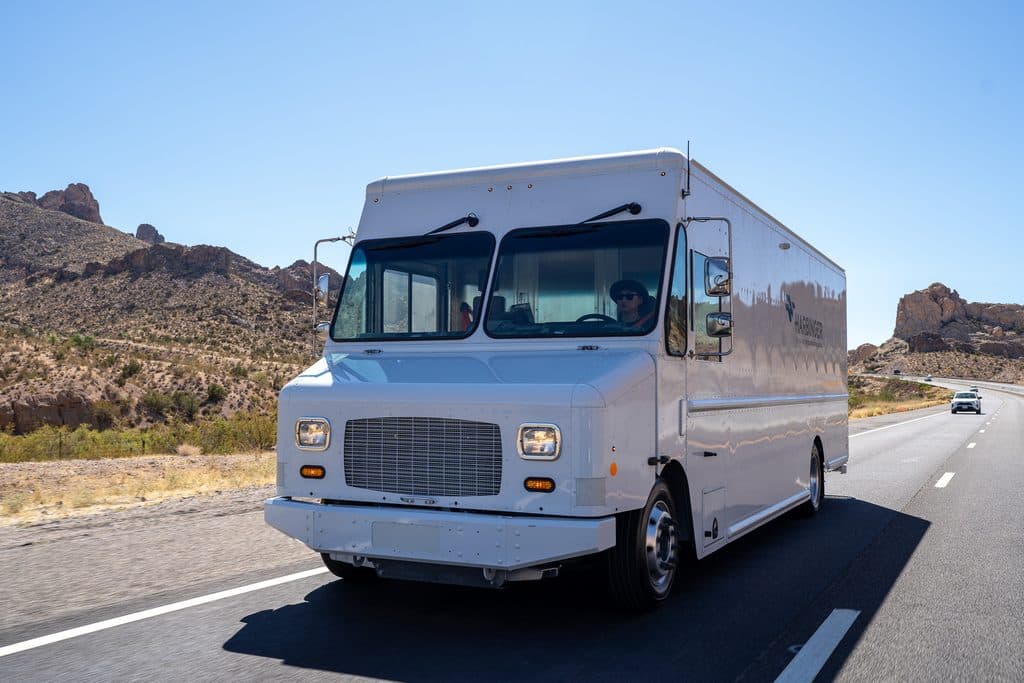
Harbinger has received an order for 2,000 all-electric medium-duty trucks from FedEx valued at more than $300 million, marking a major expansion of the companies’ fleet electrification partnership. The company announced the news on Sep 30, 2026.
The Garden Grove, California-based automotive and industrial manufacturer said the vehicles are planned for delivery by the end of 2027 and will be deployed across FedEx pickup and delivery operations in the United States and Canada.

“FedEx is demonstrating that the business case for incorporating electric vehicles into real-world fleet operations at scale makes sense,” said John Harris, Harbinger Co-Founder and CEO.
The 2,000 electric trucks will replace conventional vehicles on a one-for-one basis and include a mix of models from Harbinger’s all-electric lineup.
Each Harbinger Electric Truck Can Reduce Fuel Costs by an Average of $20,000 Annually Compared With a Comparable Diesel Truck, Says The Company
According to Harbinger, each electric truck can reduce fuel costs by an average of $20,000 annually compared with a comparable diesel vehicle. With a designed 20-year service life, the company estimates that the 2,000-truck deployment could generate approximately $40 million in annual fuel savings, or $800 million over the vehicles’ operating lives.
Harbinger also estimates that replacing 2,000 diesel trucks with its electric vehicles could avoid more than 1.7 million tons of CO2 emissions over their operating lives, based on current Department of Energy data.
Beyond lower operating costs, the trucks are designed to improve the driver experience with enhanced suspension and handling, modern safety and advanced driver assistance technology, responsive steering, and a 42-foot turning diameter for maneuverability on city and residential streets.
Harbinger plans to manufacture and deliver all 2,000 vehicles within approximately 18 months. Kaizen Automotive Group, Harbinger’s Canadian dealer, will support the Canadian portion of the deployment.
“Electrifying a fleet at this scale requires vehicles that can perform the work our robust operations demand while also delivering meaningful economic benefits,” said Paul Melander, Senior Vice President of Safety & Transportation at FedEx and a member of Harbinger’s Board of Directors.
The order demonstrates how commercial fleet operators can use electrification to address both emissions and operating costs, particularly for medium-duty vehicles with predictable routes and high annual mileage.
FedEx invested in Harbinger in 2025.
EVinfo.net reported in November 2025 that Harbinger announced it has raised $160 million in a Series C funding round co-led by FedEx, the world’s largest express transportation company; Capricorn’s Technology Impact Fund, a multibillion-dollar investment firm backing leading companies in electrification; and the world’s largest recreational vehicle (RV) manufacturer THOR Industries, known for its operating companies which include Airstream, Jayco, and more.
The round also featured major participation from Ridgeline, a longtime Harbinger investor backed by FedEx.
Harbinger develops all-electric and hybrid medium-duty vehicle platforms, battery and drivetrain systems, and auxiliary power solutions for commercial and specialty applications. The company also applies its electrification technologies to recreational vehicles, mobile healthcare units, energy storage and defense applications.
EVinfo.net’s Take: EVs Make More Sense Now Than Ever, And Always
EV trucking and electric cars for individual drivers make more sense than ever as rising fuel costs put more pressure on businesses and consumers. And the current fuel-price crisis is a reminder that another disruption, whether caused by war, geopolitical tensions, supply shortages or other events, could emerge at any time.
Even if gasoline and diesel prices eventually fall, they can rise sharply and unexpectedly again.
Electric vehicles provide an important solution to that uncertainty by reducing dependence on gasoline and diesel and allowing drivers and fleets to power transportation with electricity, which can be produced from a diverse mix of domestic energy sources, which become cleaner every year as renewable energy grows fast. EVs provide greater protection from the sudden fuel-price shocks that have repeatedly skyrocketed transportation costs.
Fleet EForce Keeps Commercial EVs on the Road
Fleet EForce is a specialized aftermarket service and support company focused on electric buses and commercial EVs. The company helps fleet operators keep electric vehicles on the road through remote diagnostics, on-site service and repair, preventative maintenance, technician training, telematics and a $3 million-plus inventory of electric bus parts. Fleet EForce supports multiple electric vehicle platforms and is focused on reducing downtime, improving reliability and helping fleets maintain their vehicles beyond traditional OEM service models.

Electric Vehicle Marketing Consultant, Writer and Editor. Publisher EVinfo.net.
Services