EV Sales Surpass Petrol Cars in Australia for the First Time as Drivers Look to Escape Skyrocketing Fuel Costs
Electric vehicle sales in Australia surpassed petrol-powered cars for the first time in August 2026, marking a major shift in the country’s new-vehicle market as rising fuel costs and government policy accelerate EV adoption.
More than 27,000 electric vehicles were sold during the month, setting a new Australian record for monthly EV sales. EVs accounted for 24.9% of all new vehicles sold, exceeding petrol cars, which recorded nearly 26,000 sales, and diesel vehicles, which reached approximately 23,600 sales.
When plug-in hybrid electric vehicles were included, vehicles capable of charging from an external power source represented 36% of all new-car sales in August.
Two major factors are contributing to Australia’s rapid transition toward electrification. The war in Iran has contributed to higher global oil prices, increasing the cost of operating gasoline-powered vehicles. At the same time, a federal vehicle efficiency standard introduced in 2025 requires automakers to reduce average tailpipe emissions from their vehicle fleets each year.
The efficiency standard has also encouraged automakers to introduce a much broader selection of low- and zero-emission vehicles across different price points, giving Australian consumers more electric options than ever before.
Australia previously lagged behind many other developed economies in EV adoption. Electric vehicles represented less than 2% of new-car sales just four years ago and approximately 8% in 2025. EV adoption also became a political target, including former Prime Minister Scott Morrison’s 2019 claim that vehicle efficiency standards would “end the weekend.”
Climate Change and Energy Minister Chris Bowen described EVs surpassing petrol vehicles as a landmark moment for Australia.
He said Australians were rejecting political scare campaigns and choosing vehicles that are cheaper to operate, produce fewer emissions and provide greater protection from international fuel-price volatility.
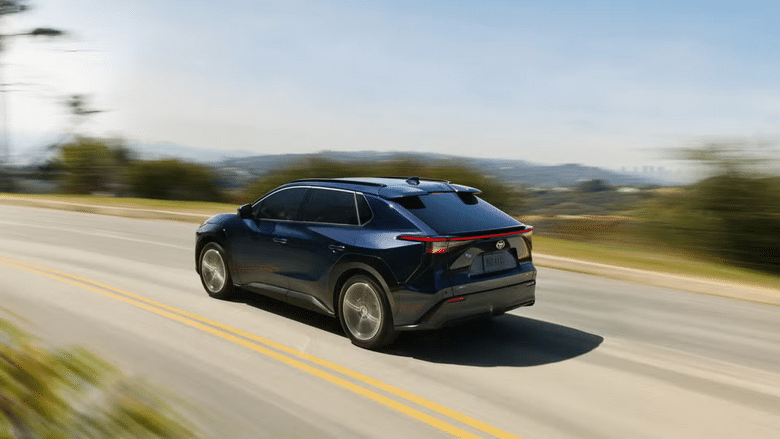
Toyota remained Australia’s best-selling automotive brand in August, followed by Chinese EV manufacturer BYD and Tesla. Five of the country’s 10 best-selling brands were Chinese, including BYD, GWM, MG, Geely and Chery. The top and primary fully electric vehicle (BEV) from Toyota in Australia is the Toyota bZ4X, alongside its newer spacious variant, the bZ4X Touring.
The Tesla Model Y was Australia’s best-selling individual vehicle, with more than 6,400 units sold during the month.
The Electric Vehicle Council said the results demonstrate a structural change in how Australians are selecting new vehicles, with economic savings and environmental considerations both contributing to the transition.
The organization said nearly 200 EV models are now available in Australia. Its chief executive, Julie Delvecchio, said the next challenge is ensuring the benefits of electric transportation reach more Australians, including residents of regional communities, apartment buildings and the roughly 30% of Australians who rent their homes.
The Federal Chamber of Automotive Industries also said consumer choice and competition are rapidly reshaping the Australian vehicle market. Chief executive Tony Weber said charging infrastructure must continue expanding alongside EV adoption.
Reliable and accessible charging will remain particularly important for consumer confidence, he said, including along highways, in rural and regional communities and for drivers who cannot charge an EV at home.
Australia’s August 2026 sales figures indicate that EVs are no longer a niche segment of the Australian automotive market. As fuel prices remain elevated, vehicle choices expand and charging infrastructure develops, electric vehicles are increasingly becoming a mainstream alternative to gasoline and diesel transportation.
Australia’s Seven Best-selling EVs are Chinese, Including Tesla
Electrek reported Australia’s EV market reached a record in June 2026, with seven electric models each exceeding 1,000 monthly sales for the first time. All seven were either Chinese-owned or manufactured in China.
The Tesla Model Y led with 8,072 sales, followed by the BYD Sealion 7 with 4,730, BYD Atto 2 with 2,482, Geely EX5 with 2,303, Omoda Jaecoo J5 with 2,096, Zeekr 7X with 1,868 and MG4 Urban with 1,015. Tesla’s presence is notable because Australian Model Ys are built at Tesla’s Shanghai factory.
Affordable Chinese EVs are driving much of the growth, with the BYD Atto 2, Omoda Jaecoo J5 and MG4 Urban priced below AU$40,000, while the Geely EX5 costs less than AU$50,000. Several of these models entered Australia within the previous year.
The shift is also highlighting the lack of Japanese EV competition. Only three Japanese models ranked among Australia’s top 50 EVs, despite Japanese automakers historically dominating the country’s broader vehicle market.
EVinfo.net’s Take: The Lack of Tariffs in Australia Shows How Fast Cheap, High-Quality Chinese EVs Can Grow
Australia wisely does not impose import tariffs on electric vehicles built in China, largely because the country no longer maintains a domestic automotive manufacturing industry that needs protection from overseas competition.
Australia’s major domestic vehicle manufacturers shut down their production operations between 2009 and 2017. With no large-scale local vehicle factories remaining, tariffs designed to protect domestic automakers and manufacturing jobs would provide little direct benefit while potentially increasing vehicle prices for consumers.
Adding tariffs would instead make EVs more expensive for Australian drivers, particularly as Chinese manufacturers such as BYD, Chery and Geely expand their presence in the market with competitively priced models. Consumer advocates and many EV drivers argue that maintaining an open market gives Australians access to a broader selection of affordable electric vehicles.
Australia’s approach also contrasts sharply with policies in other major automotive markets. The United States applies a 100% tariff on Chinese electric vehicles, while the European Union imposes additional tariffs that can reach 35% depending on the manufacturer.
Foolish Proposed U.S. Ban on Chinese Vehicles Won’t Work
In a letter sent to U.S. congressional leaders on September 3, 2026, the Alliance for Automotive Innovation called for a permanent ban on Chinese vehicles, citing what it described as China’s unfair trade practices, intellectual property theft, government subsidies and surveillance concerns.
The Alliance for Automotive Innovation’s call for a ban raises a larger question: how did the United States become so vulnerable to Chinese competition in electric vehicles in the first place?
The Alliance represents many of America’s largest automakers, including companies that have supported anti-EV policies that are now making the U.S. automotive market less competitive. The Alliance for Automotive Innovation has foolishly backed the administration’s policies designed to decrease vehicle electrification.
If U.S. automakers want protection from increasingly competitive Chinese auto manufacturers, they will ultimately need more than a ban. They will need a domestic market and industrial strategy capable of competing with them. That means vastly increasing support of American-made EVs, American EV adoption and the charging infrastructure to support them.

Electric Vehicle Marketing Consultant, Writer and Editor. Publisher EVinfo.net.
Services