Record High U.S. Labor Day Fuel Prices Reported, EV Road Trips Easier Than Ever
On September 6, 2026, ABC News reported American drivers faced record-high fuel costs heading into the Labor Day weekend, making the traditional end-of-summer road trip significantly more expensive. The average price of regular gasoline reached $4.14 per gallon, nearly $1 higher than a year earlier and well above the previous Labor Day weekend record of $3.82 set in 2012.
For many drivers, the higher prices were enough to change their travel plans. Nicole Collins, who had planned to drive from Philadelphia to South Carolina to visit friends, told ABC News her family spent much of the summer staying closer to home because the cost of driving had become too high. Gasoline at one station in Claymont, Delaware, was selling for $4.199 per gallon.
The increase in fuel prices followed the U.S. and Israeli attacks on Iran in February. Crude oil shipments through the strategically important Strait of Hormuz subsequently plunged, while Iran continued to refuse to reopen the waterway. Energy experts said the disruption has been a major factor behind elevated fuel costs.
Tom Seng, a professor of energy finance at Texas Christian University, told ABC News the situation in Iran and the Strait of Hormuz continues to dominate the outlook for fuel prices. Energy Secretary Chris Wright acknowledged that gasoline prices remain higher than they were during Labor Day 2025, although he made the dubious statement that the administration was working to bring costs down.
Diesel prices have reached a new national record. The average price climbed to $5.85 per gallon on Friday, adding substantial costs for trucking, freight and other commercial transportation. Because trucks and delivery vehicles rely heavily on diesel, higher fuel expenses are increasingly being passed along to consumers through higher transportation, grocery and package-delivery costs.
Gasoline prices normally decline after the summer driving season ends, when demand falls and refineries transition to producing a less expensive winter fuel blend. This year, however, several factors could prevent prices from falling quickly.
U.S. refineries are operating at roughly 98% capacity, with many facilities dealing with unusually severe heat in Texas. Any refinery disruptions, including those caused by hurricanes, could further restrict fuel supplies and make it more difficult for prices to decline.
Global supply concerns are also extending beyond the Middle East. Ukrainian drone attacks on Russian refineries are putting additional pressure on diesel supplies, while declining production from Chinese refineries is contributing to the uncertainty.
The combination of geopolitical instability, constrained oil flows, refinery risks and elevated transportation costs means drivers could continue facing expensive fuel well beyond the end of the summer driving season.
EVinfo.net’s Take: EV Road Trips Across America Are Easier Than Ever
More and more Americans are considering buying or leasing electric vehicles (EVs) as gas prices remain elevated, and record high temperatures remind people that global human caused climate change is very real and happening right now. Increased EV adoption addresses both problems. The appeal of sticking with polluting, expensive gasoline-powered transportation continues to decline.
Long-distance travel in an electric vehicle is becoming easier than ever as charging infrastructure expands across the United States. What was once viewed as a major obstacle to EV ownership is increasingly becoming a routine part of road-trip planning, with more fast chargers, longer-range vehicles, and better navigation tools giving drivers greater confidence to travel hundreds or even thousands of miles.
Loren McDonald, CEO, Chief Analyst at Chargeonomics and Former Chief Analyst at Paren reported on why the growth of DC fast-charging infrastructure is one of the biggest reasons EV road trips are becoming more convenient. Charging networks continue to add stations along major highways, interstate corridors, and in communities where drivers naturally stop during long journeys. As the number of charging locations increases, drivers have more opportunities to recharge without making significant detours from their routes.
Paren’s Q2 2026 State of the Industry report shows that U.S. public DC fast charging continued to expand, while the industry increasingly focuses on reliability, customer experience, strategic growth and profitability.
The U.S. added 4,382 DC fast-charging ports in Q2 2026, down 10% from 4,865 during Q2 2025. Through the first half of 2026, 7,903 ports were added, 7.4% fewer than the 8,532 added during the same period last year.
Demand remains strong, with June charging sessions rising 29% year over year to 3.5 million. However, sessions per port and utilization remained largely flat, creating a more challenging business environment for charging operators.
The market is becoming increasingly competitive. Ionna, Walmart, Red E, Mercedes-Benz HPC and Pilot Flying J are rapidly expanding national networks, while Tesla, Electrify America and EVgo are adding chargers within established urban markets.
NACS is also becoming increasingly important. While some newer operators are deploying balanced CCS and NACS networks, much of the industry remains heavily weighted toward CCS. With nearly all new EVs using NACS, operators that lag in NACS deployment risk losing customers.
Reliability continues to improve, but it is now considered a baseline expectation. Poor reliability can hurt utilization, while reliability alone does not necessarily drive higher usage.
Overall, Paren describes the market as entering a “Charging 2.0” phase focused less on expansion alone and more on dependable service, customer experience, strategic deployment and profitability. Federal and state investments in charging infrastructure are also helping fill gaps between established EV markets.
The expanding charging network is particularly important for travelers crossing rural parts of the country. Interstate charging corridors are helping connect major metropolitan areas while reducing concerns about getting stranded far from a charging station.
Charging Speed and Vehicle Range Improving
Charging speed at public chargers are also improving. Modern DC fast chargers can deliver substantial amounts of energy in a relatively short stop, while the latest charging installations are capable of providing hundreds of kilowatts of power to compatible vehicles. A charging stop can increasingly fit into the same break a driver would normally take to use the restroom, grab food, or stretch their legs.
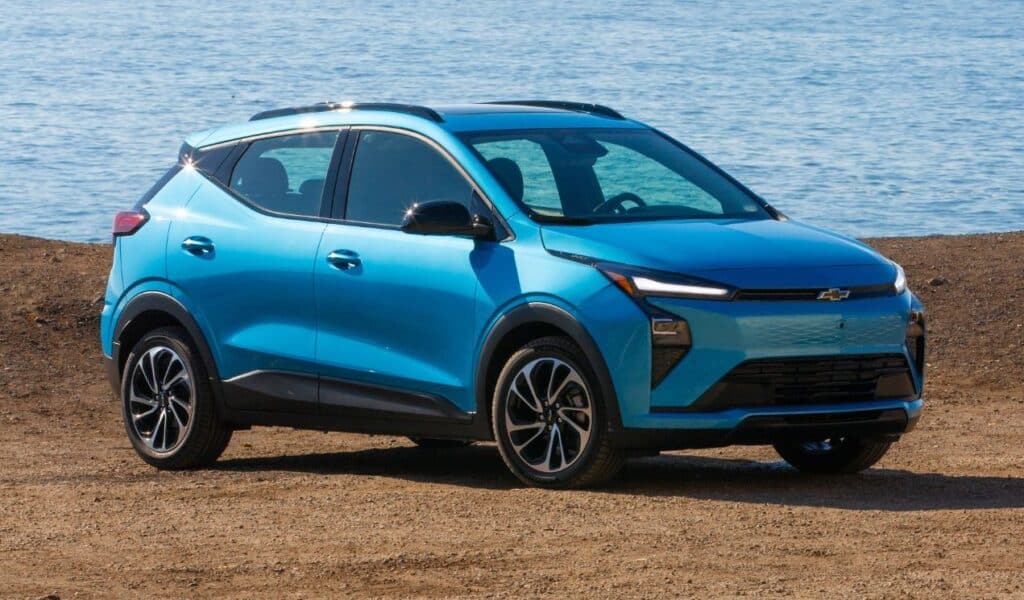
Vehicles are also increasing the speed at which they charge. EVinfo.net reported on one impressive example, the 2027 Chevrolet Bolt. EV Charging Stations, Brought to you by State of Charge, reported that the 2027 Chevrolet Bolt will be able to charge more than twice as fast as previous Bolt models, based on their studies. Motor Trend reported that the Bolt is America’s lowest-priced EV right now, at $28,995.
Vehicle range is improving at the same time.
Coltura’s Electric Car Range and Price Comparison: The 2026 List reported that many increasingly affordable electric cars and SUVs offer 300 miles or more. The longest-range configurations can exceed 400 miles, with Lucid leading the pack at 512 miles.
EV navigation has also become more sophisticated. Many vehicles can automatically plan charging stops based on battery level, driving conditions, and the distance to available charging stations.
The experience is not perfect. Drivers can still encounter busy stations, broken equipment, inadequate amenities, or locations where charging availability is limited. Charging can also take longer than filling a gasoline vehicle, particularly when a vehicle does not support high charging rates.
However, the overall road-trip experience is changing rapidly. Drivers who plan their routes around charging stops can increasingly travel across state lines without making major compromises.
For EV owners, the road trip is becoming less about whether an electric vehicle can make the journey and more about choosing the most efficient places to stop along the way.
As charging infrastructure continues to expand and charging speeds improve, electric vehicles are becoming increasingly capable road-trip machines. The combination of longer range, faster charging, better route planning, and a growing national charging network is making electric travel across America more practical with every passing year.

Electric Vehicle Marketing Consultant, Writer and Editor. Publisher EVinfo.net.
Services