Ford’s $5.8B Kentucky EV Battery Plant Begins Production, Michigan LFP Plant Under Construction
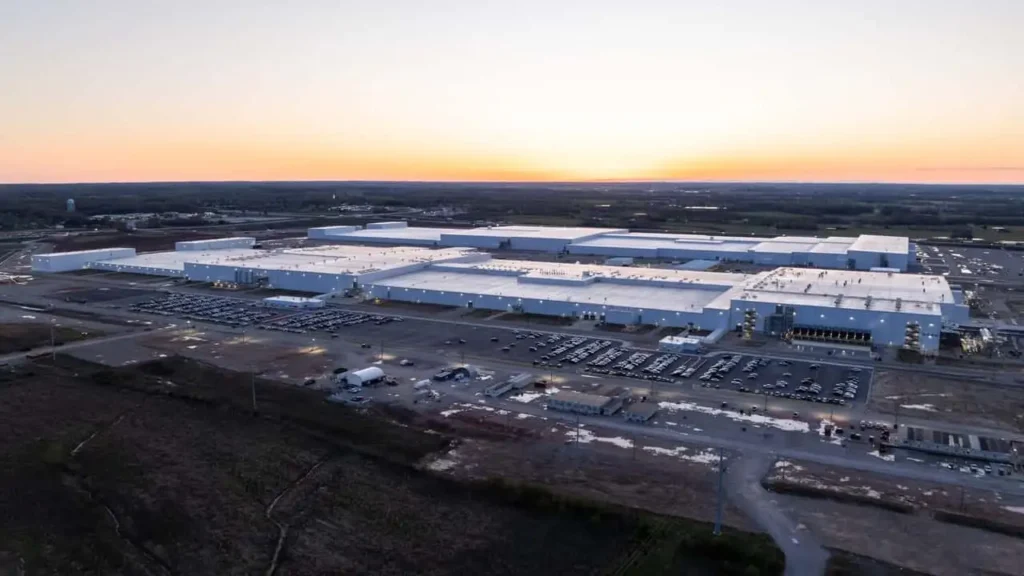
Ford’s electrification push just reached a major milestone. On August 19, BlueOval SK, Ford’s joint venture with South Korean battery maker SK On, officially began commercial EV battery production at its first U.S. plant in Glendale, Kentucky.
The $5.8 billion facility will supply nickel manganese cobalt (NMC) batteries for the F-150 Lightning pickup truck and the E-Transit van. About 1,450 workers are currently on site, but the operation could scale up to 5,000 employees once the plant reaches full capacity. A second BlueOval SK battery plant is under construction in Tennessee, though its start has been delayed to 2027.
The Kentucky site’s launch is a direct result of wise federal climate policies from a better era, particularly the Inflation Reduction Act (IRA). In December 2024, the U.S. Department of Energy awarded BlueOval SK a record $9.3 billion loan to build three battery plants in Kentucky and Tennessee. Together, the projects are expected to support 5,000 construction jobs and up to 7,500 long-term operations jobs.
The timing is crucial for Ford. While crosstown rival General Motors claims to be the largest U.S. battery producer, with cells already powering nearly a dozen EVs, Ford’s own EV sales are under pressure. In the first half of this year, F-150 Lightning deliveries dropped 17% to 13,029 units, E-Transit sales fell 34% to 4,174, and Mustang Mach-E sales slipped 2% to 21,785. Analysts point to cooling demand, aging models, and rising competition from Hyundai, Kia, and GM’s new EVs.
Still, Ford says it’s pressing forward. Looking ahead, CEO Jim Farley recently described Ford’s next-generation EV truck program as a “Model T moment” for the industry. To prepare, Ford will wind down production of the Escape and Lincoln Corsair crossovers at its Louisville Assembly Plant and retool the facility for the new truck, which is expected to launch in 2027 on a fresh Universal EV Platform with a starting price around $30,000.
With BlueOval SK batteries now rolling off the line, Ford has taken a critical step in building the supply chain it needs to compete in the next phase of the EV era.
Ford’s LFP Battery Plant Paves Way for Next-Gen Electric Vehicles
The company plans to start producing lower-cost lithium iron phosphate (LFP) battery cells in Michigan next year using technology licensed from China’s CATL.
Lisa Drake, VP Technology Platform Programs & EV Systems at Ford, reported on the progress at Ford’s BlueOval Battery Park Michigan in June.
“The team is on track with the build-out of the structure, which is complete, and major process mechanicals, electrical and piping are well underway. Our state-of-the-art lithium iron phosphate (LFP) battery cell production equipment is already operational, producing C-sample cells at our equipment supplier location off-site,” said Drake in Ford’s article.
“We remain on track to start production of these batteries next year,” continued Drake.
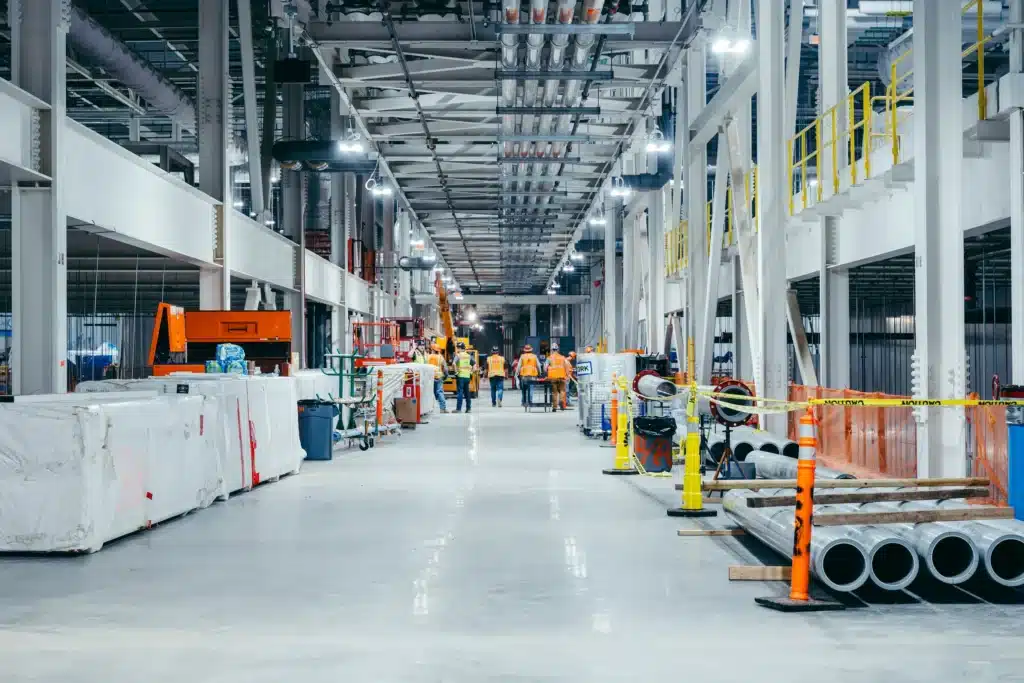
Even before equipment arrives on site, progress is accelerating. State-of-the-art lithium iron phosphate (LFP) cell production equipment is already operational at an off-site supplier facility, producing C-sample cells, the final prototype stage before full production readiness. These cells will soon be used for design-confirmation sign-off in Ford’s next-generation electric vehicle program. Training team members in parallel ensures that once the equipment is installed in the Michigan plant, commissioning will move quickly.
What makes this project historic is not just the scale, but the independence. For the first time, an American automaker is producing LFP battery cells and packs domestically without a foreign joint venture. Built by American workers for American-assembled EVs, the plant represents a shift toward vertical integration in the battery supply chain, a strategy Ford says is essential to unlock cost efficiencies, stabilize supply, and reduce reliance on imports in an unpredictable global trade environment.
Once fully online, BlueOval Battery Park Michigan will mark a return of battery innovation to the U.S. and serve as a cornerstone of Ford’s next-generation EV lineup, beginning in 2026.

Electric Vehicle Marketing Consultant, Writer and Editor. Publisher EVinfo.net.
Services