CATL’s Sodium-Ion EV Batteries Will Be Widely Available by the End of 2026
Chinese battery giant CATL already dominates the global electric vehicle battery market, and the company now says its sodium-ion batteries will be widely available by the end of 2026.
Through October 2025, CATL accounted for 38.1 percent of the global EV battery market, up from 37.6 percent over the same period in 2024. China’s BYD ranked second with a 16.9 percent share, followed by LG Energy Solution at 9.3 percent, CALB at 4.7 percent, and Gotion at 4.1 percent, according to SNE Research.
CATL aims to extend its lead with plans to deploy sodium-ion batteries across multiple industries next year. Speaking at a supplier conference on December 28, 2025, reported by CarNewsChina, the company confirmed the technology will be ready for large-scale use by the end of 2026.
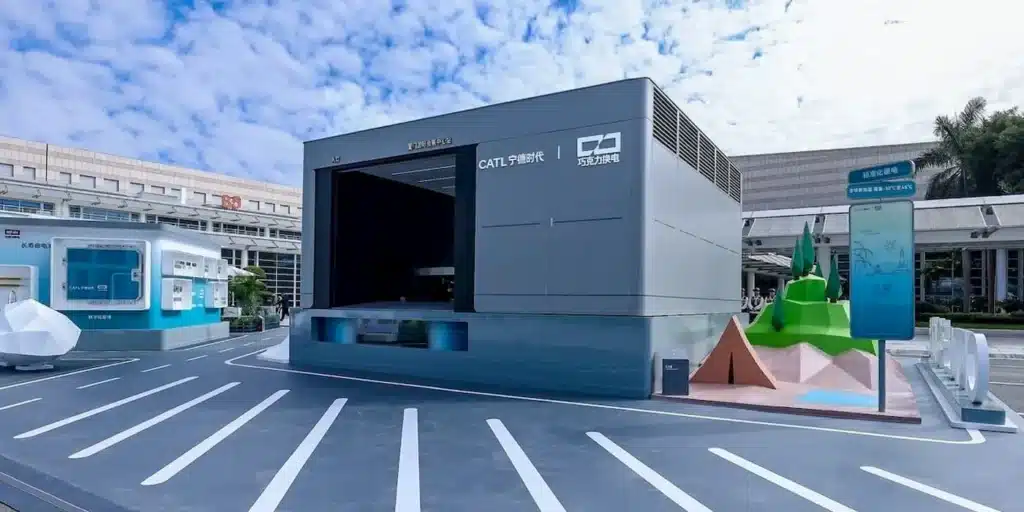
The company said its sodium-ion cells will be used in battery swapping systems, passenger vehicles, commercial vehicles, and stationary energy storage. In April, CATL introduced Naxtra, its dedicated sodium-ion battery brand. The company says Naxtra cells achieve an energy density of 175 Wh/kg, placing them on par with some of the best lithium iron phosphate batteries on the market.
Like LFP, sodium-ion batteries are positioned as a lower-cost alternative to traditional lithium-ion chemistries, with added benefits in safety and cold-weather performance. CATL has previously said the technology is key to enabling longer driving range and faster charging in low temperatures, with commercial cells designed to operate from minus 40 degrees Celsius to 70 degrees Celsius.
In September, CATL said the batteries can deliver a pure electric driving range of more than 500 kilometers, or about 310 miles, and are ready for mass deployment. Naxtra sodium-ion batteries were also the first to pass China’s new EV battery safety standard, GB 38031-2025, which takes effect on July 1, 2026.
According to CATL, the technology reduces dependence on lithium resources and strengthens the foundation of next-generation energy systems, supporting a shift from single-resource reliance toward greater energy security.
BYD began building a major sodium-ion battery plant in Xuzhou in early 2024, investing about $1.4 billion for a planned 30 GWh of annual capacity aimed primarily at micro EVs and e-scooters. Several Chinese automakers are already deploying sodium-ion packs, including JAC Yiwei, Jiangling Motors, and Chery, with suppliers such as HiNa Battery, Farasis Energy, and CATL.
EVinfo.net’s Take: China and the Global Rise of Sodium-Ion Batteries: The U.S. Potential to Lead the Charge for EVs
In January 2024, EVinfo.net released an article, China and the Global Rise of Sodium-Ion Batteries: The U.S. Potential to Lead the Charge for EVs, during a brighter period in US history.
We spoke about our hope that the USA would become a leader in sodium-ion EV batteries, which hasn’t happened, sadly. But there is still hope, at the November 2026 midterm elections, we have a chance to choose better leaders that support the EV industry. The US EV industry brings lots of jobs and economic growth to America, while increasing our ability to compete with China.
China dominates sodium-ion battery manufacturing today, but the United States has a credible opportunity to emerge as a global leader. Sodium carbonate, the core raw material in sodium-ion batteries, is abundant and inexpensive, and the U.S. is the world’s largest producer of natural soda ash.
Lithium-ion batteries will remain essential, especially for larger EVs, and China is likely to maintain leadership in that segment in the near term. However, major lithium discoveries in California and growing interest in sodium-ion technology suggest the U.S. could play a leading role across both battery chemistries. We just need to demand that our leaders support the EV industry.
See EVinfo.net’s summary of leading EV battery types.

Electric Vehicle Marketing Consultant, Writer and Editor. Publisher EVinfo.net.
Services