Many Leading EV Battery Types Driving Innovation
There are a whole lot of electric vehicle (EV) battery types and chemistries competing with each other currently in North America and around the globe. Here is a clear guide of how different battery chemistries influence EV range, charging speed, cost, and performance.
There is no single, universal battery solution for electric vehicles. Automakers select different chemistries, cell formats, and pack designs based on trade-offs between affordability, durability, energy density, and power delivery. Much like internal combustion engines vary from small four-cylinders to high-output V8s, EV batteries are optimized for different use cases.
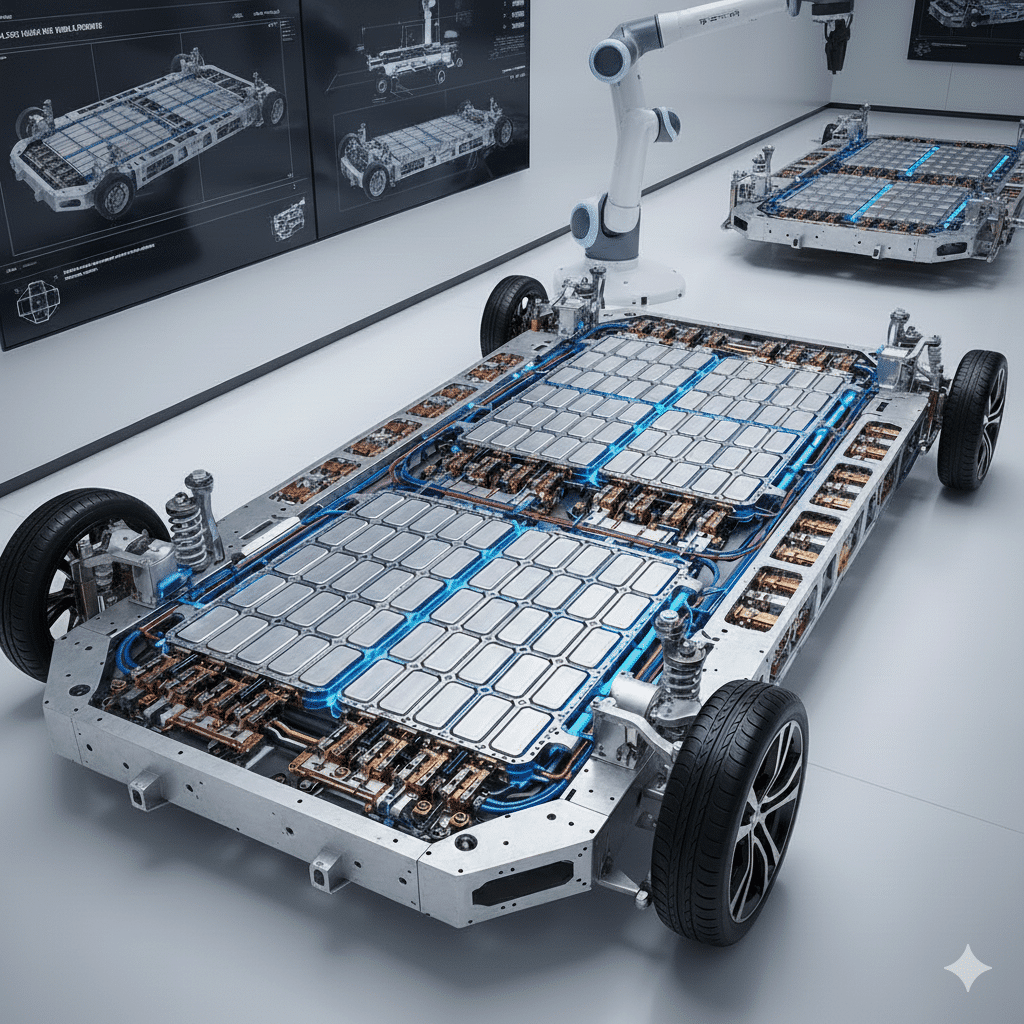
Below is an overview of the battery chemistries that shaped early EVs, power today’s models, and are likely to define the next generation.
Lead-Acid
Lead-acid batteries are the oldest rechargeable battery technology still in widespread use. They are inexpensive, reliable, and easy to recycle. Both gasoline vehicles and EVs still rely on lead-acid batteries for 12-volt auxiliary systems.
However, they are heavy and have very low energy density, making them unsuitable for modern EV propulsion. Early EVs like the first-generation GM EV1 briefly used lead-acid packs before transitioning to more advanced chemistries.
Midtronics reported that Lithium-ion batteries have stretched expectations for energy storage in 12-volt applications, as the leading current challenger to lead-acid.
Nickel Metal Hydride (NiMH)
Nickel-metal hydride batteries predate modern lithium-ion cells and are best known for their role in hybrid vehicles. They are durable and perform reliably across a wide range of temperatures, but their weight and limited energy density restrict their use in full EVs.
NiMH remains common in many hybrids, particularly from Toyota, though lithium-ion batteries are steadily replacing them, as more reliable and energy-dense options.
Lithium Manganese Oxide (LMO)
LMO batteries use a manganese-based cathode that is relatively inexpensive and thermally stable. They can deliver high power and fast charging, but they degrade faster and store less energy than newer chemistries.
LMO blends appeared in early EVs such as the Nissan Leaf and Chevrolet Volt but have largely been phased out for long-range applications.
Nickel Manganese Cobalt (NMC)
NMC is the dominant lithium-ion chemistry outside China. It offers high energy density and benefits from a mature global supply chain, making it ideal for longer-range EVs.
Most EVs sold in the U.S., including those from Hyundai, Kia, BMW, Volkswagen, and Toyota, use NMC cells. Downsides include higher costs, sensitivity to cold weather, and lower thermal stability compared to iron-based chemistries.
Nickel Cobalt Aluminum (NCA / NCMA)
NCA replaces manganese with aluminum, improving cathode stability and reducing degradation.
Variants such as NCMA add aluminum to the NMC mix and are widely used in GM trucks and SUVs. Like NMC, these batteries are costly and require advanced thermal management.
Lithium Iron Phosphate (LFP)
LFP eliminates nickel, manganese, and cobalt in favor of iron phosphate, dramatically reducing cost and improving safety and cycle life. While energy density is lower, innovations such as prismatic cells and cell-to-pack designs have narrowed the gap.
LFP dominates the Chinese market and is increasingly used in the U.S. and Europe for affordable EVs and fleet vehicles. LFP batteries are making EVs safer and cheaper for consumers, says an article by Battery Technology.
Lithium Manganese Iron Phosphate (LMFP)
LMFP builds on LFP by adding manganese to improve energy density and performance. Chinese manufacturers such as Gotion and CATL claim significant gains in range and durability through the use of LMFP.
CATL’s “M3P” battery is believed to use a similar formulation and is already deployed in production vehicles, with further development underway alongside major automakers.
Lithium Manganese Rich (LMR)
LMR is a Western counterpart to LMFP, designed to reduce reliance on nickel and cobalt while leveraging abundant manganese. The goal is to achieve NMC-like range at costs closer to LFP.
General Motors and Ford are actively developing LMR cells, with GM targeting deployment around 2028 for full-size trucks and SUVs with ranges exceeding 400 miles.
In April 2025, Ford Motor Company, announced a breakthrough, saying that the company would pivot to LMR.
Silicon Anodes and Synthetic Graphite
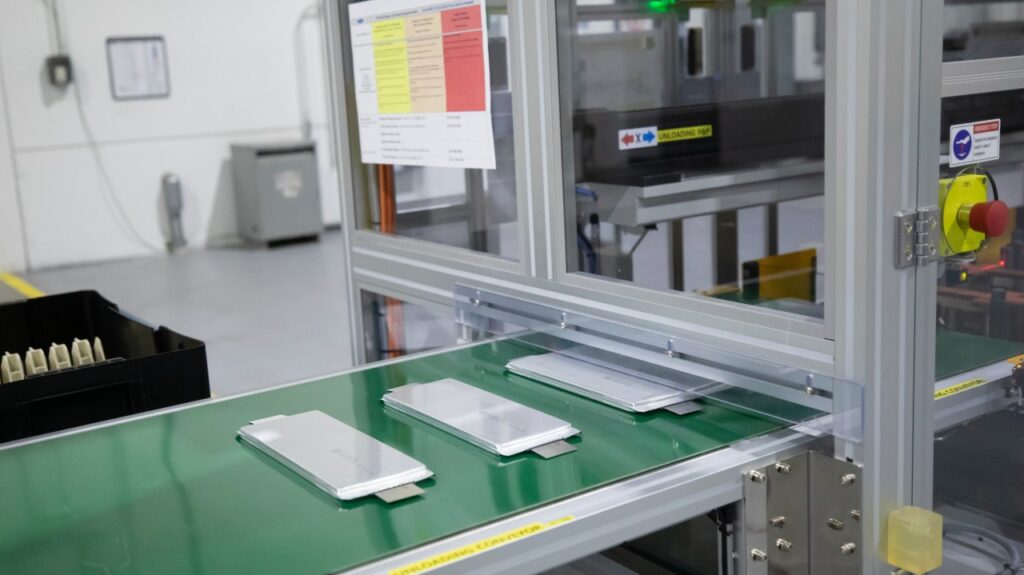
Rather than changing the cathode, some innovations focus on the anode. Silicon and synthetic graphite can store more energy than conventional graphite, potentially shrinking battery size without sacrificing range.
Companies such as Group14 Technologies and Sionic Energy claim production-ready silicon anodes, which could see broader EV adoption as manufacturing scales.
In January 2025, General Motors (GM) announced an agreement with Vianode to supply synthetic graphite anode materials for its electric vehicle (EV) batteries.
Lithium Metal
Lithium-metal batteries replace graphite anodes with thin sheets of lithium, offering unmatched theoretical energy density. The challenge lies in controlling dendrite formation, which can cause safety and durability issues.
Startups like Factorial Energy and QuantumScape are racing to commercialize lithium-metal designs, often paired with solid-state electrolytes.
In October 2025, Pure Lithium Corp. announced its new headquarters will host a pilot production line designed to advance Pure Lithium’s proprietary Brine to Battery™ technology, a vertically integrated process that combines lithium metal extraction and battery anode production.
Sodium-Ion
Sodium-ion batteries replace lithium with sodium, which is far more abundant and less expensive. While energy density is lower, sodium-ion performs well in cold climates and is well suited for budget EVs and commercial applications.
CATL has already launched sodium-ion batteries for both trucks and passenger vehicles in China.
Solid-State Batteries
Solid-state batteries replace liquid electrolytes with solid materials, potentially enabling longer range, faster charging, and improved safety. Many experts estimate that EV ranges will more than double when solid state batteries are released.
China’s GAC Group has reportedly built the country’s first production line capable of manufacturing large all-solid-state EV battery cells. The line is still in the pilot stage and not yet ready for mass production. China Daily reported the news in November 2025.
Stellantis is working closely with Factorial Energy to validate large-format solid-state cells. Mercedes-Benz is another key participant and is partnering with Factorial to develop its next-generation Solstice solid-state battery.
In September 2025, QuantumScape and Corning Incorporated announced an agreement to jointly develop ceramic separator manufacturing capabilities for QuantumScape’s solid-state EV batteries.
Manufacturing challenges and high costs remain major obstacles. As a result, semi-solid batteries are expected to reach the market first.
Charging Speed Improving, New Bolt Improves More than 2x
EV battery charging speed varies wildly from days (Level 1) to under an hour (DC Fast Charge), with Level 2 taking several hours for a full charge, but most drivers get 60-200 miles of range in 20-30 mins on fast chargers. This longer wait time than filling a gas tank (typically five minutes) has been a stubborn barrier to EV adoption.
However, progress is being made. In 2024, A Polestar 5 prototype equipped with Storedot’s extreme fast charging (XFC) cells was charged from 10% to 80% in ten minutes, significantly faster than the current average fast-charging times.
In March 2025, China’s BYD unveiled its new “super e-platform,” that would allow EVs to charge at an unprecedented speed, potentially as quickly as refueling a gas-powered car, in about five minutes.
In practical, real-life applications for the majority of today’s EV buyers, one example of battery technology progress is the the new, exciting, upcoming 2027 Chevrolet Bolt. In December, 2025 EV Charging Stations, Brought to you by State of Charge, reported that it will be able to charge more than twice as fast as previous Bolt models, based on their studies.
Cell Shape and How Cells Are Integrated Play a Critical Role
Battery chemistry alone does not determine EV performance. Cell shape such as cylindrical, pouch, or prismatic and how cells are integrated into modules, packs, or even the vehicle chassis play a critical role in efficiency, cost, and design flexibility.
These packaging and structural innovations are just as important as chemistry and will continue to shape how EVs evolve in the years ahead.

Electric Vehicle Marketing Consultant, Writer and Editor. Publisher EVinfo.net.
Services