Aznom L’Epoque: The Car as a Work of Art
Italian coachbuilder Aznom Automotive unveiled L’Epoque, a concept car that asks a simple but radical question: what if getting somewhere felt exactly like being somewhere? Not a transition between places, but a continuation of living. Not a vehicle, but a room that happens to move.
Designed in collaboration with Milan’s CAMAL Studio, L’Epoque draws its inspiration from the grand chauffeur-driven parade cars and coachbuilt coupes of the 1920s and 1930s, translated into a thoroughly contemporary machine.
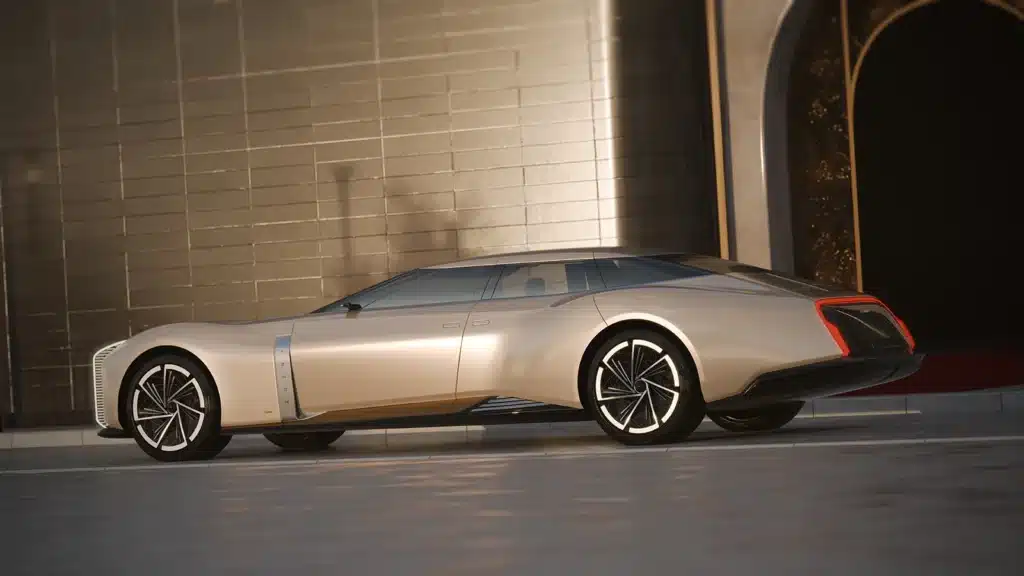
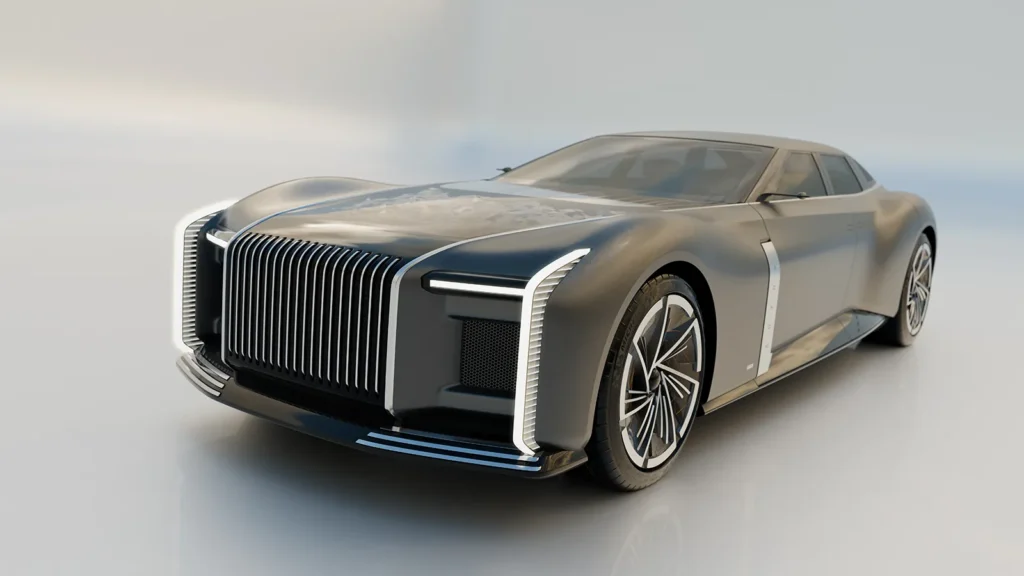
The proportions alone signal something different from everything else on the road: roughly eight meters long, with a long bonnet, a rearward cabin, and a boat-tail rear borrowed from nautical forms. The vertical front grille is monumental in the Art Deco tradition, recalling the architectural patterns of that era rather than anything from a modern car showroom. The windows interact with the idea of continuous urban surfaces. This is not a car that blends in.
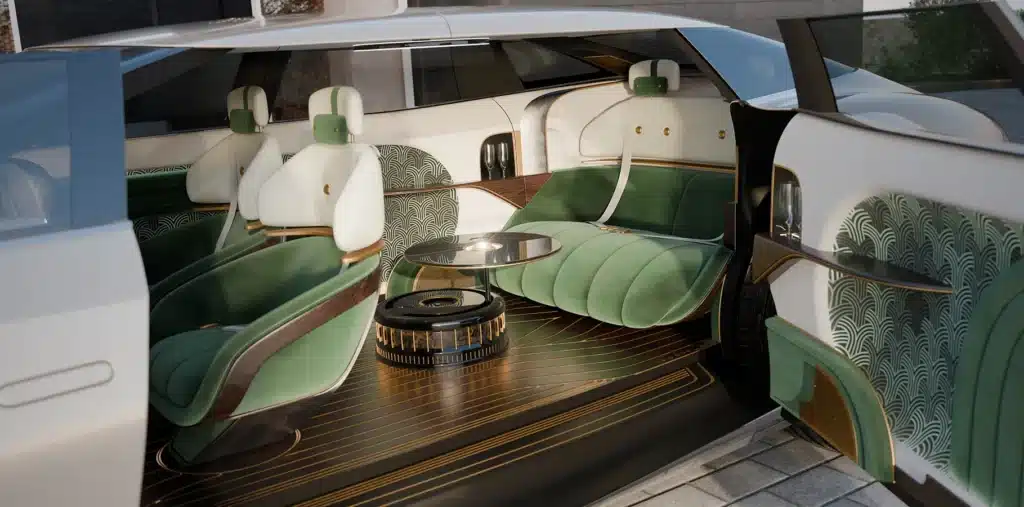
The exterior makes a statement, but the interior is where L’Epoque truly breaks from automotive convention. There are no seats in the traditional sense, only furnishings. The rear cabin is conceived as a private lounge, with a large sofa as its centrepiece and two additional seats that fold away discreetly when not needed, creating a flexible 2+2+2 configuration that never feels crowded or compromised.
Handcrafted wood, fine leathers, and fabrics drawn from the interiors of historic Italian buildings replace the typical automotive palette of molded plastic, backlit trim, and oversized touchscreens. The philosophy here is deliberate: exclusivity measured not in display inches, but in the quality of materials and the care of workmanship.
Technology is present throughout but kept invisible, surfacing only when needed and never for the sake of spectacle. An AI assistant manages the entire onboard ecosystem through natural voice commands, coordinating climate, lighting, fragrance, and atmosphere according to individual passenger profiles. Soundproofing, both passive and active, is treated as a core design element rather than an afterthought. The goal is a cabin where outside noise, the sense of motion, and the awareness of machinery simply recede into the background.
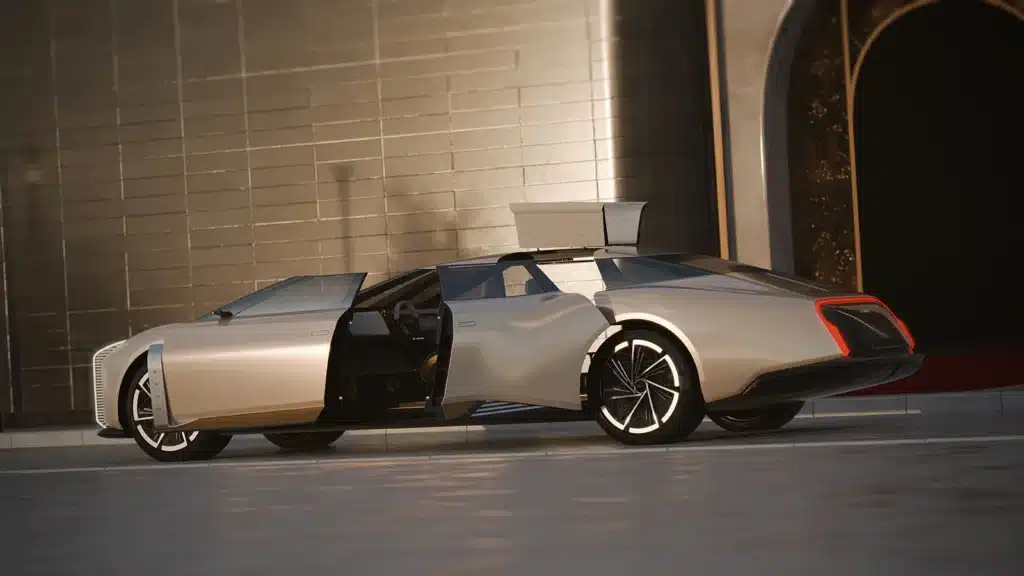
Access is theatrical in its own quiet way. The doors feature an unconventional double-kinematic opening system, and a portion of the roof lifts automatically to ease entry and posture. A carpet of light, projected onto the ground, welcomes guests as they step aboard.
Under all the elegance sits serious hardware. Four electric motors, one per wheel, produce a combined output of over 1,000 horsepower. A 100 kWh battery is supported by a V6 motor generator acting as a range extender. Active suspension with real-time road surface detection keeps the cabin perfectly level across cobblestones, port ramps, and uneven city surfaces, maintaining the illusion of stillness while the world passes outside the windows.
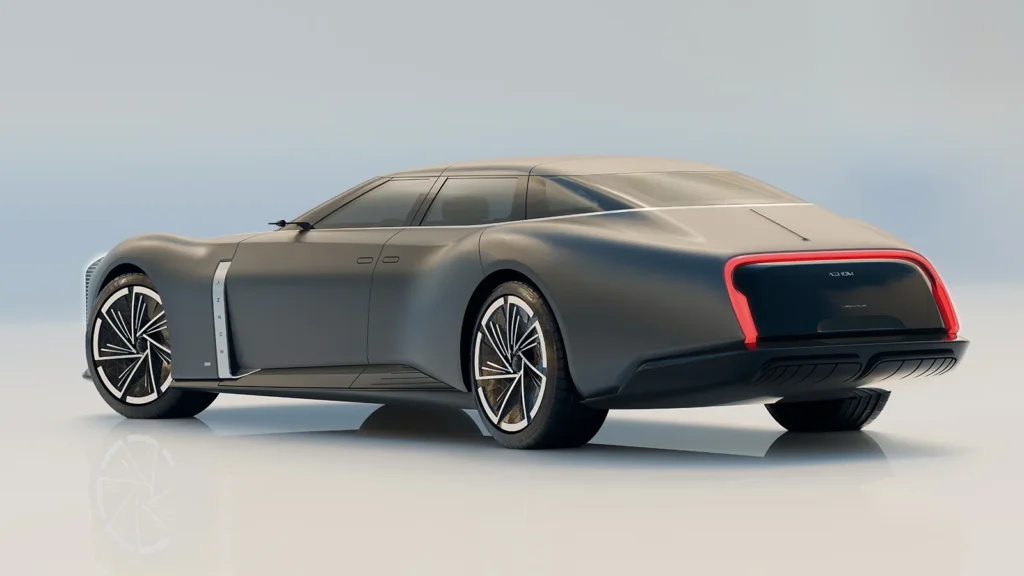
AZNOM director Marcello Meregalli describes L’Epoque as a response to a moment when the car has been reduced to a utilitarian object, a means of getting from point A to point B and nothing more. His ambition, shared by CAMAL Studio design director Alessandro Camorali, is to return the automobile to the realm of works of art and human ingenuity, beautiful and purposeful in equal measure.
L’Epoque remains a style study for now, though Aznom notes that a one-off production model is technically feasible. Whether or not it ever reaches a private driveway, it makes a compelling case that the car, at its best, can still be something worth loving.