EV Battery Solutions by Cox Automotive Surpasses Major Recycling Milestone
Cox Automotive’s EV Battery Solutions business has reached a significant milestone, having processed and recovered more than 10 million pounds of black mass, the powder-like material produced when lithium-ion batteries are mechanically recycled and which contains valuable minerals including lithium, nickel, cobalt, and manganese that can be refined and reintegrated into new battery production. The company announced the news on March 12, 2026.
The achievement reflects the growing operational reality of EV battery lifecycle management. EVs represented approximately 5 percent of lease maturities in 2025 and are projected to exceed 12 percent in 2026, climbing toward 23 percent by 2028. As more electric vehicles enter the used market, the need for safe diagnostics, battery servicing, and responsible end-of-life handling is becoming a mainstream requirement rather than a niche concern.
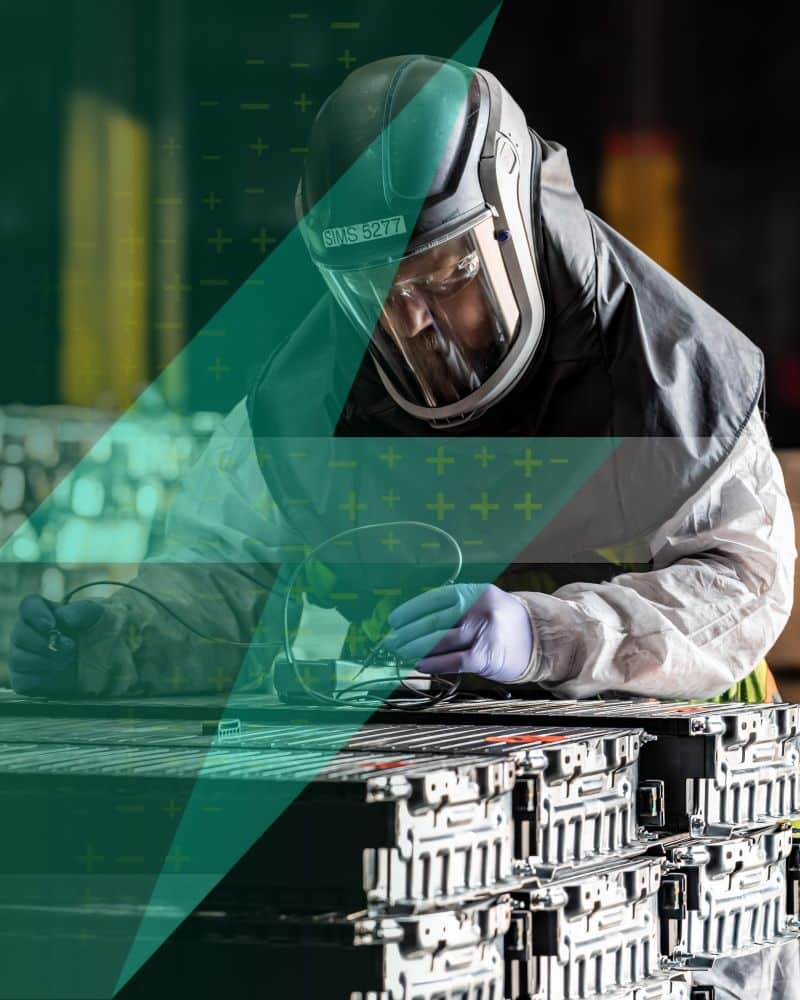
Cox Automotive’s approach to the battery lifecycle spans repair, refurbishment, and remanufacturing before recycling becomes necessary. When batteries do reach end of life, the company’s EV Battery Solutions unit uses proprietary depowering and dry-shredding technologies designed to minimize fire risk during processing. At its recycling center in Oklahoma City, technicians employ a patented dry recycling process that eliminates water and chemical treatments, relies on mechanical disassembly and air-based separation, and achieves up to 94 percent material recovery.
The company operates EV battery service facilities in Oklahoma City, Belleville, Michigan, Las Vegas, Conyers, Georgia, Ede in the Netherlands, and Rugby in the United Kingdom, as well as select Manheim locations.
The milestone also supports Cox Enterprises’ broader sustainability program, Cox Conserves, which has funded more than 500 sustainability projects and invested more than $165 million in environmental initiatives since its founding in 2007.
“This milestone is proof that circularity in the EV battery ecosystem is moving from concept to scale,” said Brian Skalovsky, director of battery recycling for EV Battery Solutions by Cox Automotive. “Every pound we recover represents valuable materials kept in circulation, and a more responsible path forward as more EVs enter the used market.”
“This is about building the infrastructure that makes electrification work in the real world,” said Lea Malloy, vice president of EV Battery Solutions by Cox Automotive. “By extending battery life through repair and remanufacturing, and responsibly recycling at the end of life, we’re helping close the loop for electric mobility.”
EVinfo.net’s Take: EV Battery Recycling Is Making the Cleanest Cars Even Cleaner
Electric vehicles already represent the most environmentally responsible way to get from one place to another.
A recent comprehensive new life-cycle analysis published in Nature Journal finds that electrifying light-duty vehicles (LDVs) in the United States delivers substantial greenhouse-gas reductions across every vehicle type and powertrain, even under unfavorable conditions. This is one of many such studies proving EVs as the most eco friendly vehicle.
Even when accounting for the emissions involved in manufacturing and the energy sources powering the grid, EVs produce significantly less carbon over their lifetime than gasoline-powered vehicles.
But there has always been an asterisk attached to that claim, and it has to do with what happens to the battery when the car is done with it. That asterisk is getting smaller.
The Battery Problem and the Circular Economy Solution
Lithium-ion batteries contain valuable and finite materials, including lithium, cobalt, nickel, and manganese. Mining those materials has real environmental costs. It disturbs land, consumes water, and in some parts of the world, raises serious human rights concerns as well. If a battery reaches the end of its useful life and goes to a landfill, those costs are paid once, the materials are lost, and the cycle starts over with fresh extraction.
A circular economy breaks that pattern. Instead of mining new materials for every new battery, manufacturers recover what already exists from retired packs, refine it, and feed it back into production. The environmental math changes substantially when that loop closes. The energy and ecological cost of extracting virgin materials is avoided. Less mining means less land disturbance, less water consumption, and a smaller carbon footprint baked into the battery before it ever powers a single mile.
For EVs, which are already the cleaner choice at the tailpipe and increasingly so at the grid level as renewable energy expands, battery recycling represents the next frontier in reducing their overall environmental impact. A vehicle powered by a battery made partly from recovered materials, charged on a grid drawing more heavily from wind and solar, is a genuinely different proposition than the EV of ten years ago.
Recycling Rates Matter, and North America Is Behind
The honest assessment is that battery recycling infrastructure in North America is still catching up to the scale of the opportunity. Collection rates are improving, companies are investing in new processing technologies, and milestones like Cox Automotive recovering more than 10 million pounds of black mass signal real progress. But the gap between where the industry is and where it needs to be remains significant.
China, by contrast, has made EV battery recycling a policy priority and has built the infrastructure to match. Chinese regulations require automakers and battery manufacturers to take direct responsibility for end-of-life battery management, creating clear accountability and financial incentive to recover materials rather than discard them. The country has invested heavily in large-scale recycling facilities, and its recovery rates for key battery materials are substantially higher than those achieved in North America or Europe.
The policy dimension matters as much as the technology. Recycling infrastructure does not materialize on its own. It requires clear regulatory frameworks that define who is responsible for battery collection and processing, economic signals that make recovery financially viable, and investment in the logistics networks needed to move retired batteries safely from vehicles to processing facilities. China built those conditions deliberately, and the results show.
North America has the technology. Companies operating here have demonstrated that high material recovery rates are achievable using dry processing methods that reduce environmental impact compared to older hydrometallurgical approaches. What the continent needs is the policy architecture to match, including extended producer responsibility frameworks, standardized battery labeling to streamline sorting, and investment in regional processing capacity that can handle the volume of batteries that will be coming off lease and out of service in increasing numbers over the next several years.
Repurposing Used EV Batteries Can Lower Costs, but Repurposing Is Rare and the United States Lacks Standards for Repurposing
EV batteries typically are first repurposed before they are recycled. Many EV batteries reaching the end of their vehicle life still retain considerable functionality. In many cases, these batteries have more than 80 percent of their original capacity and can be repurposed for stationary applications such as home or commercial energy storage, solar integration, or backup power. Extending battery use through repurposing increases overall value and preserves much of the energy and investment embedded in their production.
A growing repurposing industry has emerged to capture this opportunity. Companies are recovering high-quality batteries from retired EVs and converting them into stationary storage systems, either by linking intact battery packs together or by disassembling and reconfiguring components to create more customized solutions. Repurposing offers multiple benefits, including lower emissions, reduced demand for new battery production and mining, and more affordable energy storage options. Recycling remains necessary but should occur only after reuse and repurposing pathways have been fully explored.
EVinfo.net reported on several repurposing efforts under way. In December 2025, Nissan Australia announced the completion of a new on-site renewable energy project at its Melbourne production facility. The project includes a 100 kW rooftop solar installation and a 120 kWh battery energy storage system that repurposes retired electric vehicle batteries, marking a first-of-its-kind deployment.
The project, known as Nissan Node, was developed in partnership with Melbourne-based battery technology company Relectrify. Central to the installation is a 36 kW / 120 kWh battery energy storage system assembled from nine second-life Nissan Leaf battery packs.
In June 2025, Crusoe and Redwood Materials unveiled North America’s largest microgrid powered by large-scale solar and second-life EV batteries, a pioneering achievement that powers Crusoe’s modular AI data center infrastructure with renewable energy and unmatched agility.
OMI’s 3-Minute Charge Breakthrough Redefines Battery Speed
In addition to important EV battery recycling and repurposing efforts, American companies are leading the way on EV battery innovation. One great example is OMI.
OMI unveiled a validated cathode capable of charging at a 20C rate, allowing a battery to move from near depletion to full charge in approximately three minutes. OMI, an innovation company based in Dallas, Texas, has accomplished what has long challenged the world’s largest battery manufacturers. A supplier to companies such as Polaris Industries and Harley-Davidson, OMI has built a reputation for engineering high-performance energy solutions that push conventional limits. The company announced the news on PR Newswire on February 23, 2026.

From components to full assemblies, OMI’s role is simple: reduce risk, accelerate timelines, and protect margins.
Paul Brewster, Chief Sales Officer at OMI, said: “OMI is a full-service manufacturing and engineering partner that helps OEMs and growth-stage companies reduce cost, risk, and supply-chain friction by leveraging proven global manufacturing, sourcing and assembly capabilities. We support a wide range of technologies—from machined brass forgings, investment castings, gears, die castings, plastics, rubber, motors, PCBs, and custom alloys to full assembly and packaging—while also providing paid NRE engineering, design, and programming services.”
Brewster continued: “OMI specializes in working with companies impacted by tariffs, capacity constraints, or declining competitiveness, particularly SMEs and private-equity-backed businesses that lack the internal resources to outsource effectively. By linking complementary manufacturing processes, managing suppliers end-to-end, and delivering inspected, production-ready parts and assemblies, OMI enables customers to stabilize supply chains, accelerate time to market, and regain margin without adding internal complexity. With 25 years of design, sourcing, and manufacturing/assembly experience, we would love to help streamline your process and have the innovation, flexibility and diversity to deliver impactful solutions regardless of industry.”

Electric Vehicle Marketing Consultant, Writer and Editor. Publisher EVinfo.net.
Services