Australia’s Fuel Crisis Deepens as Over 500 Stations Run Dry, Creating an EV Sales Boom
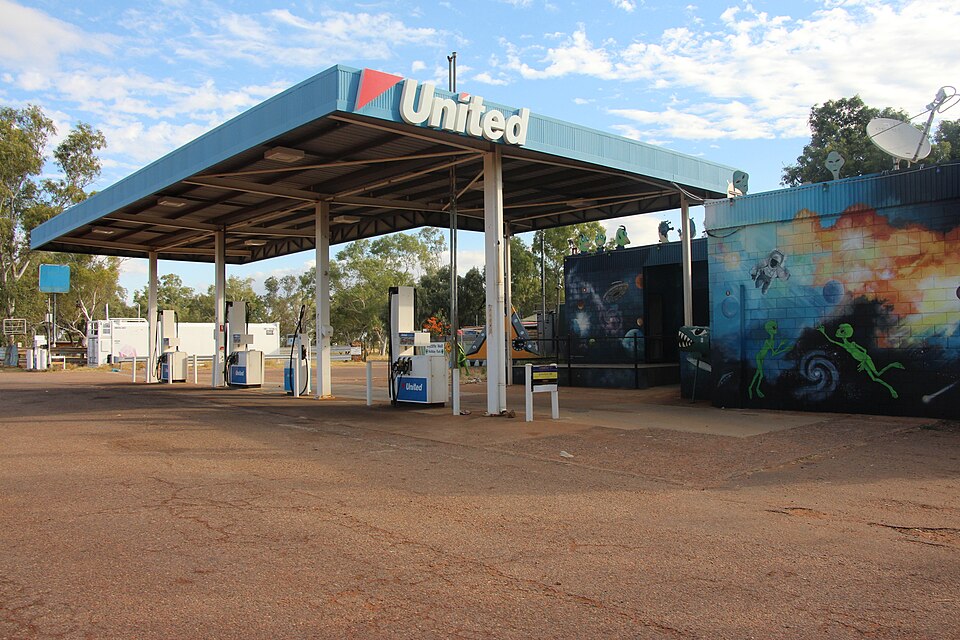
On March 26, 2026, Energy Terminal reported that fuel shortages across Australia are intensifying due to the war in Iran, with more than 500 service stations now out of at least one type of fuel and dozens having run completely dry.
Energy Minister Chris Bowen confirmed that 520 stations nationwide are experiencing shortages, while the situation is hitting rural communities hardest. In New South Wales alone, 32 stations have no fuel whatsoever, 313 are missing at least one type they normally carry, and 187 are without diesel. Officials noted that every station that has run completely dry is located in a regional area, underscoring how severely distribution strains are falling on communities outside major cities.
Authorities have characterized the crisis as a distribution problem rather than a collapse in overall supply, but the federal government has moved quickly regardless. Diesel fuel standards have been temporarily lowered for six months to help boost availability, and part of the country’s strategic fuel reserves has been released to stabilize the market.
The deeper issue is structural. Australia is heavily dependent on fuel imports, leaving it acutely exposed when global supply chains come under pressure. The ongoing Middle East conflict has tightened those chains considerably, and rising demand is compounding the strain. The shortages are a sharp reminder of how quickly that dependence can translate into empty pumps, particularly for the rural communities that have the fewest alternatives and the least ability to absorb the disruption.

Soaring Fuel Prices and Outages Cause Spike in EV Interest and Sales in Australia
On March 21, 2026, the Australian Broadcasting Corporation (ABC) reported that The Iran war and the blockade of the Strait of Hormuz have sent fuel prices skyrocketing. Australians are feeling it acutely, and many are responding by taking a serious look at electric vehicles for the first time.
Angela, a Melbourne resident, recently visited a dealership with her mother and grandmother. Her family had always been curious about EVs, she said, but rising fuel costs turned that curiosity into genuine consideration. A farmer from regional Victoria named Nigel had a similar awakening after his son bought one. With 11 vehicles on his property burning through fuel constantly, he is now exploring solar panels to charge an EV at a projected cost of around $100 a year to run.
The numbers back up those individual stories. Electric vehicles accounted for 11.8 percent of total Australian car sales in February, a record monthly market share. Sales of plug-in hybrids and the Tesla Model Y each rose more than 20 percent month over month. Two of the country’s top-selling Chinese automakers, BYD and Great Wall Motor, both reported significant sales increases since the fuel crisis began. BYD’s Paul Ellis attributed the surge to a combination of rising fuel costs, inflation, and interest rates, adding that the financial case for EVs has rarely been clearer.
Chinese brands are playing an increasingly central role in that shift. Last month, China overtook Japan as Australia’s largest source of new cars for the first time ever. Four Chinese brands now rank among Australia’s top ten sellers, and attitudes toward them are warming. Melbourne business development manager Tapan Patel, who recently chose a BYD for his family’s second car, said he trusted the brand’s long history in battery manufacturing in a way he did not with newer entrants.
Robert Khanal, Business Manager at Eagers Automotive Limited, commented on a wave of EV buyers descending on his dealership in Canberra, Australian Capital Territory, Australia.
Khanal said: “I haven’t seen anything like this in years. People are walking into EV showrooms and buying cars the way they bought toilet paper during COVID. No exaggeration, sales are up nearly 3x and the momentum is unreal. This isn’t just about cars anymore, it’s rising fuel costs, smarter long-term decisions, and a clear shift in mindset. A year ago customers asked, “Are EVs worth it?” Today they’re asking, “Which one can I get and how soon?” We’re not approaching the EV wave, we’re in it. The switch isn’t coming… it’s already here.”
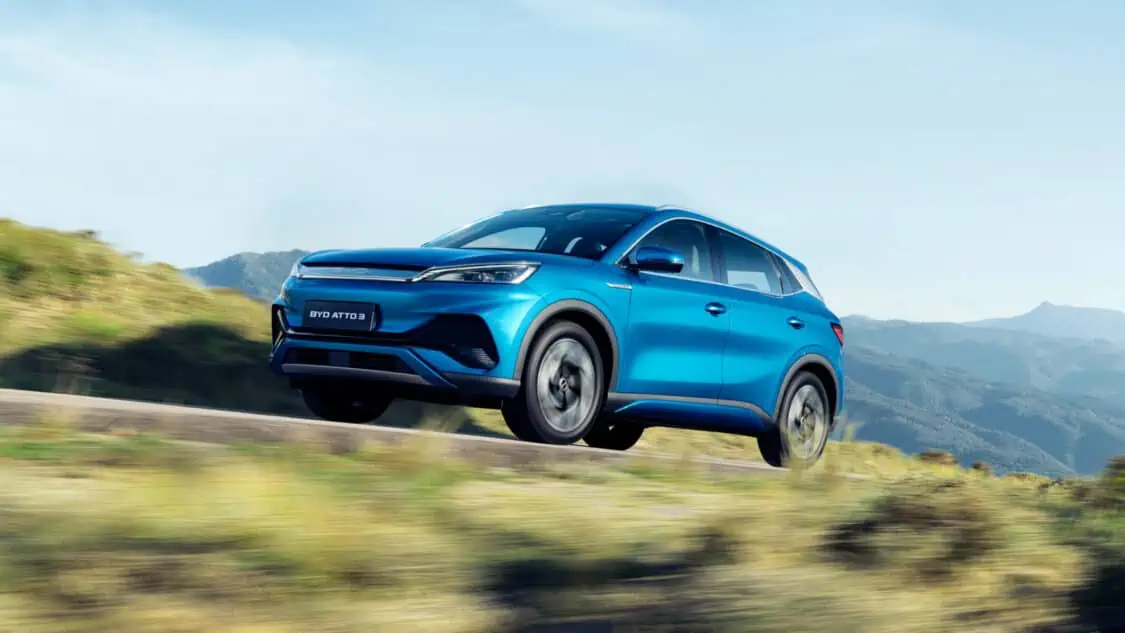
BYD also announced a second-generation blade battery capable of charging from 10 to 70 percent in just five minutes, a development analysts say could reshape EV adoption trajectories once it reaches international markets.
Tu Le, founder of Sino Auto Insights, told ABC that cut-throat competition in China was forcing brands to look to places such as Australia as a “pressure release valve”.
Australia is one of a handful of markets around the world with nearly no tariffs and quotas, which gives way to strong profit margins.
Mr Le believes Chinese automakers are also using Australia as a testing ground for breaking into Western markets for SUVs and utes given the love of those vehicles in Australia.
Despite the momentum, overall EV penetration in Australia remains low, sitting at around 2 percent of all cars on the road. FCAI chief executive Tony Weber acknowledged that growth has been slower than hoped but said the opening months of 2026 are pointing in the right direction. With fuel prices showing no sign of falling quickly and Chinese automakers treating Australia as a proving ground for broader Western expansion, the pressure to accelerate that shift is only building.
EVinfo.net’s Take: EVs and Renewable Energy Are the Answers to Every Fuel Crisis
Australia’s fuel crisis is another reminder that the solutions to a fuel crisis like this one exist today, unlike the fuel crisis of the 1970s.
Every fuel crisis tells the same story. A conflict erupts in an oil-producing region, shipping lanes tighten, crude prices spike, and ordinary people are left scrambling at the pump. It happened in the 1970s. It is happening right now, as the Iran war drives oil past $100 a barrel and gas stations in Australia run dry by the hundreds. The details change. The underlying vulnerability does not. And the answer, each time, is the same one we keep failing to act on fast enough: get off oil.
Electric vehicles and renewable energy are not futuristic concepts or niche solutions for early adopters. They are mature, proven, and increasingly affordable technologies that exist right now and work right now. Every EV on the road is a vehicle that cannot be held hostage by a blockade, a pipeline disruption, or a decision made in a foreign capital. Every solar panel on a rooftop is a unit of energy production that no geopolitical event can interrupt. That is not a minor convenience. That is structural resilience.
The current crisis is making the case in real time. In Australia, more than 500 service stations have run out of at least one fuel type, with rural communities hit hardest. Families are lining up at pumps. Farmers are rethinking how they power their operations. And EV dealerships across the country are reporting surges in interest and record sales figures. People do not need to be convinced with charts and projections when they are staring at an empty pump or a fuel bill that has jumped by a third in a matter of weeks.
The economics have shifted decisively. Used EVs in the United States are selling at record pace, with 93,500 units moved in Q1 2026 alone, up 17 percent from the previous quarter. Nearly half of all used EV transactions are now coming in under $25,000. In Australia, Chinese automakers like BYD and Great Wall Motor are reporting sharp sales increases, and EVs claimed a record 11.8 percent of new car sales in February. Globally, EV sales topped 20.7 million units in 2025, growing 20 percent year over year. The market is not waiting for policy to catch up.
Renewable energy completes the equation. An EV charged by coal-generated electricity is still better than a gas vehicle, but an EV charged by solar, wind, or hydro is something else entirely: a vehicle running on domestically produced, geopolitically insulated power. Pair that with battery storage and vehicle-to-grid technology, and homes, farms, and businesses can maintain power and mobility even when the broader grid and fuel supply chains are under stress. The farmer in Victoria eyeing solar panels to charge his EV at $100 a year understands this intuitively. It is the same logic that applies at the national level.
The security dimension is impossible to ignore. Nations that electrify their transportation systems and build out renewable generation are nations that reduce their exposure to oil market shocks, reduce the leverage that unstable regions hold over their economies, and keep energy spending circulating domestically rather than flowing overseas. Every dollar spent charging an EV is a dollar that stays home, supporting local jobs, local infrastructure, and local energy production.
The obstacles are real but shrinking. Range anxiety is fading as new models routinely exceed 300 miles on a charge. Charging speeds are dropping dramatically, with next-generation battery technology promising charges measured in minutes rather than hours. Upfront costs are falling across both the new and used markets. The transition is not painless, but it is underway, and every crisis that punishes fossil fuel dependence accelerates it.
What slows it down is policy that moves in the wrong direction. The USA rolling back EV incentives, loosening emissions standards, and treating fossil fuels as a permanent fixture rather than a phase to be managed out does not protect consumers. It exposes them. It locks in the vulnerability that every fuel crisis exploits. The countries and communities that come through these disruptions best will be the ones that used the crisis as a catalyst rather than an excuse to delay.
The fuel crisis unfolding right now is painful. It is also clarifying. EVs and renewable energy are not the answer to this crisis alone. They are the answer to every fuel crisis, including the ones still to come.

Electric Vehicle Marketing Consultant, Writer and Editor. Publisher EVinfo.net.
Services