ChargeSouth, a New EV Media Website, Was Built by a Southerner Who Got Tired of Waiting for Honest EV Coverage
ChargeSouth was built for Southern drivers tired of electric vehicle (EV) coverage written with California in mind. Founded by a Southerner, the site covers Georgia, Alabama, Tennessee, Texas, and 10 other states with the kind of ground-level reporting that national outlets skip.
Jason Powers, VP of Sales & Emerging Technologies at eVerged, is the founder, and is based in Birmingham, Alabama. Powers brings more than two decades of enterprise sales experience to the publication, along with hands-on ownership of more than a dozen electric vehicles ranging from the Tesla Cybertruck and GMC Hummer EV to the BMW iX and Rivian R1T. He is also President of the Tesla Owners Club of Alabama and a Steering Committee Member for the AMP Center at the University of Alabama — giving ChargeSouth direct connections to the policy, utility, and advocacy communities shaping EV adoption across the region.
Powers said: “I’m excited to announce my side project focused on launching a southeast site dedicated to all things EV. This platform will feature:
- Reviews on EVs, chargers, dealerships, and service
- Road trip stories
- Infrastructure information
- Government and utility program data
I welcome any suggestions that would be useful to my friends in the industry and our mutual customers. Follow our journey on Instagram, X, and LinkedIn. (coming soon).”
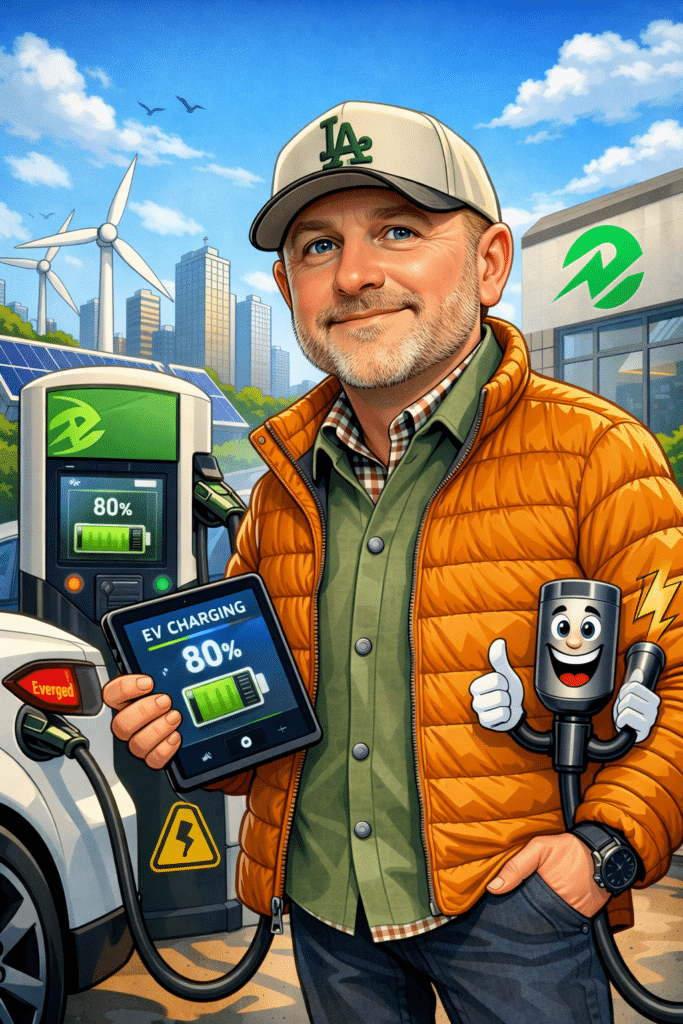
ChargeSouth Offers Much-Needed Local Coverage of the South
The premise of ChargeSouth is simple. The South is the next frontier for EV adoption. NEVI funding is coming online across the Southeast, utility programs are expanding, and EV prices are finally reaching mainstream buyers. But almost no one is covering what that means for drivers navigating rural highways, triple-digit summers, and charging infrastructure that is still catching up.
Why Local EV Coverage Matters: The South Is Going Electric and Nobody’s Talking About It
The national EV conversation keeps its eyes on California. But something is quietly happening in the South.
If you get your EV news from national outlets, you’d be forgiven for thinking electric vehicles are still mostly a coastal, urban phenomenon. The coverage tends to follow a familiar pattern: California leads, Tesla dominates, and everyone else is catching up. What that narrative misses is a genuine, ground-level shift happening across the American South, street by street and dealership by dealership.
People in southern states are noticing more EVs on the road. They’re seeing them at Walmart parking lots in North Carolina, at charging stations along Florida interstates, at neighbor’s driveways in Georgia suburbs. This isn’t an anecdote. Florida now leads the Southeast in new passenger EV sales, reaching a peak EV market share of 12.8% in the third quarter of 2025, the only state in the region to surpass the national EV market share of 11.9% at the time, and by the end of 2025, the state had surpassed half a million total passenger EV sales. Even Alabama, long near the bottom of regional rankings, recorded a peak in new passenger EV sales in Q3 2025, surpassing four percent EV market share for the first time.
These are real milestones. And they’re going largely unreported outside of specialized outlets.
The Stories National Coverage Doesn’t Tell
National EV journalism is structurally biased toward scale. It leaves out the human stories that actually move the needle for everyday buyers considering the switch.
It doesn’t cover the Toyota dealer in Tennessee who just got a shipment of electric Toyota bZs and can’t keep them on the lot. It doesn’t profile the family in Mississippi who went electric to escape gas prices and are now evangelizing their neighbors. It doesn’t explain how South Carolina increased its fast charger port count by 67 percent in 2025, with growth concentrated at restaurants, shopping centers, and gas stations. Those are stories that matter to southern readers deciding whether an EV is realistic for their life, and they’re simply not being told at a national level.
Southeast public EV charging grew 24 percent in 2025, which is substantial progress. But the region still lags the national average in public charging availability per 1,000 people by 26 percent, which means local infrastructure questions remain urgent and unresolved for real buyers in the region. National outlets won’t dig into whether there’s a reliable fast charger between Baton Rouge and Mobile. Local coverage will.
Why It Matters More Now
With fuel prices elevated and unlikely to fall significantly anytime soon, more southern drivers are seriously weighing the switch for the first time. The Iran war has pushed gas above $4 a gallon and the math on EVs has never looked more compelling. But the questions people in the South have are local ones: Can I charge on a road trip through rural Georgia? Are there EVs that handle heat and humidity well? What incentives still exist at the state level after federal credits expired?
Those aren’t questions that a story filed from a San Francisco bureau is going to answer. EV adoption across the U.S. is shaped on a state-by-state basis by state policies, infrastructure deployment, and economic and demographic factors. That means the story of EVs in the South is a distinctly southern story, and it deserves to be covered that way.
What Good Local EV Coverage Looks Like
It’s the charging station that just opened off I-20 in Birmingham. It’s the local electrician who’s booked out six weeks installing home chargers. It’s the school bus fleet in a rural county going electric and what that means for the kids and the budget. It’s the Hyundai plant in Georgia that’s now producing electric vehicles and the workers building them. These stories exist. They’re happening right now. They just need someone paying attention.
The national EV story is about policy and percentages. The local story is about people. And for readers in the South trying to figure out if going electric makes sense for their lives, the local story is the one that actually helps.
A Publication Built on Independence
What sets ChargeSouth apart from most automotive and EV media isn’t just geography — it’s editorial philosophy. Powers has been unsparing in that regard. When his own experience with a vehicle or a manufacturer fell short, he said so publicly. An accountability piece about his experience with GM and the denial of a lease buyback on his 2025 Hummer EV 2X — published under his byline on ChargeSouth — drew significant attention precisely because it was the kind of honest, first-person reckoning that sponsored content will never produce. That willingness to hold the industry accountable, even when Powers has professional relationships on the line, defines what ChargeSouth is trying to be.
That independence extends to how ChargeSouth approaches infrastructure coverage. Powers has deep working knowledge of the NEVI formula program, CFI discretionary grants, IRA tax credits, and utility make-ready programs across the Southeast — knowledge built through his day job at eVerged, where his portfolio spans Level 2 AC charging, Level 3 DC fast charging, solar generation, and battery energy storage. ChargeSouth translates that insider expertise into plain-language coverage that helps readers, fleet operators, and local governments actually understand what funding is available and how to access it.
ChargeSouth fills that gap across six areas: vehicle reviews, charging infrastructure, policy and incentives, Southern road trips, home charging, and regional market data. Every EV is tested in real conditions, including highway speeds, summer heat, and rural routes, with actual results reported rather than EPA estimates.
Infrastructure coverage tracks NEVI corridor builds, network reliability, and new station openings. Policy coverage breaks down state-by-state grant spending, utility programs, and federal tax credit eligibility in plain language.

Electric Vehicle Marketing Consultant, Writer and Editor. Publisher EVinfo.net.
Services