Meyer Werft Presents Project ‘Vision’, the World’s First 100% Battery‑electric Cruise Ship
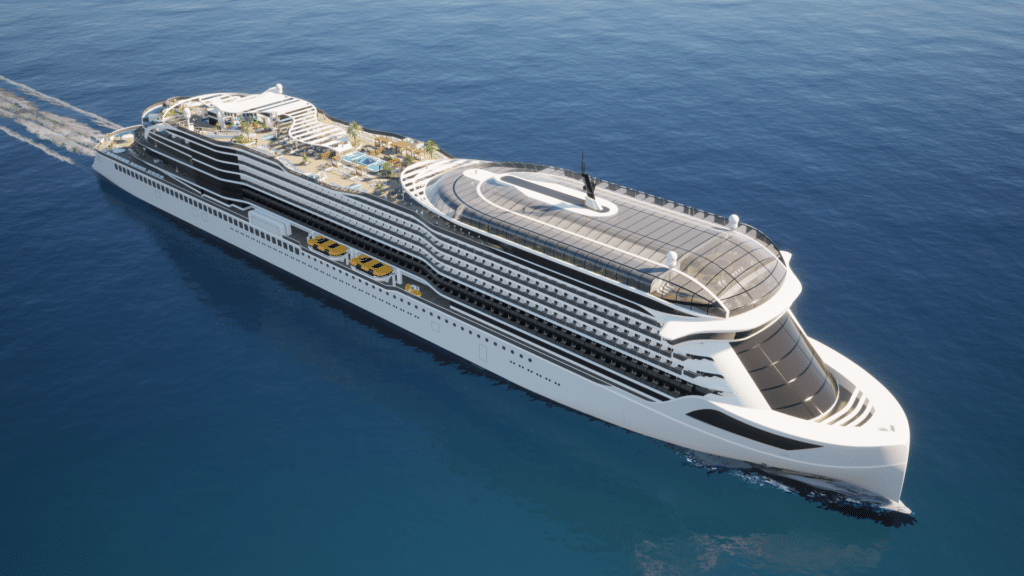
In April 2026 at Seatrade Cruise Global in Miami, the MEYER WERFT Group presented its concept study “Vision,” a groundbreaking design for what it describes as the world’s first fully battery-electric cruise ship at a scale exceeding 80,000 gross tons.
Project “Vision” is designed to measure approximately 275 meters in length, accommodate around 1,856 passengers, and reach roughly 82,000 GT. The concept highlights how electrification and new marine engineering approaches could significantly reshape the future of cruise ship design and operations.
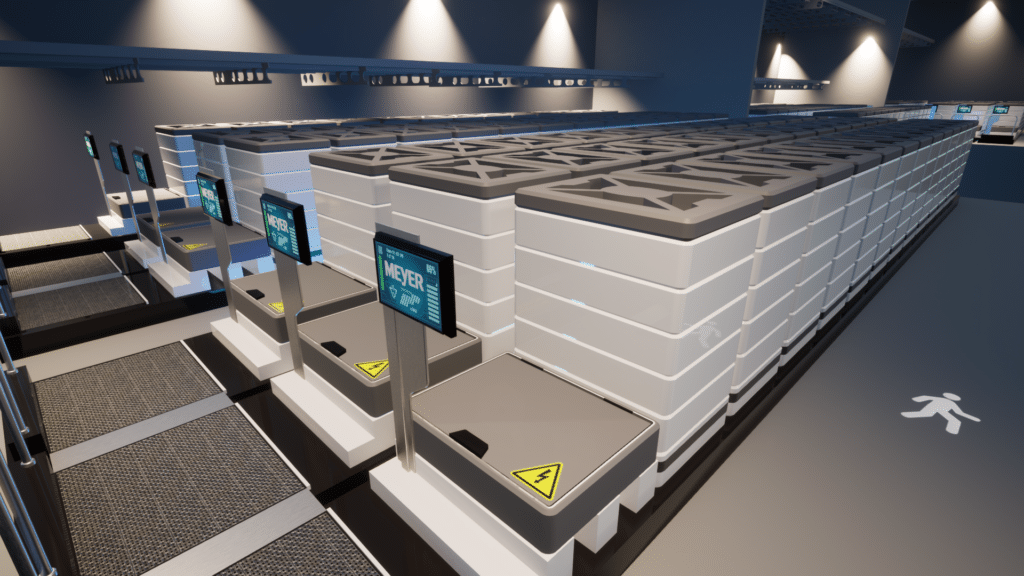
A key component of the vessel is its large-scale battery system supplied by Corvus Energy. This system is intended to enable full-electric operation across many typical European cruise routes, including itineraries such as Barcelona to Civitavecchia near Rome. Industry projections suggest that by 2030, around 100 ports across Europe could be equipped with the shore power infrastructure needed to support large-scale charging for electric cruise vessels.
“We are pleased to have Corvus Energy — the pioneer in safe and reliable battery systems for ships, having equipped more than half of the world’s hybrid and fully electric seagoing vessels — at our side. The technology is available today. If ordered this year, we could already deliver the first ship in 2031,” says Thomas Weigend, Chief Sales Officer at MEYER WERFT.
“Our close collaboration with MEYER WERFT and the combination of our capabilities demonstrated with the ‘Vision’ is the natural evolution of battery technology — and a defining moment for the cruise industry. Scaling to fully electric cruise ships shows the world that the technology is safe, mature and ready to change the game”, adds Fredrik Witte, CEO of Corvus Energy.
“We asked ourselves how we can use innovation to reduce CO₂ and contribute to decarbonization — not in 50 years, but much sooner. We enable a reduction in greenhouse gas emissions of up to 95%,” explains Tim Krug from the MEYER WERFT Concept Development Group.
The design also allows for flexible propulsion configurations. While the primary concept is fully battery-electric, hybrid options with smaller onboard generators can be integrated when needed, enabling longer voyages such as transatlantic crossings.
Johannes Bade, responsible at MEYER WERFT for the development program behind “Vision,” adds: “With battery‑electric cruise ships, we offer a competitive product that relies on existing technologies. We are opening up entirely new opportunities for our customers to operate sustainably and profitably in the long term.”
Beyond propulsion, Project “Vision” introduces major architectural changes. Traditional cruise ship structures such as large exhaust funnels and vertical engine shafts are eliminated due to the absence of combustion engines. This frees up significant deck space and enables a redesigned sun deck with open, unobstructed views.
The ship is also designed as an all-weather vessel, incorporating fully enclosed and glazed public areas to improve year-round usability. Recreational spaces, including the aqua park, are relocated to indoor areas such as the stern, allowing consistent operation regardless of weather conditions.
By removing main engines and reducing mechanical systems, the concept also targets a significant improvement in onboard comfort, with reduced noise, vibration, and emissions throughout the vessel. Project “Vision” reflects a broader industry shift toward electrification, shore power integration, and next-generation sustainable cruise ship design.

Electric Vehicle Marketing Consultant, Writer and Editor. Publisher EVinfo.net.
Services