Scania to Provide 91 Battery-electric Buses in Sweden, With Service Starting in June 2027
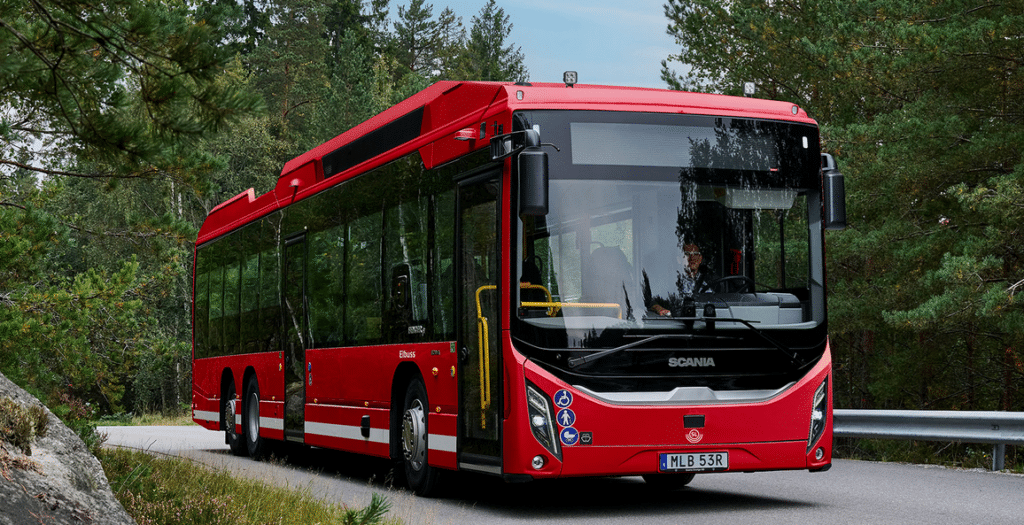
Scania and transport operator VR Group have signed one of Sweden’s largest electric bus agreements to date, with 91 battery-electric buses scheduled to enter service in the Södertälje region beginning in June 2027. Scania announced the news on May 18, 2026.
The order follows VR Sweden winning a contract in 2025 from local public transportation authority SL to operate bus services in Södertälje and Nykvarn. Ahead of the service launch, VR selected Scania to supply the new electric bus fleet. Scania’s headquarters and production facilities are also located in Södertälje, strengthening the local connection behind the project.
The agreement represents a major step in VR Sweden’s long-term strategy to expand sustainable and fossil-free public transportation. The deployment of modern electric buses is expected to help reduce carbon emissions, lower noise pollution, and improve urban air quality across the region.
The buses will be Scania Fencer f1 BEV models built on the company’s battery-electric bus platform, which is developed and manufactured in Europe. The partnership between VR and Scania includes vehicle development, operational planning, maintenance services, long-term support, and fleet rollout coordination.
“With development and battery assembly in Södertälje, and close cooperation throughout the process, we will offer a solution that is both robust and sustainable,” says Christopher Svensson, Key Account Manager at Scania Sweden. The deal is Scania Sweden’s single largest delivery of battery-electric vehicles to date, and of the 91 units, 32 will be with a 4×2 configuration and 59 with a 6×2*4 configuration, all with 445 kWh of installed energy.
Both companies say the agreement aligns closely with broader transportation electrification goals in Sweden and across Europe, where cities and transit agencies are increasingly replacing diesel fleets with battery-electric alternatives to meet climate and sustainability targets.
“The investment is an important step in the transition to electrified public transport and enables reduced local emissions, while ensuring attractive and reliable traffic for passengers as well as a good working environment for drivers and maintenance personnel,” says Anders Frykman, Bus Director at VR Sweden.
More information about Scania’s electric public transportation solutions can be found at Scania Sustainable Transport Solutions.
EVinfo.net’s Take: Why Public Transportation Should Go Electric, Especially During Global Fuel Crises
Public transportation systems around the world are facing a growing reality: fossil fuel prices can become unstable almost overnight. Wars, geopolitical conflicts, supply chain disruptions, sanctions, and oil production cuts can rapidly send diesel and gasoline prices soaring, creating major financial pressure for cities, transit agencies, and taxpayers.
The ongoing Iran conflict is once again exposing how vulnerable transportation systems remain when they depend heavily on oil. Global fuel markets reacted quickly to concerns surrounding disruptions near the Strait of Hormuz, one of the world’s most important oil shipping routes. Fuel prices surged across many regions, increasing operating costs for buses, delivery fleets, logistics companies, and public transportation systems.
This is one of the strongest arguments for electrifying public transportation.
Electric buses provide transit agencies with far more stable and predictable operating costs compared to diesel fleets. Electricity prices are generally less volatile than global oil markets, especially when paired with renewable energy and battery storage systems. Transit agencies can also generate their own electricity through solar energy installations, reducing long-term dependence on imported fossil fuels.
Another major advantage is energy security. During wartime disruptions or global fuel shortages, diesel supply chains can quickly become strained. Electric transit fleets powered by domestic electricity generation help reduce exposure to international energy shocks and geopolitical instability.
The world has seen this pattern before. The oil crises of the 1970s dramatically reshaped transportation markets by pushing consumers toward smaller and more fuel-efficient vehicles. Today, rising fuel costs are accelerating interest in electrification for buses, trains, delivery vans, and municipal fleets.
Electric buses also deliver major urban benefits beyond fuel savings. They produce zero tailpipe emissions, reduce noise pollution, improve air quality, and lower maintenance costs because electric drivetrains have fewer moving parts than diesel engines. For cities struggling with pollution and rising transportation costs, electrification can improve both public health and financial sustainability.
Battery technology has also improved significantly in recent years. Many electric buses can now operate full daily routes on a single charge, while depot charging systems and fast chargers continue expanding globally. Large transit agencies across Europe, China, Canada, and the United States are already deploying thousands of electric buses as part of long-term decarbonization strategies.
Another fuel crisis could emerge at any time.
In many ways, electric public transportation is no longer just an environmental strategy. It is increasingly becoming an economic stability strategy and an energy security strategy as well.

Electric Vehicle Marketing Consultant, Writer and Editor. Publisher EVinfo.net.
Services