Stellantis to Invest Over €1 Billion in France for Three New Peugeot Models in Mulhouse
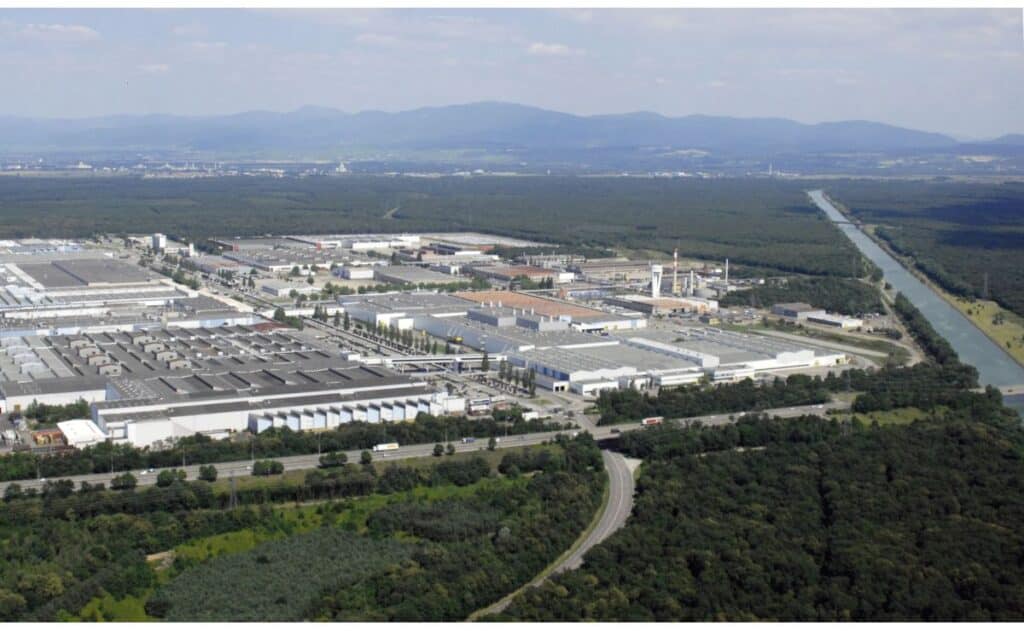
Stellantis has announced an investment of more than €1 billion to support the production of three new Peugeot models in France. The vehicles will be built at the Mulhouse plant in Alsace, with production set to begin in 2029.
The investment will enable the development and manufacturing of three next-generation C-segment models based on the new STLA One platform. These vehicles will include fully electric and hybrid powertrains, reflecting the company’s broader multi-energy strategy.
The STLA One architecture is designed as a modular and scalable platform supporting multiple vehicle sizes and powertrains. Stellantis says it will help reduce development complexity and improve cost efficiency by up to 20 percent through standardization and scale.
The C-segment is a core market in Europe, representing roughly 30 percent of total vehicle sales. Stellantis sees the Peugeot brand as a key volume and profitability driver within this segment, and the Mulhouse production decision strengthens its long-term European positioning.
The investment is also aligned with Stellantis’ FaSTLAne 2030 strategy, which focuses on new global platforms, accelerated development cycles, and electrification. The company emphasized that Peugeot will be the first brand to deploy the STLA One platform globally.
Production at Mulhouse is expected to support long-term plant utilization and job stability, with the facility employing around 4,500 workers. Stellantis framed the decision as part of its broader effort to combine electrification with industrial competitiveness in France.
Company leadership highlighted support from French industrial policy and EV incentives as contributing factors enabling the investment. The announcement reinforces Stellantis’ commitment to maintaining a strong manufacturing footprint in Europe while transitioning toward electrified vehicle production.
Stellantis Plans $70 Billion Comeback, 29 New EVs Over the Next Five Years
Stellantis is outlining a major five-year turnaround plan centered on a roughly $70 billion investment to rebuild its product lineup and regain competitiveness in the EV and software era.
The strategy includes launching about 29 new battery electric vehicles alongside plug-in hybrids, traditional hybrids, and combustion models, all built on STLA One.
A major focus of the plan is software-defined vehicle technology. Stellantis is deepening partnerships with Qualcomm and other tech firms to develop centralized computing systems, improved infotainment, and more advanced driver assistance and autonomy features.
The company is also restructuring its brand and product priorities, concentrating investment on core global brands such as Jeep, Ram, Peugeot, and Fiat, while emphasizing North America and Europe as key markets.
Alongside the product push, Stellantis is targeting cost reductions and efficiency gains through platform consolidation, manufacturing optimization, and more localized brand strategies.
Overall, the plan represents a reset of Stellantis’ EV strategy after earlier missteps, shifting toward fewer platforms, more standardized technology, and a broader mix of powertrains rather than a purely electric approach.

Electric Vehicle Marketing Consultant, Writer and Editor. Publisher EVinfo.net.
Services